Scientists at Cardiff University (
www.cardiff.ac.uk) are exploiting the unique properties of bacteria to help develop a self-healing system for buildings and historic structures.
They have set out to produce a system that can be simply applied to building stone and masonry, to give it self-healing properties.
Once applied, any sort of damage to the stone would trigger the release of bacteria and a range of ‘helper’ chemicals, allowing the damage to start repairing itself autonomously.
The key to this technology is the fact that naturally occurring micro-organisms such as bacteria can produce mineral deposits when mixed with certain precursor chemicals.
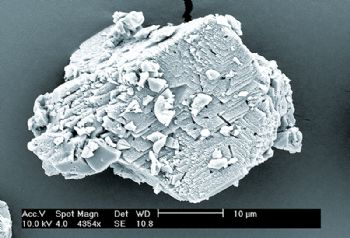
One such mineral produced by bacteria is calcium carbonate — one of the main components of rocks and other masonry materials.
Mike Harbottle at Cardiff University’s School of Engineering said: “When present in masonry, the bacteria that produce the mineral deposits become entombed as spores, alongside the chemical precursors, in the mineral that they are producing.
"When damage occurs to the masonry, the deposits in the mineral are also damaged, exposing both the bacteria and the chemicals, which react with each other again to produce even more mineral, thus healing the damage.”
Throughout the two-year project, the team will be developing ways to engineer self-healing systems into masonry, either during the material’s production phase or after the masonry has been used as a building material.
"One possibility would be to produce a liquid that you could buy from a local DIY store — containing all of the bacteria and chemicals required — and spray onto masonry to repair damage.”