The first Airbus A350-1000, which was delivered to launch operator Qatar Airways last month, is equipped with a new safety feature that will now be standard across all A350-1000s.
Called the automated emergency descent, or AED, this system engages the aircraft’s autopilot function to automatically and quickly bring the aircraft to a lower altitude in the event of in-flight cabin de-pressurisation.
Yann Besse, an autopilot laboratory test team engineer for Airbus (
www.airbus.com), said: “Depressurisation events are extremely rare.
Our goal was a simple system that provides significant workload alleviation when a rapid descent is required.”
The AED mode is triggered when the cabin pressure falls below a pre-determined limit.
After alerting the flight crew, the system engages the autopilot to bring the aircraft to a lower altitude, if there is no crew reaction within 15sec.
The AED’s use on the A350-1000 is the first application of its kind in a large commercial aircraft.
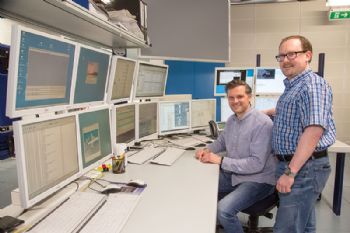
Developing the new system meant developing an innovative way for Airbus engineers to work at separate locations.
The AED system requires a seamless interface between the aircraft’s autopilot and cabin pressurisation systems; it necessitated close collaboration between the engineers responsible for each system to integrate them.
Mr Besse said: “The autopilot test bench is in Toulouse, France, and the cabin pressurisation facility is in Hamburg, Germany.
"An inability to connect the two sites would have meant having to do the AED system’s testing on a real aircraft, which would take much longer.”
Each site made modifications to its ‘bench networks’ that enabled the Toulouse and Hamburg facilities to connect in real time, allowing fully representative testing at both sites.