Certain tasks (rather than specific occupations) will be under threat from Artificial Intelligence (AI), so no job will be immune, according to a new
Automation and Autonomy report by the Institution of Mechanical Engineers (IMechE) (
www.imeche.org).
It says that roles will change not just in manual labour but also in clerical and professional positions.
It adds that the impact of AI on jobs will come in waves, with the first happening in the next five years and other roles (involving more-complex manual tasks or social and literacy skills) taking longer to disappear, over the next 20 years; 27% of all workers are concerned about losing their jobs.
Health-care is predicted to be the industry most affected by AI, as it transforms diagnosis, decision-making and treatment.
At a time when the NHS is facing a recruitment crisis, with parts of NHS England only able to fill
one in 400 nursing vacancies, AI robots could potentially help with logistical tasks, thereby giving nurses the time to fulfil other duties.
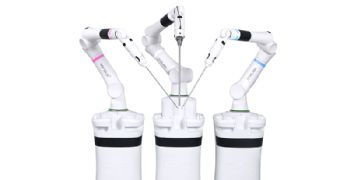
Over a quarter of the NHS hospitals that perform operations already use robotic devices to assist in operating theatres.
Dr Jenifer Baxter, head of engineering at the IMechE, said: “The most significant risk we face with AI is its rapid pace of development and adoption.
“Our way of life is changing quickly, and we need to be developing considered policies that reflect the fact that AI will feature in every aspect of our lives.
“This includes considering education and training opportunities, as well as ‘safety nets’ for those who may find the transition to the world of the Fourth Industrial Revolution more difficult.”