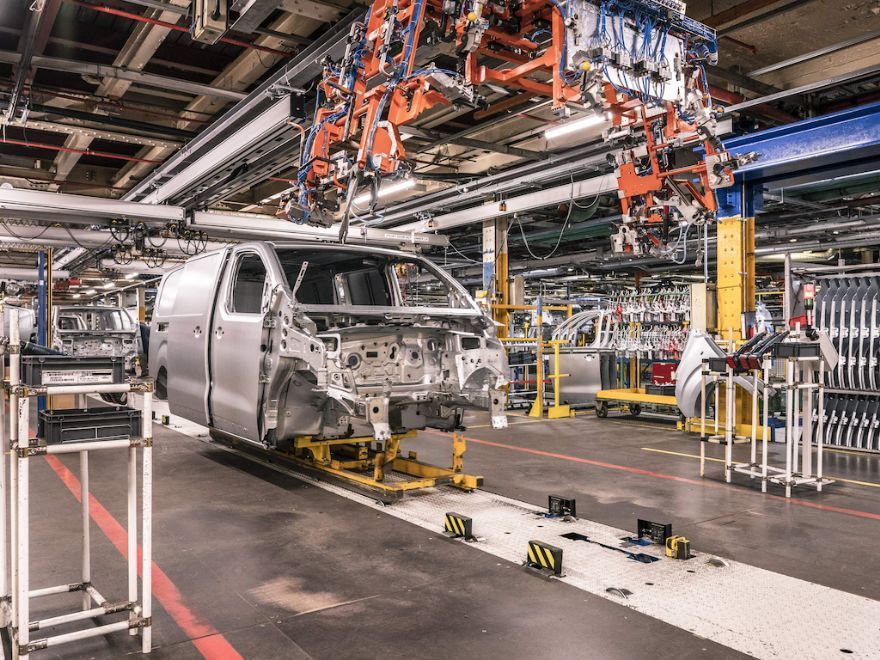
UK commercial vehicle (CV) production grew 57% in the first quarter of 2022 according to figures published last week by the
Society of Motor Manufacturers and Traders (SMMT). Some 25,268 vans, trucks, taxis, buses and coaches rolled out of British factories in the first quarter, including 10,130 units in March alone, a year-on-year increase of 64.3% in the month.
Last month also saw CV production finally exceed pre-pandemic levels, up 11.3% on 2019’s performance, equating to 1,032 more vehicles built as manufacturers ramped up production.
Growth over the first three months of the year was driven largely by a 70.5% uplift in exported CVs, with some 5,873 more units heading overseas, while domestic production also increased by a notable 42.6%. More than half (56.2%) of all CVs produced this year have been shipped abroad, with 94.4% of those destined for the European Union. During March, exports almost doubled, growing 95.1%, while the percentage of CVs built for UK operators also increased by 33.6%
Mike Hawes, SMMT chief executive, said: “Despite the challenges the UK automotive industry continues to face, most notably the global shortage of semiconductors, commercial vehicle manufacturing output is still resolute. Significant demand from both home and overseas for the latest and greenest working vehicles continues and will be aided by new model and technology releases throughout the year.
“Competitiveness, however, is far from assured and action must be taken now to reduce the potential impact of rising energy and inflation costs, to encourage investment and the long term future of the sector.”
Meawhile, UK engine production declined -22.7% in March to 152,250 units. Production for UK and overseas markets falls -27.2% and -19% respectively in the month. A total of 411,273 engines were built in the first quarter, down -23.2% on the same period last year.
Mr Hawes added: “While the automotive industry is resilient, the global shortage of semiconductors has affected both vehicle and engine production. The competitiveness of the industry is also being challenged by the rising costs of energy and other inflationary pressures here and abroad.
“For the industry to recover, it urgently needs government action, including measures to reduce business costs, which will help ensure the UK remains at the forefront of automotive manufacturing and protect the jobs and livelihoods of its skilled workers.”