Building on strong demand for its new electric vehicles (EVs),
Ford has announced a series of initiatives for sourcing battery capacity and raw materials that will enable the company to reach its targeted annual run rate of 600,000 electric vehicles (EVs) by late 2023 and more than 2 million by the end of 2026.
Ford detailed its global vehicle portfolio plans supporting these production goals as part of its Ford+ plan. Jim Farley, Ford’s president and CEO and president of ‘Ford Model e’, said: “Ford’s new EV line-up has generated huge enthusiasm and demand, and now we are putting the industrial system in place to scale quickly. Our Model e team has moved with speed, focus and creativity to secure the battery capacity and raw materials we need to deliver breakthrough EVs for millions of customers.”
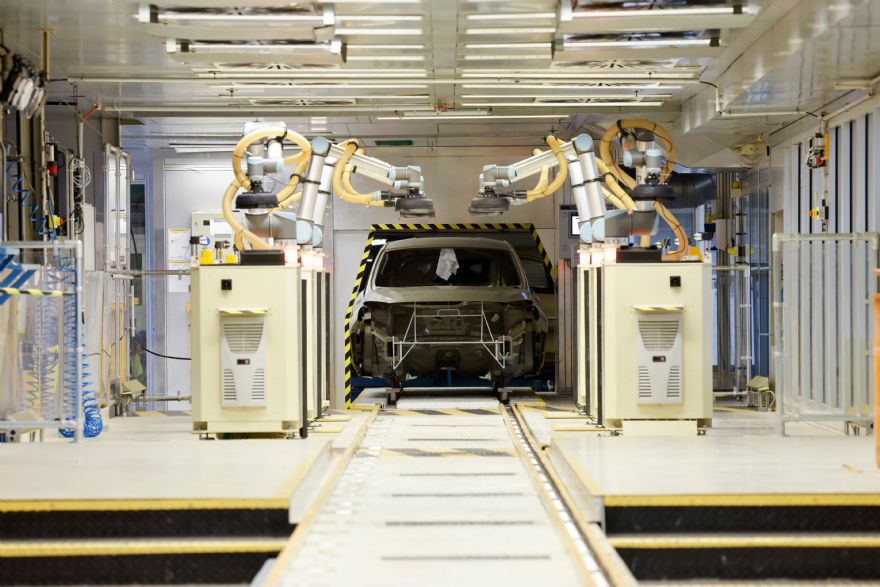
Ford plans to invest over $50 billion in EVs through 2026 and have EVs comprising more than half its global production by 2030. The company is also targeting carbon neutrality globally no later than 2050. In Europe, the Ford Cologne Niehl plant is currently undergoing major construction updates to prepare for the start of EV production in 2023. These updates include the construction of a new 2,500m
2 building that will be home to a new and efficient pre-coating line covering five floors.
Furthermore, the current manufacturing facilities will be updated with new energy-efficient solutions that will save more than 2,000 tonnes of CO
2 and more than 2,600MWh of electric energy per year. The first electric passenger vehicle is expected to roll-off the Cologne production line in 2023, with a second EV model to be built starting in mid-2024. Annual output from the new plant is expected to reach 200,000 vehicles per year.
Ford is adding lithium iron phosphate (LFP) cell chemistry to its portfolio, alongside its existing nickel cobalt manganese (NCM) chemistry, thereby reducing the reliance on scarce critical minerals such as nickel; at current costs, this will bring a 10 to 15% bill of material savings for Ford versus NCM batteries. The company confirmed it has also secured 100% of the annual battery cell capacity needed (60GWh) to support the planned 600,000 EV run rate by working with leading battery companies around the world.
However, Ford is building on agreements tied to its 600,000 milestone and is taking them even further, having sourced about 70% of the battery cell capacity the company needs to support an annual global run rate of more than 2 million EVs by late 2026.
Ford and CATL — the world’s largest battery producer — have signed a separate non-binding MoU to explore a cooperation for supplying batteries in Ford’s markets across China, Europe and North America.
Ford also announced it plans to localise and use 40GWh of LFP capacity in North America starting in 2026. The company intends to use this additional capacity to complement three previously announced battery plants in Kentucky and Tennessee that are part of the BlueOval SK joint venture between Ford and SK On. Ford has signed an additional MoU with SK On as well as Koç Holdings to create a joint venture in Turkey for expanded battery capacity there.