 Sheffield Forgemasters
is set to make a trial forging to advance the development of a pioneering green technology demonstration plant for fusion power. The critical ring component, for Canada’s
General Fusion, will confirm specifications for the next phase of the programme, to create a thick-walled fusion vessel designed to withstand the extreme high temperatures and compressive forces needed to create fusion energy.
The trial ring’s specifications match the 11 rings planned for the fusion demonstration machine. It will allow the engineering team to validate performance of the high-strength steel alloy, finalise the vessel design and confirm the manufacturing process for the fusion reactor.
Sheffield Forgemasters CEO David Bond said: “Fusion is the holy grail of green energy sources and uses the same processes which power our sun, with the potential of virtually unlimited supplies of low carbon energy. At Sheffield Forgemasters, we pride ourselves on our innovation, and have extensive knowledge and experience in establishing practical manufacturing solutions for disruptive technologies. We are thrilled to be a part of this project and are ctively working to bring fusion energy to the world.”
The fusion demonstration machine will create fusion conditions, including an internal temperature of 100 million degC in a power-plant-relevant environment. Its results will provide the information needed to design and build a commercial-scale pilot plant.
The vessel is designed to be modular, made up of 11 steel rings bolted together on site. In the future, this cost-effective and efficient method will enable General Fusion to deploy its commercial machines quickly, using General Fusion’s practical technology – Magnetized Targeted Fusion (MTF).
Greg Twinney, General Fusion CEO, said: “Sheffield Forgemasters brings to this project over 200 years of expertise creating complex steel components. Teaming up with world-leading specialists allows us to focus on our commercialisation plan and stay on pace to generate zero-carbon electricity by the early 2030s.”
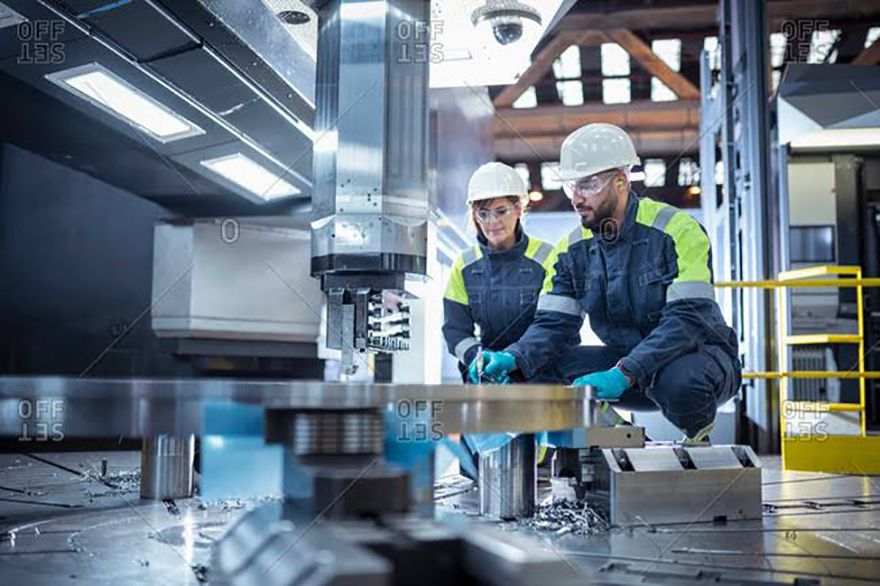
To create the trial ring, which will weight 42 metric tonnes, a large steel ingot has been forged in the UK’s largest open-die press, forming the steel into a donut shape with a diameter of just over 3m. The ingot will then be rolled and expanded into a larger, thinner ring, spanning 7.6m in diameter and 56 holes drilled into the ring. These replicate the holes that will transmit high-pressure gas from the compression drivers to a spinning interior rotor in the fusion demonstration machine. The pressure change will push smaller pistons to collapse General Fusion’s proprietary liquid metal liner around hydrogen plasma and create fusion.
Once completed, Sheffield Forgemasters’ engineering team will carry out a series of non-destructive tests on it, including visual, ultrasonic, dye-penetrant and magnetic particle inspection, as well as eddy-current testing.