The Swedish bearings and seals company
SKF is providing key components for the ‘next generation Very Large Array’ (‘ngVLA’), a $2 billion telescope system that aims to ‘peer deeper into the universe than ever before’. The US National Radio Astronomy Observatory (NRAO) is planning for the ‘ngVLA’ to replace the ‘Very Large Array’ (VLA), a group of 28 radio telescopes that have been operating in the New Mexico desert for more than 40 years.
The new project, which is more advanced, will include 244 antennas arranged in a series of spiral arms on the current VLA site. Another 30 dishes will extend these arms more than 1,000km across the Southwest, with additional dishes positioned across the continental United States, Hawaii and Puerto Rico to create ‘a truly continental virtual telescope’.
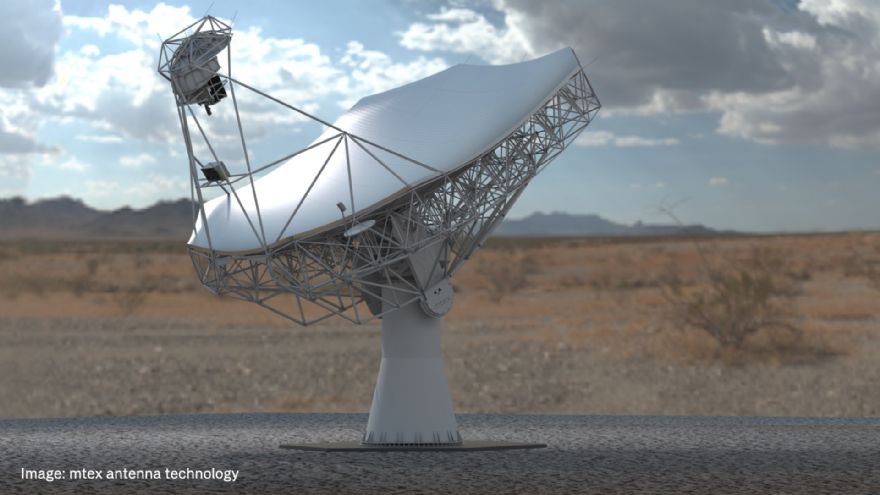
SKF products will be integrated into the elevation control system of the prototype ‘ngVLA’ antenna currently under construction by Mtex Antenna Technology GmbH, a specialist in advanced radio telescope projects based in Germany. These two companies have worked together for more than two years and defined a bearing solution that could meet the telescope’s requirements for high load capacity, low friction and extreme precision.
In use, the system must be able to point the antenna with an accuracy of less than one thousandth of a degree, while continuously adjusting its position to compensate for the effects of wind and the Earth’s rotation.
The prototype elevation control system includes two 720mm SKF spherical roller bearings that have been manufactured ‘to unusually high accuracy’ and are mounted on tapered sleeves that allow the final clearance to be precisely adjusted during assembly to further reduce radial runout during operation. Furthermore, an SKF automatic lubrication system will minimise stick-slip and reduce friction and wear during telescope operation.
The prototype antenna will be installed at a test site in New Mexico later this year, then undergo extensive testing over the following 18 months. It is planned that large-scale production of antennas will start in 2027, with the overall construction process expected to take a decade.