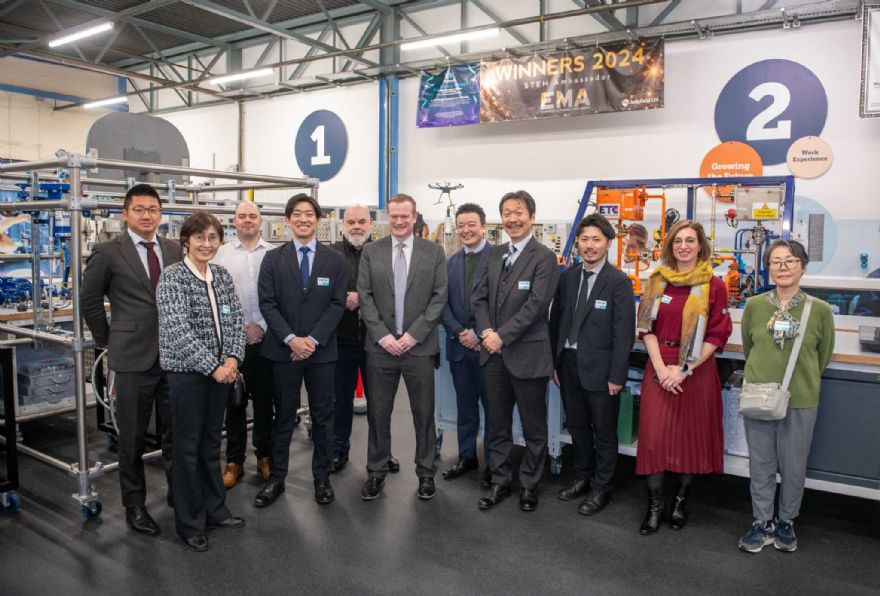
A Japanese government delegation recently completed a tour of key nuclear, engineering and technology sites across Cumbria as part of a fact‑finding mission linked to the continued clean‑up of the Fukushima Daiichi power station. Representatives from Japan’s Ministry of Economy, Trade and Industry (METI) visited the Sellafield site and met with
Sellafield Ltd before taking part in a series of supply chain visits organised by the
Industrial Solutions Hub (iSH).
During its time in the region, the delegation held discussions with partners including the Sellafield Engineering Centre of Excellence, Cumberland Council, and the
Resolve Engineered Solutions Consortium — a collaboration between
Forth,
React Engineering,
Core Nuclear Solutions and
COMS. The programme was designed to showcase Cumbria’s technical strengths, with particular emphasis on nuclear decommissioning capability, regeneration initiatives and collaborative supply chain models.
KAGA Yoshihiro, director of the Nuclear Accident Response Office at METI, said the delegation was keen to examine Cumbria’s approach to both clean‑up and community development. He added: “We are working to make progress in decommissioning the entire Fukushima Daiichi site, but at the same time we are also focused on regeneration, reconstructing the area after the extensive damage caused by the accident. Our goal is to ensure that reconstruction and decommissioning progress hand-in-hand and what you are doing here aligns closely with that approach.”
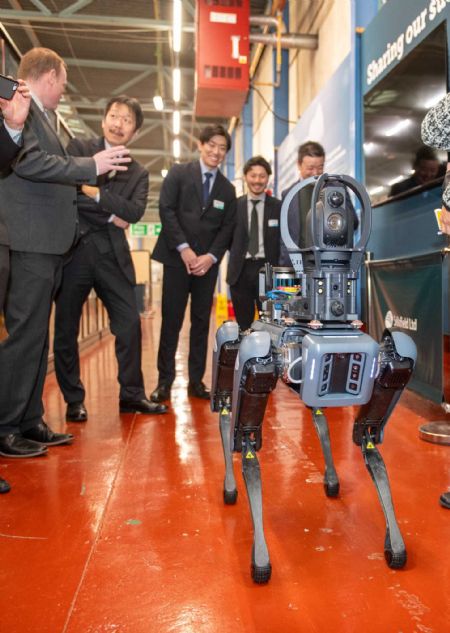
He continued: “That is why we came — to observe your work, understand your methods and take away insights that we can apply or adapt for our own activities back in Japan. So far, we have learnt a great deal. You have launched significant initiatives, attracted a range of companies, both large and small, and communicated your vision very effectively.”
The itinerary also included visits to Createc and RAICo1 — a partnership involving UKAEA and nuclear sector organisations — along with an evening engagement with local industry stakeholders. METI delegates showed particular interest in the Resolve Consortium, viewing it as a distinctive example of SMEs combining resources to bid for and deliver complex work packages.
Miranda Kirschel, programme director at iSH, said: “We were delighted that the delegation were able to spend some time with us and see the capability we discussed with them when we were out in Japan last year.
Sellafield and its supply chain have world-leading expertise and the companies based here have a great deal to offer our Japanese counterparts as they continue the clean-up of the Fukushima Daiichi site. It has been a fantastic opportunity to grow our relationship with them.”
Three industrial clustersShe continued: “Through iSH, we have been able to demonstrate how the creation of our three industrial clusters — robotics, manufacturing and digital — will not only support nuclear decommissioning activity, but also ensure our communities have the right skills to access the next generation of jobs. Many of these roles are very different from traditional nuclear decommissioning positions and it is vital we prepare for that change now.”
The delegation also received an update on investment being delivered through the Cleator Moor Town Deal, including plans for the iSH Enterprise Campus, which will offer new facilities to support innovation, skills development and business growth in West Cumbria.
Craig Branney, who hosted the delegation at the Sellafield Engineering Centre of Excellence, said: “It was a real privilege to welcome our colleagues from Japan to the Sellafield Engineering Centre of Excellence and to share how we are approaching the challenges of large-scale nuclear decommissioning. At Sellafield, we are committed not only to making safe, timely progress in decommissioning the site, but also to doing so in a way that strengthens the local economy and builds long-term capability.”
He continued: “A key part of that is working much more closely with our supply chain — investing in skills, innovation and collaboration, and creating an environment where organisations of all sizes can contribute and thrive. Visits like this are incredibly valuable. They allow us to exchange ideas, learn from international experience and test our own thinking, while also demonstrating how partnership, shared purpose and sustained investment can support both decommissioning and wider regeneration.”