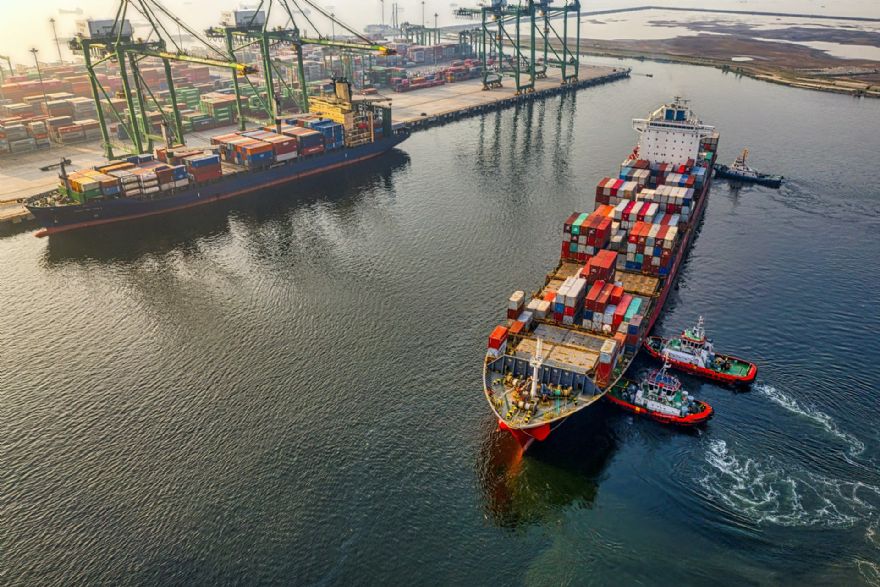
 Photo courtesy of William William on Unsplash
Changes in global trade policies and the introduction of sweeping tariffs are forcing UK manufacturers to reassess their approach to international trade, as higher costs, uncertainty and increased border complexity reshape global markets, according to new research from
Make UK and
DHL Express..
Findings from
International Trade Trends 2026: UK Manufacturers in Global Markets, reveal that growing trade barriers are prompting firms to diversify markets, adjust supply chains and rethink where future growth lies. The USA remains a key export destination for British manufacturers, with six in 10 currently trading with there. However, the direct and potential impact of tariffs is already being felt.
One in four manufacturers report balance sheet losses linked to added costs arising from US tariffs, while nearly a quarter say they accelerated exports to the USA in the early months of 2025 to try to beat anticipated tariff increases. At the same time, manufacturers are increasingly hedging their exposure. Almost one in four say they have shifted their focus towards non-US markets, while one in five have already stopped or reduced exports to the USA altogether. A further 16% say they have plans to do so. In contrast, a quarter of exporters report carrying on with their US trade plans without adjustment, highlighting the varied impact across the sector.
These findings reflect a broader shift in sentiment. While the USA remained the second-most attractive growth market at the time of the survey, more recent sentiment points to manufacturers placing greater emphasis on opportunities in Asia and Oceania. The USA nevertheless continues to be an important market for UK manufacturers. Beyond the USA, the research highlights wider structural barriers to international trade. Eight in 10 companies have been impacted by tariffs of some form. While tariffs and trade rules, including rules of origin, are cited by 58% of manufacturers as a major obstacle to exporting. Half also point to customs delays as a significant challenge, with businesses facing additional paperwork, inconsistent processes and a lack of clear guidance.
Cautiously optimisticDespite these pressures, manufacturers remain cautiously optimistic. Almost eight in 10 say they are confident in the UK’s overall trade prospects, signalling continued ambition to compete globally even in a more fragmented and uncertain trading environment. While concern about the level of global competition is near universal among manufacturers (87%), they also believe Britain has a strong manufacturing reputation globally, with 85% of respondents saying they emphasise the ‘Britishness’ of their product or company.
Make UK’s CEO Stephen Phipson said: “UK manufacturers’ ability to trade goods and services globally is under growing strain from a combination of higher tariffs, geopolitical pressures, and the need to adapt to a rapidly changing global environment. Tariffs and trade friction in global markets are creating uncertainty and disrupting long-standing customer and supply chains. Many businesses are responding by diversifying exports, adjusting supply chains, or scaling back activity to manage rising costs and delays.
“Despite these challenges, manufacturers remain ambitious and outward-looking. We fully support the Government’s strategy to adopt a trade approach that strengthens the UK’s global competitiveness and supports more seamless and certain trading relations with our long-term partners.”
DHL Express UK’s CEO John Cornish said: “The research shows that UK manufacturers aren’t retreating from global trade, they are recalibrating. After years of disruption, businesses are taking a more deliberate and strategic approach to where and how they export, balancing risk while still pursuing growth overseas. In this context, we are seeing British manufacturers diversify to a certain extent and strengthen trade with countries that pose less geopolitical risk or that benefit from trade agreements with the UK.”
Fragmented trading landscapeHe continued: “At DHL Express, we see first-hand how important it is for manufacturers to navigate tariffs, customs complexity, and shifting trade rules with confidence. With the strength of British manufacturing and the right support in place, UK exporters remain well positioned to compete globally, even in a more fragmented trading landscape.”
The research also shows that 63% of manufacturers will source more of their materials domestically over the next five years, up from 49% in the years since 2020, as they look to strengthen resilience, reduce risk and manage costs alongside international trade.
However, manufacturers are clear that more support is needed to turn confidence into growth. More than half say they want greater export support from government, while 38% would value access to a logistics partner service and 36% identify customs support as a priority. The findings underline a sector that is adapting rather than retreating. Manufacturers are diversifying markets, adjusting strategies and responding pragmatically to a changing global trade landscape. But without action to reduce friction and improve practical support, the cumulative impact of tariffs, customs complexity and uncertainty risks holding back future growth.
To ensure the UK’s trade approach reflects today’s challenges — including tariffs and other barriers - Make UK is calling for a renewed focus on helping businesses navigate global markets, ensuring ambition is matched by delivery so UK manufacturers remain competitive on the world stage.