As raw material volatility and concentrated supply chains continue to put pressure on global manufacturing, tooling companies are taking a closer look at how they utilise critical tool materials. Tungsten carbide remains a mainstay across a wide spectrum of machining tasks, but its dependence on tungsten — a strategically sensitive resource — has prompted manufacturers to re-evaluate where carbide offers the most value and where alternative materials can deliver stronger technical performance.
NTK Cutting Tools, drawing on deep expertise in ceramic material engineering and application development, has advanced the capability of cutting tools in harsh operating environments. In the machining of cast iron, NTK’s engineered ceramic grades have become some of the most reliable solutions for high‑temperature conditions that push conventional carbide beyond its limits.
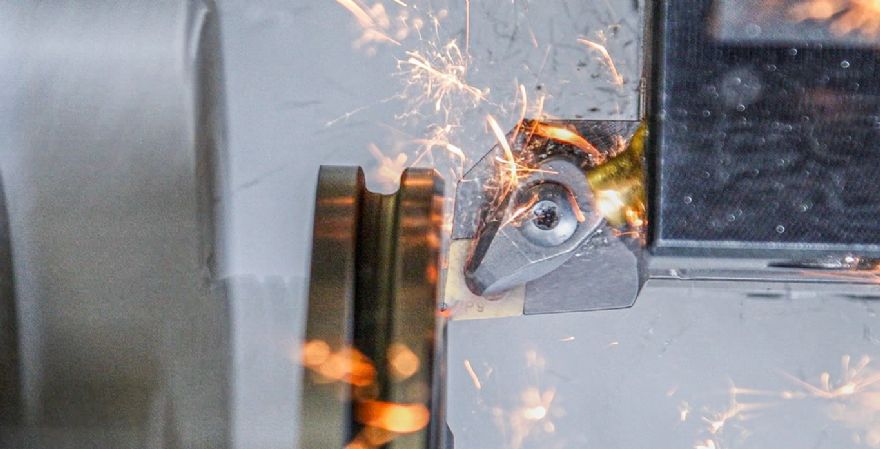
Cast iron machining generates significant heat, especially in high‑speed or dry cutting operations. Alumina- and silicon‑nitride‑based ceramics retain their hardness and wear resistance at these elevated temperatures, allowing them to maintain tool stability and deliver consistent wear patterns. This material resilience enables higher cutting speeds and reduced cycle times, supporting reliable dry machining where thermal performance, rather than edge toughness, dictates tool life.
However, ceramics are not intended to displace carbide across the board. Carbide continues to excel where heavy interruptions, unstable fixturing or severe mechanical shock dominate the application. The opportunity lies in identifying which machining stages are driven primarily by heat rather than impact. By selecting ceramics for thermally intense cuts and reserving carbide for operations requiring maximum toughness, manufacturers can optimise tool life, productivity and overall process resilience. This more strategic allocation reduces dependence on any single tool material while improving operational efficiency.
NTK’s ceramic portfolio has been engineered specifically for cast iron production environments. Its SP9 coated silicon nitride grade supports operations from roughing to finishing in both grey and ductile cast irons. The SX6 grade offers high toughness for demanding roughing applications, including components with scale. Alumina-based grades such as HC1 and HW2 provide stability at very high cutting speeds, making them suitable for finishing grey cast iron in sectors ranging from automotive and heavy equipment to pump and valve manufacture.
Real-world production examples show how these ceramic grades can replace carbide in selected operations to boost throughput. In components such as wheel hubs and structural housings, the use of ceramics has enabled significant increases in cutting speed and overall productivity. These gains translate directly into improved spindle usage in high‑volume environments, where machining time per part is a critical economic factor. In many cases ceramic machining can be performed dry, reducing or eliminating coolant consumption and supporting more sustainable manufacturing by lowering energy use and minimising coolant disposal requirements.
The broader shift toward ceramic tooling represents a move from simple material substitution to a more engineered approach to process development. Aligning tool material properties with the dominant operational stresses — whether thermal or mechanical — allows manufacturers to build more resilient machining strategies, particularly in cast iron applications where heat is the governing factor. When applied in the right conditions, NTK’s advanced ceramic grades not only increase productivity but also enhance process stability in some of the most demanding environments on the shopfloor.