Spanish defence consortium
SATNUS has successfully completed its fourth flight demonstration campaign under Pillar 3 of the Next Generation Weapon System/Future Combat Air System (NGWS/FCAS) programme, marking a further milestone in the development of advanced manned–unmanned teaming capabilities for future air combat.
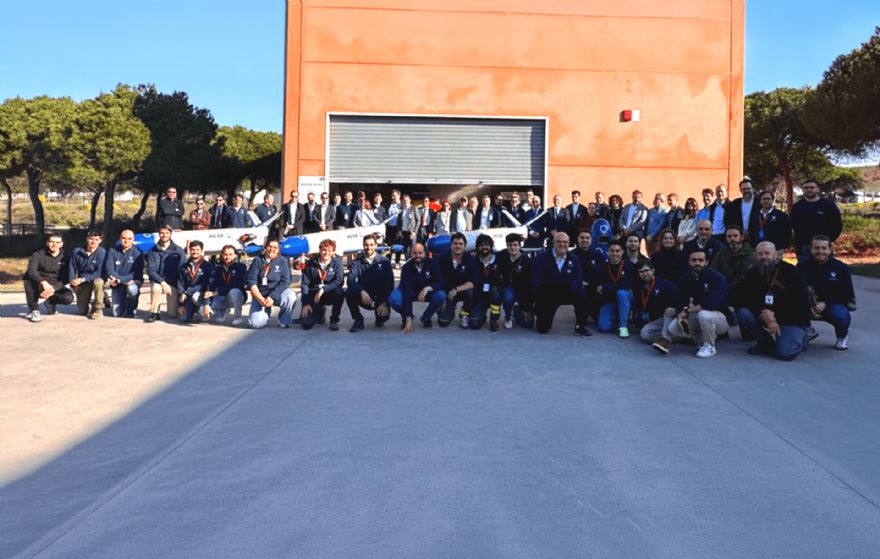
The campaign was conducted during the third and fourth weeks of March at the INTA‑CEDEA test facilities in Spain and comprised nine flight sorties. Its primary objective was to verify the performance of the Manned‑Unmanned Teaming (MUT) software led by SATNUS and developed in close collaboration with international partners Airbus Defence and Space GmbH and MBDA.
The software was integrated into the Next Generation Autonomy Computer (NGAC), with Remote Carriers represented by a combination of real and simulated Man‑Unmanned‑Teaming & Common Systems Demonstrator (MCSD) platforms. This hybrid setup enabled a robust evaluation of operational concepts in a highly representative environment.
Throughout the campaign, a wide range of MUT functionalities were demonstrated and validated. These included formation flying, evasive manoeuvres, collaborative navigation (including operations in denied or degraded environments) mission re‑planning, formation break‑up and visual platform detection to calculate relative distance. At peak complexity, the flights involved up to three real Remote Carriers operating simultaneously, supported by two simulated platforms.
Flight‑test levelThe final phase of the campaign culminated in flights carried out in the presence of the Combined Project Team (CPT) and representatives from the National Programme Offices of the three partner nations: France, Germany and Spain. Their attendance underscored the importance of the campaign within the multi-national NGWS/FCAS framework and provided an opportunity to review results directly at flight‑test level.
SATNUS highlighted the highly specialised work carried out by its engineering teams to achieve all defined objectives. The campaign drew on the combined expertise of the SATNUS consortium partners
GMV,
Sener and
Tecnobit-Grupo Oesia, together with the broader capabilities of its international collaborators. According to the company, effective coordination across organisations and nations was a key factor in delivering the campaign on schedule and to scope.
The successful completion of this latest demonstration reinforces the maturity of the MUT software and its underlying autonomy concepts, moving the NGWS/FCAS programme closer to operationally viable manned–unmanned air combat systems.
As European defence programmes increasingly prioritise collaborative, networked and autonomous systems, the results of this latest flight demonstration represent a significant step towards the future of air power and multinational defence cooperation.