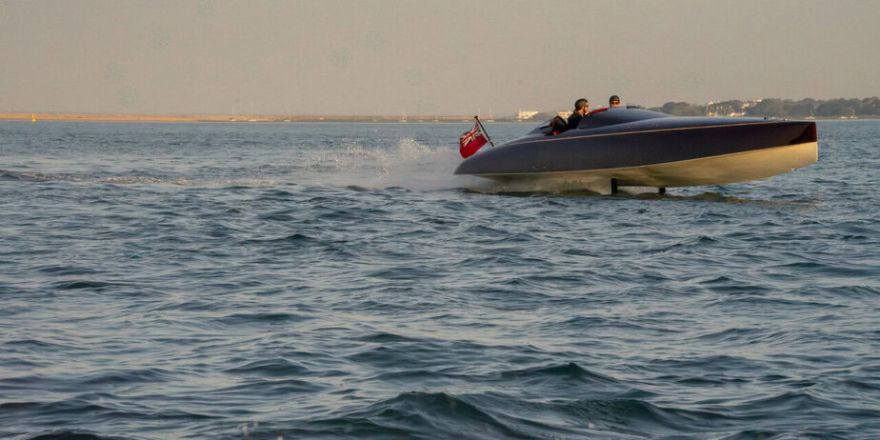
A fully electric foiling powerboat developed through a British collaboration between
BAR Technologies and
Spirit Yachts has become one of the first challengers in a new era of the prestigious British International Harmsworth Trophy, as the historic competition transitions exclusively to electric propulsion.
First contested in 1903, the Harmsworth Trophy is one of powerboating's most celebrated prizes. Traditionally associated with high-powered combustion-engine craft and outright speed, the competition has now been reinvented to reflect the changing direction of the marine sector, with entries restricted to electrically powered vessels.
Among the first contenders under the new format is the SpiritBARTech F35, a bespoke foiling electric powerboat that combines Spirit Yachts' boatbuilding expertise with BAR Technologies' advanced hydrofoil and performance engineering capabilities.
The vessel was developed for a private client and showcases technologies aimed at improving both efficiency and performance. Its hydrofoil system lifts the hull above the water when underway, reducing drag and delivering a smoother ride while extending operating range.
According to the companies, the fully electric craft is capable of travelling up to 100 nautical miles and achieving speeds of more than 30 knots, demonstrating the growing capabilities of electric propulsion in the high-performance marine sector.
The SpiritBARTech F35 recently completed the demanding Poole-Cowes-Poole course as part of the Harmsworth Electric Boat Challenge, with skipper Simon Schofield at the helm and support from BAR Technologies' Head of Operations & Vessels, Ollie Pendleton.
The boat completed the course in one hour, 36 minutes and 53 seconds, achieving an average speed of 30.35 knots and establishing a benchmark time for other competitors to challenge during the season.
Unlike traditional boat races, the Harmsworth Electric Boat Challenge operates as a time-trial competition running between May and October. Competitors attempt the course throughout the season, with the fastest time ultimately determining the winner when results are announced later in the year.
While the team must now wait to see whether another challenger can better its performance, both companies say participation was driven by more than the prospect of lifting the trophy.
The Harmsworth Trophy has long been associated with technical innovation and engineering excellence, qualities that organisers believe remain central to the competition's modern electric format.
Mr Pendleton said: "The Harmsworth Trophy once rewarded bigger engines and more power. Today, it rewards smarter engineering, efficiency and innovation. That makes it a fascinating reflection of where the marine industry is heading.
"At BAR Technologies, we love solving difficult engineering challenges, but we also enjoy putting our technology to the test. The Harmsworth Trophy gives us the chance to do both. Working alongside Spirit Yachts to take on such a historic challenge was hugely rewarding, and now we'll be watching with interest to see if anyone can beat the time."
Schofield added: "There is a real sporting spirit behind this challenge. Whether you're sailing, racing or powerboating, there's always excitement in taking on a benchmark and seeing how you measure up.
"The F35 performed brilliantly and it was hugely rewarding to see BAR Technologies' world-class engineering come together on the water. We set out to post a strong time and showcase what electric performance boating can do, and we're proud of what the vessel achieved."
For BAR Technologies, the challenge provided a further opportunity to demonstrate how technologies originally developed for elite racing programmes can be transferred into commercial and leisure marine applications.
The project also highlights broader trends emerging across the maritime sector as manufacturers explore electric propulsion, lightweight construction techniques and hydrofoil technology to improve vessel efficiency and reduce environmental impact without compromising performance.
By combining traditional yacht craftsmanship with advanced naval architecture and foiling expertise, the SpiritBARTech F35 offers a glimpse of how future high-performance boats could evolve.
Whether the benchmark time ultimately proves enough to secure the Harmsworth Trophy remains to be seen. However, the vessel's participation has already underlined the growing role of electric propulsion and hydrofoil technology in shaping the next generation of performance boating.
Pic credit: Zoe Dunne