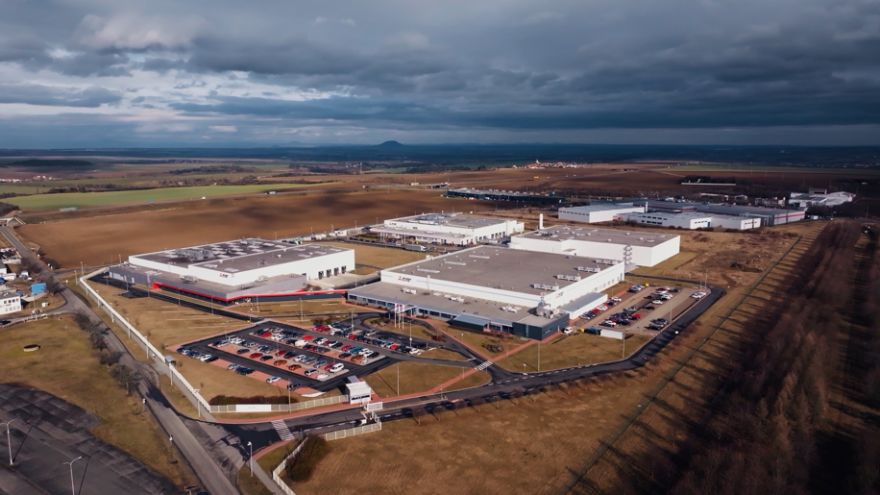
In modern production environments, competitive advantage is increasingly determined by how effectively a manufacturer can capture, connect and act on data. At
Mitsubishi Electric Automotive Czech (MEAC), located in Slaný, data has become a strategic asset.
The facility, which supplies electrical automotive components including integrated starter generators to manufacturers across Europe, first opened in 2001. It now employs over 500 people and has evolved from a traditional production environment into a highly connected factory where millions of data points are transformed into real-time operational insight, as it looks to support the automotive industry's transition towards electrification and smart manufacturing.
Crucially, rather than pursuing digitalisation through wholesale equipment replacement, MEAC has adopted a pragmatic approach that combines proven production assets with connected automation technologies, facilitated by its long-term automation equipment supplier, Mitsubishi Electric Factory Automation. The result is a factory that has made significant improvements to its output, quality, uptime, environmental impact and employee wellbeing.
One of the most striking aspects of MEAC's digital transformation is its approach to existing infrastructure. While many manufacturers would have pursued a strategy of replacing existing machinery and control systems, for MEAC, the focus has been on extracting greater value from equipment that continues to perform.
Jan Kabát, manufacturing engineering manager said: "On the production side, we keep what works. Our Q-Series control units have been operating reliably for more than 10 years, while modernisation is achieved through a data layer using MES interfaces to connect machines and generate operational insights without disrupting output." He continued: “We do not modernise machines simply for the sake of modernisation. The stable Q-Series control remains in place, while connectivity and data capabilities are added where they deliver measurable gains: less downtime, better visibility and faster troubleshooting."
This approach has enabled MEAC to connect more than 100 machines through Mitsubishi Electric's e-F@ctory architecture. This has created a digital layer that provides visibility into plant performance without incurring significant CapEx costs. The data generated now forms the basis of day-to-day decision making throughout the factory. It enables engineers to create custom reports and deploy additional sensors where greater process visibility is required.
However, for MEAC, the real value of connectivity lies in the ability to continuously improve manufacturing performance. Digital tools and analytics provide detailed visibility into processes, allowing teams to quickly identify issues and implement corrective actions before they affect production quality or customer deliveries.
For Dalimil Bartoň, general manager, data has become central to the company's continuous improvement strategy. He said: "We use data to drive continuous improvement in both process and product quality. By analysing detailed manufacturing data, we can identify defect patterns, optimise processes and reduce scrap. The result is more consistent quality for customers and lower manufacturing costs for the business." He continued: "The point isn't about using technology for technology's sake. It's knowing how to deploy systems so they genuinely support production within a true PDCA cycle. By using Mitsubishi Electric FA's portfolio in a pragmatic way, the team continues to raise automation levels, protect quality, and deliver measurable results on the shop floor."
While digital transformation is often associated with plant equipment, MEAC has also applied data-driven techniques to improve working conditions for employees. The company uses RFID technology and workstation data to understand how work is performed across the facility and identify opportunities to reduce physical strain. Petr Soukup, manufacturing senior manager, explained: "We use RFID technology to identify operators and understand where they are working, combining this information with muscle-load and workstation-level data. This helps us plan job rotations and organise work more effectively to reduce ergonomic strain. As a result, we've achieved more consistent performance across shifts."
With MEAC also understanding the impact of environmental conditions on production performance, the facility represents a comprehensive Software-defined Building based on Mitsubishi Electric iQ‑R PLCs and ICONICS GENESIS64 software. According to Milan Koňarik, facility manager, the system provides a single view of critical facility infrastructure. He said: "Our Software-defined Building is built on ICONICS and GENESIS64, with Mitsubishi Electric iQ-R PLCs. This allows us to actively manage the plant environment and its impact on production.”
He continued: “We monitor HVAC, the data centre, pre-cooling systems, UPS and other technical utilities, with over 3,000 measurement points feeding a single data view for faster decision-making.
The system can trigger SMS and email alarms, support smarter energy purchasing and help our energy-saving team act quickly. We see it as a practical tool for reducing energy costs and operational risk while keeping our carbon neutrality ambitions on track."
Ultimately, as automotive manufacturers continue to face pressure to improve efficiency, quality and sustainability, MEAC shows how effective digital transformation can be achieved without disrupting established production processes. With improved visibility of key data points, reduced downtime, enhanced product quality, lower energy consumption and a more sustainable working environment, MEAC has truly managed to get its data talking.