Parents are beginning to think about their children’s future careers much earlier than previous generations, according to new research commissioned by
BMW Group UK.
The study suggests career planning has shifted from the later years of secondary school to the first years of primary school, with many parents now considering future employment opportunities when their children are as young as five.
BMW Group UK surveyed 2,500 parents, comparing the experiences of those currently raising children with parents whose children are now aged 19 to 24. Among 2,000 parents who had already started thinking about their child's future working life, 58% said they began during the primary school years. The most common age was four to six, selected by 30% of respondents.
The findings contrast sharply with those from parents of young adults. Half of those surveyed whose children are now aged 19 to 24 said they only began considering career options when their child was between 15 and 18. More than a third (38%) now wish they had started earlier.
BMW says the results reflect growing uncertainty about the future of work, particularly as technologies such as artificial intelligence continue to reshape industries and career opportunities.
More than three-quarters (78%) of parents believe AI will significantly change the jobs available to their children, while 49% admit they do not know which skills will be most important for future employment. Nearly two-thirds (63%) think finding a job will be harder in ten years’ time than it is today.
At the same time, parents are calling for greater engagement between employers and schools. More than three-quarters (76%) believe primary-aged children should have more opportunities to visit workplaces and take part in practical activities linked to engineering and technology. Almost three-quarters (72%) said they would feel more confident about their child’s future if employers provided more information about career opportunities.
The research coincides with the launch of BMW Group UK's Apprentice 2036 campaign, which aims to encourage interest in engineering, technology and apprenticeships from an early age.
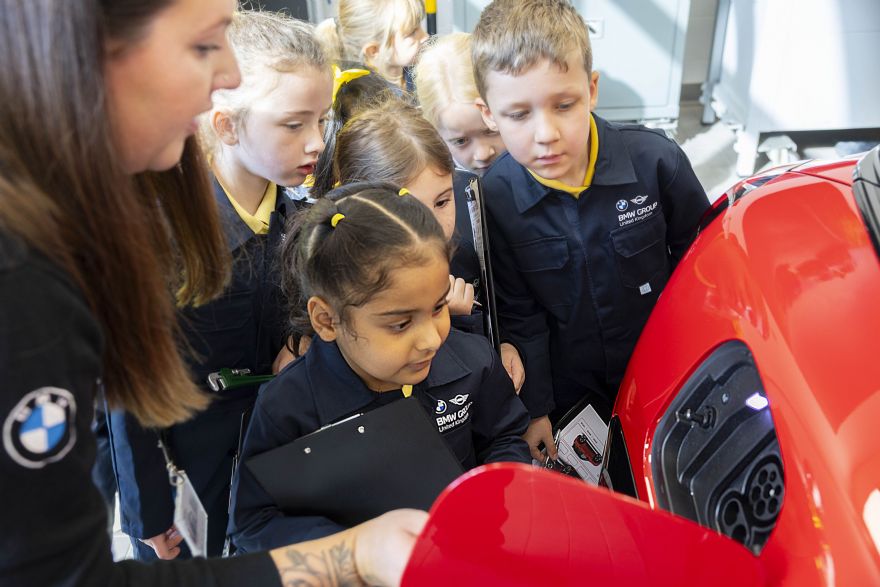
Central to the initiative is The Spark Lab, a hands-on workshop for five and six-year-olds that introduces concepts such as electric vehicles, batteries and charging technology. The programme was recently delivered to Year 1 pupils from Grazeley Church of England Primary School at the BMW Group Academy UK in Reading.
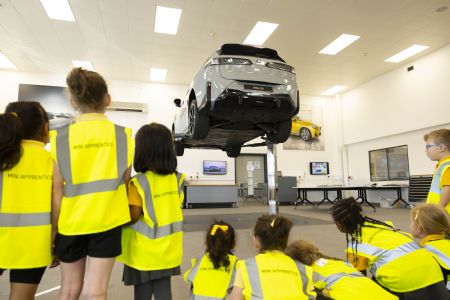
Children took part in practical activities exploring EV technology and designing their own future vehicles, while also developing problem-solving, communication and creativity skills. Those three abilities were identified by parents as the most important attributes they would like their children to develop at a young age.
The campaign also highlights BMW Group UK's apprenticeship programme, which spans areas including automotive technology, manufacturing, engineering, marketing and communications. The company currently has around 500 apprentices across its UK operations.
Sam Jarvis, HR director for UK and Ireland at BMW Group UK, said it was understandable that parents were thinking about future careers much earlier.
“Parents can see that technology is changing working life, so it is understandable that many are beginning to think about their children’s futures earlier,” he said.
“The vehicles today’s five and six-year-olds could one day help to design, build, maintain or explain will be very different from those we know now. What we do know is that we will need curious, creative and highly skilled people to help create and sell the cars of the future.”
He added that apprenticeships provide a valuable alternative to traditional academic routes, combining recognised qualifications with practical workplace experience and a salary from day one.
Future of Work expert Christine Armstrong said introducing younger children to different careers was not about pressuring them into making decisions.
“Introducing children to the world of work at five or six seems early, but it isn’t about asking them to choose a career,” she said. “It’s about them and their parents seeing different kinds of jobs and workplaces, noticing what fascinates them and broadening their understanding of the opportunities available to them.”
Millie Strongitharm, underwriting apprentice at BMW Group, said: “Choosing an apprenticeship is the best decision I’ve ever made. My apprenticeship means I can earn a salary, gain a degree and build real-world experience without taking on debt. It’s given me a head start financially and I’m already working towards life goals like buying my own house.”
BMW Group employs around 9,000 people in the UK and supports nearly 50,000 jobs across the wider economy. The company hopes Apprentice 2036 and The Spark Lab will help broaden awareness of the career paths available in engineering and advanced manufacturing, while encouraging the next generation to explore opportunities they may not otherwise encounter.
For more information visit
www.bmwgroup.jobs.gb/en/apprentice-2036.