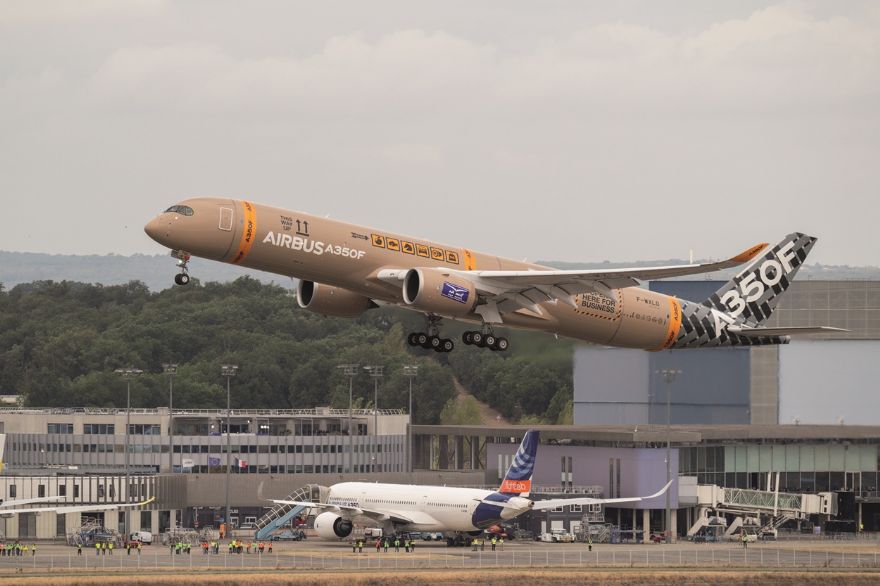
The first flight of
Airbus's new A350F marked a significant milestone in the evolution of air cargo transport, but while the freighter itself represents a new chapter for the aircraft manufacturer, one of its most important components arrives with a long-established operational pedigree.
Powering the aircraft on its maiden flight was the
Rolls-Royce Trent XWB-97, an engine that has already accumulated more than 4.5 million flying hours during eight years of service on the Airbus A350-1000. As a result, airlines investing in the next-generation freighter will be doing so with a propulsion system that has already proven itself in commercial operations around the world.
Based on the A350 passenger platform, the A350F has been developed to meet the changing demands of the global airfreight market. The aircraft has already secured 115 orders from 14 customers, reflecting strong confidence in its potential to deliver improved efficiency and capability for cargo operators.
Although freighter operations differ considerably from passenger services, Rolls-Royce believes the Trent XWB-97 is well prepared for the task. Cargo carriers typically place particular emphasis on payload, network flexibility and asset utilisation, often operating aircraft on schedules and routes that differ significantly from those of passenger airlines.
However, the company points out that the operational demands placed on the engine by the A350F will remain comfortably within a performance envelope already demonstrated in service.
The current A350-1000 fleet routinely undertakes flights averaging around nine hours in duration, while the Trent XWB-97 is recognised as the world's most utilised large commercial aircraft engine, spending on average around 14 hours in the air each day. These missions combine substantial passenger loads with significant fuel weights, creating some of the most demanding take-off and climb requirements in commercial aviation.
While the A350F is expected to fly shorter sectors carrying heavier freight payloads, Rolls-Royce says the overall challenge presented to the engine remains well understood.
Ian Smith, chief engineer for the Trent XWB programme, said: "For my engineering team, the starting point was to understand the freighter mission properly. We looked closely at expected payloads, stage lengths, utilisation and operating conditions and compared them with the real-world experience we already have from the A350-1000 fleet. That evidence gives us confidence that the Trent XWB-97 is ready for this new market."
The engine's maturity has not slowed development efforts. Rolls-Royce continues to invest heavily in the Trent XWB-97, using data gathered from millions of flight hours and maintenance events to further improve performance and durability.
Every flight generates operational insight, while overhaul activity provides engineers with a detailed understanding of how components perform in real-world conditions. According to Rolls-Royce, the Trent XWB-97 benefits from the industry's largest operational dataset for a new-generation high-thrust engine, enabling evidence-based decisions on future upgrades.
That ongoing development programme will see customers benefit from enhancements designed to extend engine life and improve durability. Rolls-Royce plans to introduce an upgrade package from 2028 that will deliver up to six years' time on wing, helping operators maximise aircraft availability while reducing maintenance-related disruption.
Phil Curnock, chief engineer for the Trent XWB-97 upgrade programme, explained: "The advantage of having millions of hours of Trent XWB-97 experience is that improvement is based on evidence, not assumption. We can see how the engine performs across different missions and environments and use that insight to target the upgrades that matter most to customers. That is what 'always ahead' means from an engineering perspective."
Beyond technical performance, Rolls-Royce is also emphasising the importance of long-term operational support. Customers operating the Trent XWB-97 can access the company's TotalCare service programme, which is designed to improve fleet availability and provide greater predictability around engine maintenance and operating costs.
Under the arrangement, Rolls-Royce shares responsibility for engine performance, aligning its own success with that of the airline. For cargo operators managing complex global logistics networks, the certainty offered by such support agreements can be as valuable as headline performance figures.
For prospective A350F operators, the combination of a new-generation cargo platform and an engine with millions of operational hours already behind it could prove particularly attractive. As the aircraft moves towards entry into service, Rolls-Royce believes that proven reliability, continued investment in durability and comprehensive aftermarket support will give cargo carriers confidence that they are adopting not only a new freighter, but a propulsion system already tested extensively in airline operations worldwide.
Pic courtesy of Airbus