Children growing up with AI are developing markedly different attitudes towards robotics than today’s adults, according to new international research by
Hexagon.
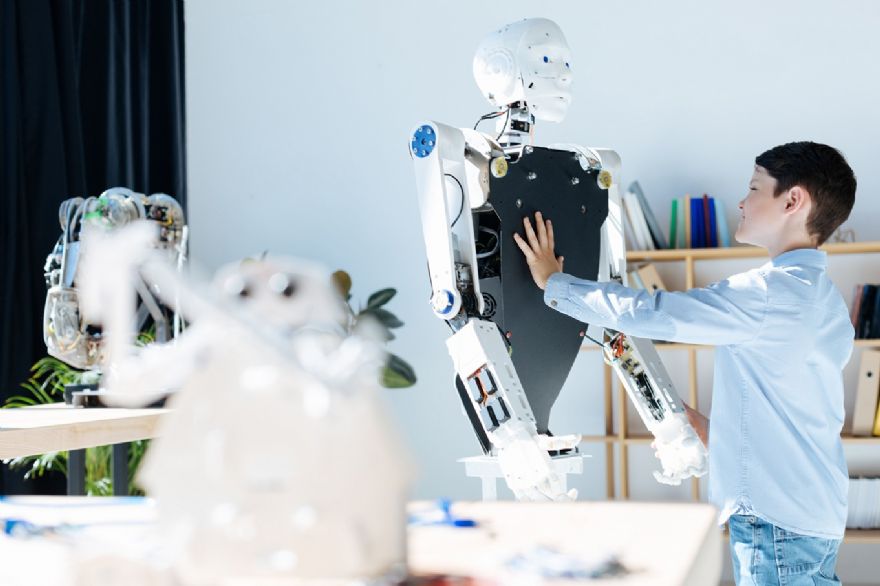
The study, covering nine countries, suggests the emergence of the world's first "Robot Generation", with young people showing significantly greater enthusiasm for robots and intelligent technologies than older generations. Overall, 80% of children surveyed said they were excited about robots, compared with 59% of adults.
The generational divide is particularly evident in the UK. Britain recorded the largest gap among the countries surveyed, with 80% of children expressing excitement about robots versus just 47% of adults. Elsewhere, attitudes were more closely aligned, with gaps of nine percentage points in China, 11 in India and 12 in Brazil.
According to Hexagon, the findings indicate that while enthusiasm for robotics is growing worldwide, acceptance among adults differs considerably from country to country.
One reason may be that today's children are growing up with far greater exposure to AI and robotics than previous generations. Globally, 85% of children reported using AI within the past three months, compared with 75% of adults. Children were also more likely to see value in accessing AI tools through a physical robot, with 63% supporting the idea versus 47% of adults.
Real-world exposure to robots also appears to influence attitudes. Nearly six in ten children (58%) said they had encountered a robot firsthand, compared with 48% of adults. In Britain, however, adults were considerably more likely to know robots through films, television, books and video games than through direct experience. While 77% had encountered robots through fictional portrayals, only 30% had interacted with one in real life.
British adults were also among the most sceptical. More than half (52%) expressed concerns about robots, compared with 44% in China and 29% in South Korea. The research suggests familiarity, and the type of familiarity people have with robotics, plays a major role in shaping perceptions.
The divide becomes even more apparent in workplace scenarios. Both adults and children are broadly comfortable with robots acting as assistants, with acceptance levels of 71% and 76% respectively. However, attitudes change when robots move into roles with greater responsibility.
Globally, 59% of children said they would be excited to work alongside a robot colleague, compared with 40% of adults. In the UK, the difference was even more pronounced, with 58% of children welcoming a robotic co-worker compared with just 28% of adults.
A small but notable proportion also envisaged robots in leadership roles. Twenty per cent of children said robots could be the boss, compared with 14% of adults.
Burkhard Boeckem, CTO of Hexagon, said the challenge is not preparing for a future in which robots replace people, but one in which intelligent machines become everyday collaborators.
"The biggest barrier to that future may not be the technology, but whether today's adults are ready for it," he said. "Children are already growing up comfortable with AI and increasingly familiar with robotics, and we need to make sure the rest of society isn't left behind."
When asked how they would use a personal robot assistant, children and adults again showed differing priorities. Young people were most interested in educational applications, with 60% wanting support understanding school lessons and 48% seeking help generating ideas for homework and projects.
Adults, by contrast, viewed robots primarily as productivity tools. More than half (53%) wanted assistance with routine administrative work such as note-taking, information gathering and simple research, while 38% favoured help with diary management and organising meetings.
Ferdinand Doepel, deputy head academic and innovation at Wimbledon High School, said the study highlights the need to prepare young people for a future in which AI and robotics play a larger role.
"The most surprising finding isn't that children are excited about robots, but that they're already imagining how they'll work alongside them," he said.
However, he cautioned that familiarity with technology does not necessarily mean understanding its implications. Students may be comfortable using AI tools but remain unaware of their limitations, the impact they can have on critical thinking, or the consequences of sharing data with them.
Hexagon believes education, industry and policymakers must work together to ensure future generations can use AI and robotics responsibly. The company argues that practical experience, combined with critical thinking, creativity and confidence, will be essential if robotics is to be adopted safely and productively at scale.