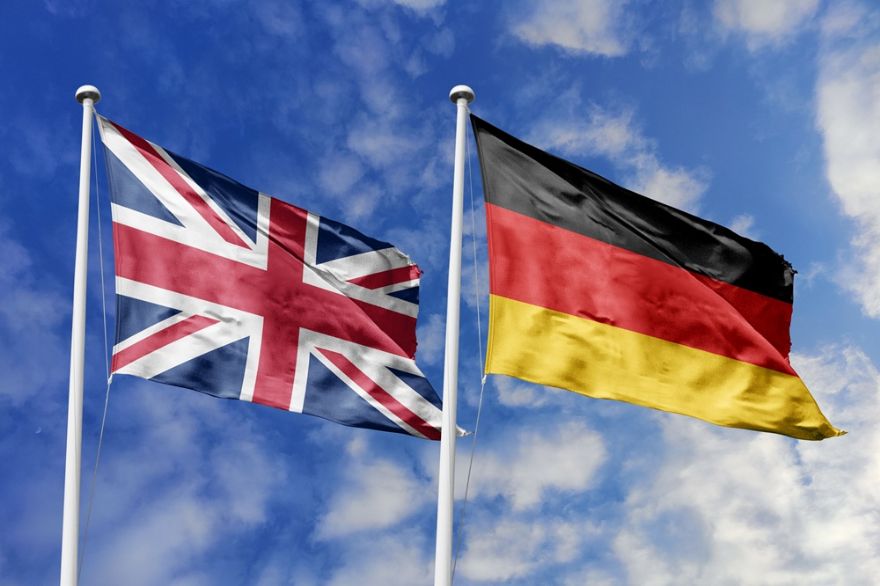
A new UK-Germany Industrial Tech Corridor has been launched to strengthen collaboration between businesses, researchers and investors, with the aim of accelerating technology adoption, creating high-skilled jobs and driving economic growth in both countries.
Announced during Prime Minister Andy Burnham’s recent visit to Berlin, the initiative forms a flagship part of the Kensington Treaty, the bilateral friendship agreement between the UK and Germany. It is designed to connect fast-growing technology companies with major industrial partners and investors, helping them develop commercial partnerships and scale more rapidly in international markets.
Backed by major German companies including Allianz, Bosch, RWE and Siemens, the corridor will focus on fostering collaboration in advanced technologies such as artificial intelligence (AI), quantum computing and other critical industrial technologies. The programme builds on the existing UK-Germany Strategic Science and Technology Partnership and aims to strengthen links between industry leaders, innovators and research organisations on both sides of the North Sea.
The UK Government said the initiative will help businesses secure new investment opportunities while encouraging the adoption of productivity-enhancing technologies across manufacturing, engineering and other industrial sectors.
Alongside the launch of the corridor, the two countries have also agreed to establish a joint £17 million (€20 million) fund to support collaborative quantum research projects. The funding will be used to accelerate work in areas including quantum computing, quantum-enabled financial services and next-generation sensing technologies.
Quantum technology is increasingly viewed as a key driver of future economic growth. Government estimates suggest it could contribute more than £200 billion to the UK economy and support around 100,000 jobs by 2045. The latest funding commitment follows the UK's ambition to become the first nation to build large-scale quantum computers domestically by the early 2030s.
Jonathan Reynolds, Secretary of State for Business, Innovation and Trade, said the new agreements would help deliver long-term benefits for businesses and workers in both countries.
He said: "Today's agreements are great news for British tech, businesses and workers. They mean more jobs, more investment and more innovations that will change lives."
Dr Karsten Wildberger, Federal Minister for Digital Transformation and Government Modernisation added: "Together with the UK, we’re building an ideal launchpad for AI companies to scale internationally. The UK-German Tech Corridor will accelerate scale-ups to enter Europe’s most advanced AI ecosystems. This partnership represents an important step to strengthening our digital sovereignty.”
The agreement is already prompting investment announcements from technology firms operating across both markets. Munich-based robotics research company
MicroAGI plans to expand its presence in London, creating 180 high-skilled jobs. Meanwhile, fusion energy specialist
Proxima Fusion is expanding its operations at Culham in Oxfordshire and says it could quadruple its workforce there by 2028.
UK-based AI software specialist
Quantexa has also announced plans to establish a dedicated sovereign technology unit in Germany to support deployment of its systems across both countries.
The latest measures build on a £2.4 million joint UK-German R&D funding call launched last month, targeting projects in clean energy, life sciences and engineering biology. Research teams from both countries can apply for grants of up to £350,000 to develop technologies with commercial potential.
Germany is already the UK's second-largest trading partner, contributing an estimated £155 billion to the UK economy. The new Industrial Tech Corridor is intended to deepen that relationship further, creating new opportunities for manufacturers, technology developers and investors while strengthening European industrial supply chains and innovation capabilities.