In automotive manufacturing, a missing component can have consequences far beyond the warehouse. If a required part is not available at the correct location when needed, material supply is delayed and production schedules can quickly come under pressure. In the worst cases, assembly operations may have to stop, even though the component is physically somewhere on site.
For logistics managers, production planners and supply chain teams, effective warehouse management is therefore closely linked to production reliability. The challenge is not simply holding more stock. It is knowing exactly what is available, where it is stored and whether it can reach the production line on time.
Accurate data underpins availabilityAutomotive warehouses manage a wide variety of products, ranging from small components and electronic parts to larger assemblies and production materials. These items may move several times between goods receipt, reserve storage, picking zones and production supply areas.
Each movement that is not recorded reduces inventory accuracy and increases the risk of disruption. Digital warehouse management systems help overcome this by recording goods receipts, putaway, relocations and picking activities in real time. As a result, storage locations and stock quantities remain linked to each item, giving employees an up-to-date view of inventory across the site.
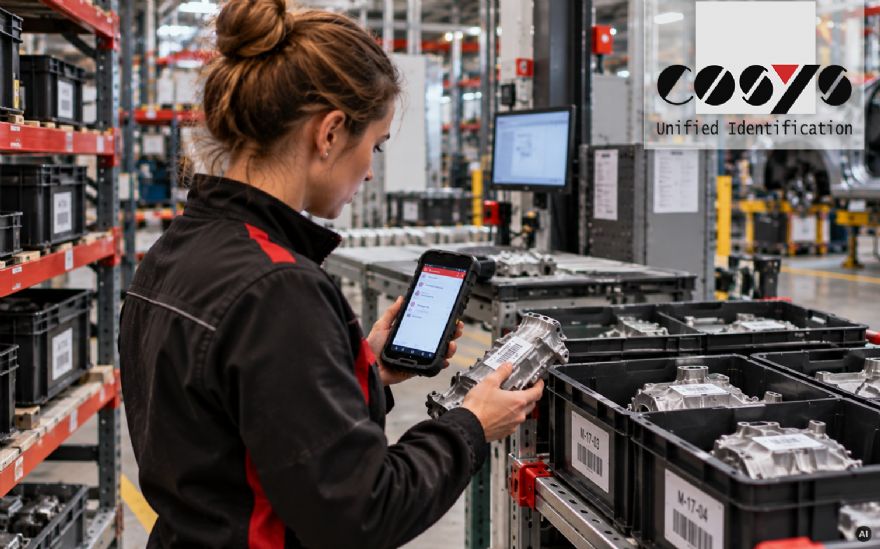
Mobile data capture devices such as the
Cosys Zebra TC701 enable staff to scan materials and storage locations directly at the point of movement rather than recording information later at a workstation. This improves data accuracy and visibility throughout the warehouse.
However, total inventory figures alone do not guarantee material availability. A business may have hundreds of units of a component on site, but if most of that stock is held in reserve storage while production supply areas are nearly empty, manufacturing operations can still face shortages.
Warehouse management must therefore focus on location-specific availability as well as total stock levels. This is especially important in automotive facilities where components may be supplied to multiple assembly lines or production cells. Digitally managed replenishment and transport processes help ensure stock movements are documented and visible, preventing materials from disappearing into operational blind spots.
Visibility and traceabilityIn automotive logistics, quantity is often only part of the story. Depending on the application, organisations may also need access to batch numbers, serial numbers or handling unit information.
Digital capture allows these details to remain linked to stock movements throughout the warehouse. When material is relocated, picked or supplied to production, every transaction can be traced, creating a reliable audit trail.
This level of transparency helps warehouse and production teams answer key operational questions. They can quickly identify which stock was used, where it originated, where it has been moved and what quantities remain available. For automotive manufacturers and suppliers working within tightly coordinated supply chains, such traceability can prove invaluable when investigating shortages, discrepancies or quality-related issues.
The real value of warehouse data emerges when it is used not only to document activity but also to support planning and decision-making. Business Intelligence tools can analyse inventory levels, stock movements, material consumption and other key performance indicators, helping managers identify products that are reaching critical levels unusually quickly.
Forecasting tools can add a forward-looking dimension by using historical consumption and movement data to identify recurring demand patterns. While forecasts cannot eliminate fluctuations in production requirements, they provide planners with a stronger basis for anticipating potential shortages before they become operational problems.
From data collection to process improvementInventory shortages do not always stem from purchasing issues or inadequate stock levels. In many cases, sufficient material exists but internal processes prevent it from reaching production in time.
Process Mining technology helps organisations identify these bottlenecks by analysing recorded warehouse events and reconstructing actual process flows. The results can reveal replenishment orders that remain open for too long, unnecessary storage movements or internal transfers that regularly take longer than expected.
Such insights are important because increasing safety stock will not solve a process issue if the real cause of the problem lies in inefficient material movement. Instead, businesses can focus improvement efforts on the specific stages creating delays.
Achieving reliable automotive logistics requires a careful balance. Too little stock increases the risk of shortages and downtime, while excessive inventory ties up working capital and consumes valuable warehouse space.
By combining warehouse management, mobile data capture, Business Intelligence, forecasting and Process Mining, manufacturers can address both sides of the challenge: ensuring enough material is available while also making sure it moves through the warehouse efficiently. For automotive manufacturers and suppliers, this creates a data-driven approach to improving production continuity without relying solely on larger inventory buffers.