 Horizon Microtechnologies
has secured a grant-backed manufacturing development project aimed at industrialising its metallised polymer micro-additive manufacturing (micro-AM) technology for satellite applications.
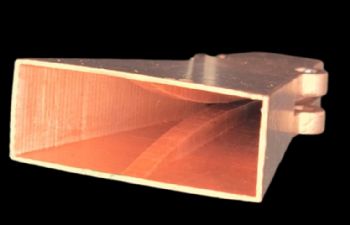
The two-year initiative, supported by approximately €500,000 in funding, will focus on scaling the company’s 3D-printing and coating capabilities to support high-volume production of satellite hardware. A key target application is the manufacture of up to 50,000 precision-coated shielding housings for use in satellite constellations.
The project marks a significant step in the company’s transition from demonstrating technical capability to establishing a scalable manufacturing platform. Horizon Microtechnologies has already proven the performance of its metallised polymer micro-AM components in space and radio-frequency applications, and the latest programme is intended to create a repeatable production framework capable of supporting real-world satellite deployment requirements.
“The project is about the next step, taking a validated technology platform and building a manufacturing pathway geared towards the prices, lead times and throughput required for supplying and supporting satellite constellations with advanced components,” said Andreas Frölich, chief executive of Horizon Microtechnologies.
The company’s manufacturing process combines precision polymer 3D printing with advanced metallisation and functional coating technologies. According to Horizon Microtechnologies, the resulting components offer metallic surface properties while retaining the low weight, design flexibility and integration benefits associated with polymer-based additive manufacturing.
The technology is particularly relevant to the satellite sector, where phased-array antennas and other payload systems often require hundreds of shielding housings or antenna elements per satellite. With constellation deployments frequently involving hundreds of satellites, production volumes can quickly reach tens of thousands of parts.
Horizon Microtechnologies estimates that its approach could deliver substantial cost savings compared with conventionally machined metal components, while reducing component weight by around 40%.
“The space economy needs more than innovation, it needs credible routes to industrial production,” said Frölich. “When a component appears tens of thousands of times across a satellite constellation, weight, cost and manufacturing repeatability become decisive. That is where Horizon can make a meaningful difference.”
Alongside expanding production capacity, the project will support investment in coating scale-up, process verification activities and collaboration with a specialist research partner. The company believes its expertise across the entire manufacturing chain, from micro-scale additive manufacturing through to metallisation and finishing, will be central to converting proven component concepts into repeatable, industrial-scale production.
As demand for satellite constellations continues to grow, the project is expected to strengthen Horizon Microtechnologies' position as a supplier of lightweight, high-performance components capable of meeting the cost and volume requirements of the rapidly evolving space sector.