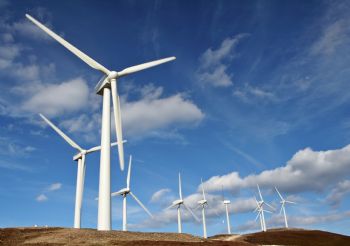
China’s largest wind-energy company — Goldwind — has partnered with the University of New South Wales (UNSW) in Australia to establish the country’s first laboratory for testing wind-power technology.
The $1.45 million in funding is the first result of a memorandum of understanding signed at the UNSW China Center Inauguration in Shanghai earlier this year, which aims to bolster on-going research between the two organisations.
Joe Dong, power systems engineer at UNSW, said: “Wind power and photo-voltaics are the most important renewable-energy sources for the future. Further investment from Goldwind will fund research projects covering wind-power studies, wind turbine noise control and water-processing technologies.”
Wind is now an established technology that accounts for 33.8% of Australia’s renewable-energy supply and 5.7% of the country’s overall power production, but “there are still some problems to be solved in efficiency, stability and frequency control.”
Because Australia’s energy grid requires electricity to be delivered at a frequency of exactly 50Hz, generation can sometimes be disrupted when wind speeds change rapidly.
“Currently, we do not have a facility in Australia to test wind turbines before connecting them to the grid, so we must do this in the USA or Europe, which is very expensive — and the foreign electricity grids don’t perfectly mimic the Australian system.”