At the
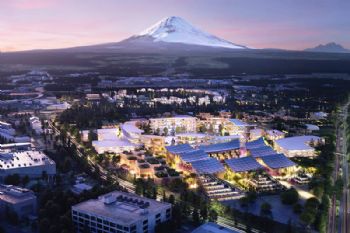
CES trade show held earlier this month in Las Vegas, Toyota revealed plans to build a prototype “city of the future” on a 175-acre site at the base of Mount Fuji in Japan. Called the Woven City, this will be a fully connected ecosystem powered by hydrogen fuel cells.
Envisioned as a “living laboratory”, the Woven City will serve as a home to full-time residents and researchers, who will be able to test and develop technologies — such as autonomy, robotics, personal mobility, smart homes and artificial intelligence — in a real-world environment.
Akio Toyoda, president of Toyota Motor Corporation (
www.global.toyota/en), said: “Building a complete city from the ground up, even on a small scale like this, is a unique opportunity to develop future technologies, including a digital operating system for the city’s infrastructure.
"With people, buildings and vehicles all connected and communicating with each other through data and sensors, we will be able to test connected AI technology in both the virtual and the physical realms, maximising its potential.”
Toyota said it will extend an open invitation to collaborate with other commercial and academic partners, and it will invite scientists and researchers from around the world to come and work on their own projects in this ‘one-of-a-kind real-world incubator’.
“We welcome all those inspired to improve the way we live in the future to take advantage of this unique research eco-system and join us in our quest to create an ever-better way of life and mobility for all.”
The master-plan of the city includes three types of street usage: for faster vehicles only; for lower-speed vehicles, personal-mobility vehicles and pedestrians; and for pedestrians only.
The city is planned to be fully sustainable, with buildings made mostly of wood (to minimise the carbon footprint), using traditional Japanese wood joinery, combined with robotic production methods.
The rooftops will be covered in photo-voltaic panels to generate solar power, in addition to power generated by hydrogen fuel cells.