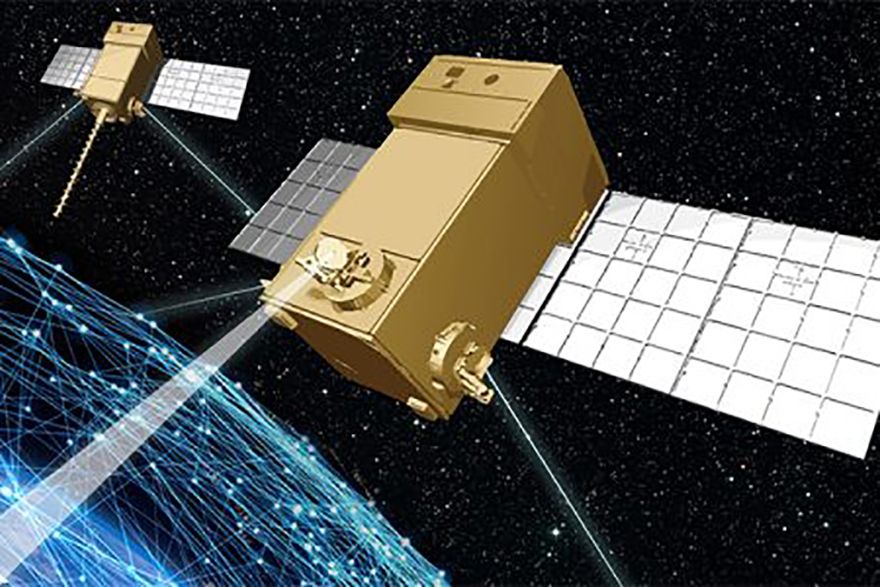
The USA’s Space Development Agency (SDA) has awarded a ‘Tranche 0 contract’ of the Space Transport Layer to Lockheed Martin, to demonstrate — in just two years — a mesh network of 10 small satellites that links terrestrial ‘warfighting domains’ to space sensors.
This $187.5 million contract is an initial test and demonstration phase, with two prime contractors building a total of 20 satellites.
Kay Sears, vice president and general manager of Lockheed Martin Military Space, said: “We see a world across all ‘warfighting domains’ where fourth and fifth-generation fighters and tactical forces on the ground can connect seamlessly with ‘holistic situational awareness’.”
The 10 satellites, operating in Low Earth Orbit, will provide secure high-bandwidth low-latency data links, introducing a new Link 16 network connectivity to space.
This capability will connect to a number of systems, including fighter aircraft like the F-16, F-22, and F-35, as well as missile defence networks like PAC-3 and THAAD.
Each Transport Layer satellite will be fully-software defined using SmartSat, Lockheed Martin’s software-defined platform that makes it easier to ‘dynamically add and quickly change missions in orbit’ via simple app uploads.
The satellites will also be fully ‘cyber-hardened’ from day one using Lockheed Martin’s ‘Cyber Resiliency Level’ model to identify cyber strengths and weaknesses so that they can be addressed early in the design process and contribute to resilience in space communications.