Spain-based
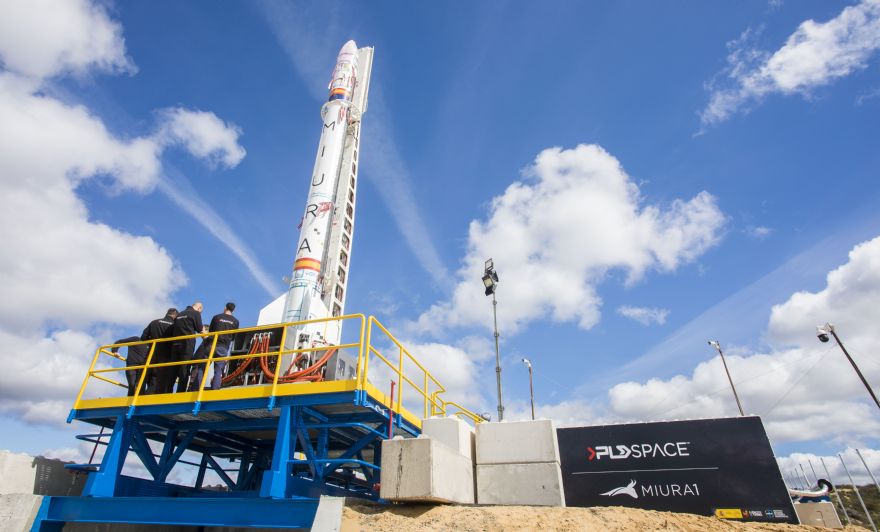
PLD Space, a European leader in small satellite space launches, achieved a major milestone last week for European Space, successfully completing the hot test of MIURA 1, from its launch base in El Arenosillo (Huelva). PLD Space is now looking forward to the first MIURA 1 SN1 test flight.
The hot test consisted of keeping the MIURA 1 engine on at full power for 5sec to check the
perfect operation of different parameters and systems of the rocket (ignition system,
temperature, and rocket pressure) in a simulation environment.
The company has already received permission from the National Institute for Aerospace
Technology (INTA) to operate in a flight test window extending until 31 May, although it is not
yet possible to announce the exact day of the launch due to security reasons, weather
forecasts and the dynamics involved in the launch operations.
Raul Torres, co-founder and CEO of PLD Space, said: “The objective of this first flight of
the MIURA 1 SN1 technology demonstrator will be to gather as much information as possible
to further validate much of the design and technology that will later be transferred and
integrated into MIURA 5.”
The MIURA 5 model will be the launcher with which PLD Space expects to start its commercial
activity in 2025 and whose development phase has already started recently in the facilities
that the company is currently expanding within the Teruel Airport site.
Ezequiel Sanchez, executive president, added: “In this experimental flight, our
definition of success is that the rocket should be as far away from the launch pad as possible.
We are aware that it is already an achievement for us, the industry and for all of Spain to be
able to place MIURA 1 on the launch pad. For every second MIURA 1 is in the air, we will be
learning and gathering data for the development of MIURA 5. After 12 years, PLD Space will
be the first private micro launcher company to reach this historic milestone in the European
space race.”
Raúl Verdú, co-founder and chief business development officer, concluded: “Looking to the
immediate future, the success of a test like this is measured by how much we can learn, which
will improve our reliability and probability of success in the future. We did MIURA 1 to
accelerate the technology development of MIURA 5 and we see the team moving forward
with amazing speed.”