New Zealand-based
Dawn Aerospace has successfully completed a full-duration, bi-propellant test of its Mk-II Aurora spaceplane’s rocket engine. The Mk-IIB will be a uniquely capable vehicle with commercial applications in atmospheric, microgravity, and high-speed flight research as well as Earth observation.
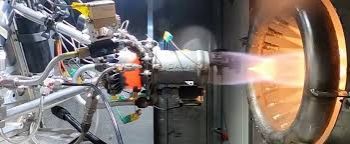
The Mk-IIA engine was fired for 112sec at the company’s test facility in Christchurch, New Zealand, and has been designed This engine will be fitted to the Mk-II Aurora, a sub-scale technology demonstrator for the Mk-III – Dawn’s two-stage to orbit solution for scalable and sustainable space access.
The Mk-II Aurora has already completed 50 test flights, 47 with jet engines and three under rocket power in March 2023. Dawn’s propulsion team have been working on improvements in preparation for the next set of flight tests, set to take the vehicle to supersonic speeds and above 20km altitude in early 2024 to complete the test campaign of the Mk-IIA.
The rocket engine is powered by HTP and kerosene as propellants, rather than the more commonly used liquid oxygen, and were selected because of their storability and deep throttling capabilities. These are crucial factors as Dawn builds towards having a global fleet of spaceplanes with aircraft-like operations.
Ralph Huijsman, lead propulsion engineer, said: “While HTP is the right long-term choice for the spaceplane, it led to some interesting challenges in the development of the engine. The available information is extremely limited and is often outdated or walled off. This meant we ran into some fundamental challenges along the way that were difficult to engineer our way out of. That makes this achievement even more special. It is exciting to see everything come together and work flawlessly.”
CEO of Dawn Aerospace, Stefan Powell said: “The team has put in significant work to reach this milestone. We're excited about our future flights where we’ll fly much higher and faster than ever before.”
The next phase in the development roadmap for the Mk-IIA is to test critical aspects of operating the vehicle such as high-altitude operations and BVLOS flights (beyond visual line of sight). The Mk-IIB will incorporate all the learnings from the Mk-IIA to achieve an optimised vehicle for flights to 100km. In doing so, it will be the first vehicle to fly to outer space twice in a day.