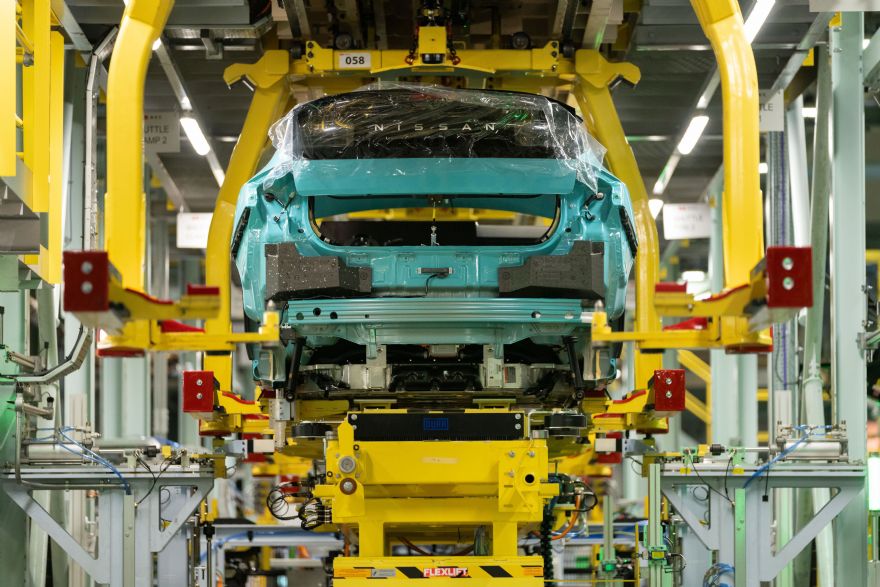
 Production of next-generation Nissan Leaf in Sunderland has begun
UK vehicle production fell by -14.3% in November with 65,932 units leaving factory lines, according to the latest figures published today by the
Society of Motor Manufacturers and Traders (SMMT). The decline was driven by a slight reduction in car output, down -1.7% to 63,126 units, and a much steeper -78% drop in commercial vehicle (CV) output, with just 2,806 units produced — 9,943 fewer than in the same month last year.
While it was the fourth successive monthly decline in car production, just 1,090 fewer cars were made than in the same month last year as production gradually normalises following the cyber incident at Britain’s largest automotive employer. Van, truck, bus and coach volumes, meanwhile, declined for the eighth month in a row, reflecting the consolidation of two plants into one in the North West.
Overall car production for the UK market rose by 46.9% to 14,589 units, while output for export declined -10.6% as shipments to the top five export markets — the European Union (EU), the USA, Turkey, China and Japan – all fell. In total, 48,537 cars were produced for global markets, representing more than three-quarters (76.9%) of total output.
The news came in a mixed week for the sector, with the start of next-generation volume electric car production in Sunderland contrasting with the European Commission’s plans to tie new additional flexibilities on CO
2 targets and public subsidies for the ‘greening’ of corporate fleets to cars and vans ‘made in the EU’. The proposal by the EU to permit a greater range of technologies beyond 2035 will put the UK out of step with its largest market and biggest source of vehicles. We need to avoid unnecessary complexity and uncertainty for businesses considering investment decisions in the UK.
The new EU automotive package is intended to ease the transition to low-carbon products and strengthen the European automotive industry. The UK automotive industry, however, has cautioned that excluding like-minded trading partners — especially the UK, given it is the largest destination for EU finished vehicles, while the EU is the biggest buyer of British vehicle and parts exports — would be counterproductive, with damaging consequences across the Channel.
The measures outlined so far risk raising costs and limiting choice for EU consumers, impacting supply chain resilience and undermining regional integration. Moreover, it will damage the mutually beneficial trading relationships that have been agreed over the past few years. Instead, the UK automotive industry is calling for the UK and EU to deepen their industrial partnership, maximising the EU-UK Trade Cooperation Agreement (TCA), with UK-made automotive content to be included under any ‘Made in Europe’ definition to boost mutual competitiveness.
Mike Hawes, SMMT chief executive, said: “Car production is normalising following August’s cyber incident and, with the manufacture of a new EV model starting this week in Sunderland, the sector can look forward with some optimism. Growth is expected next year, with the industry poised to reap the benefits of recent UK Government backing — notably new funding, modernised trade deals and efforts to reduce energy costs. The growth this package seeks to create, however, would be undermined if the UK becomes the main unintended victim of new EU local content requirements. We must instead work on a pragmatic and inclusive approach, one which protects and enhances competitiveness across the European automotive ecosystem.”