Photo by
Homa Appliances on
Unsplash The manufacturing industry is continually seeking ways to integrate sustainable practices into its operations and address the environmental challenges it poses. For instance, the manufacturing industry has been associated with pollution through the use of fossil fuels for energy, several industrial processes, and improper waste disposal. This is why it needs to adopt more sustainable practices to solve some of these problems.
The good news is that technology can help manufacturing businesses become more sustainable. Nowadays, customers worldwide have come to understand the importance of sustainability, and they are prioritising businesses that focus on green practices over those that harm the planet. So, by switching to eco-friendly practices, the manufacturing industry can gain a competitive edge while reducing carbon emissions and increasing efficiency. Many of these practices can be achieved through automation. In this article, we will explore how the manufacturing industry can become more sustainable through automation.
Automation can reduce energy consumptionOne of the best advantages of integrating automation in the
manufacturing industry is reducing energy consumption. In this way, businesses can lower the carbon emissions associated with their practices and focus even more on sustainability. Many technologies highlight the use of automation, and will cut the energy consumption. Here are some of them.
Machine learning algorithms — will collect data and identify a business's strengths and weaknesses, enabling it to find solutions to its problems. In this way, they can see if the machines have an optimal energy consumption.
Smart sensors — will also help businesses in the manufacturing industry better control their electrical consumption. These sensors are placed on machinery and then connected to Wi-Fi. If these sensors detect that the machines are not in use, they can turn them off, thereby saving electricity.
Reduce pollutionAutomation can also reduce carbon emissions, which are prevalent in the manufacturing sector, where transportation and electric power are among the largest CO
2 emitters. Manufacturing businesses that have taken steps to reduce pollution will improve satisfaction with their partners and customers. These companies can even promote their approach to making a positive change on the planet across many platforms, such as their
business email or social media apps.
There are many technologies focused on automation that can reduce emissions, such as:
Automated systems reduce the chances of errors. This is essential in the manufacturing sector, which may also involve hazardous materials. If these materials are spilled, they can contaminate the soil and lead to even more pollution. It is a better idea to integrate automation to reduce the risk of spills and leaks, which have consequences for the planet.
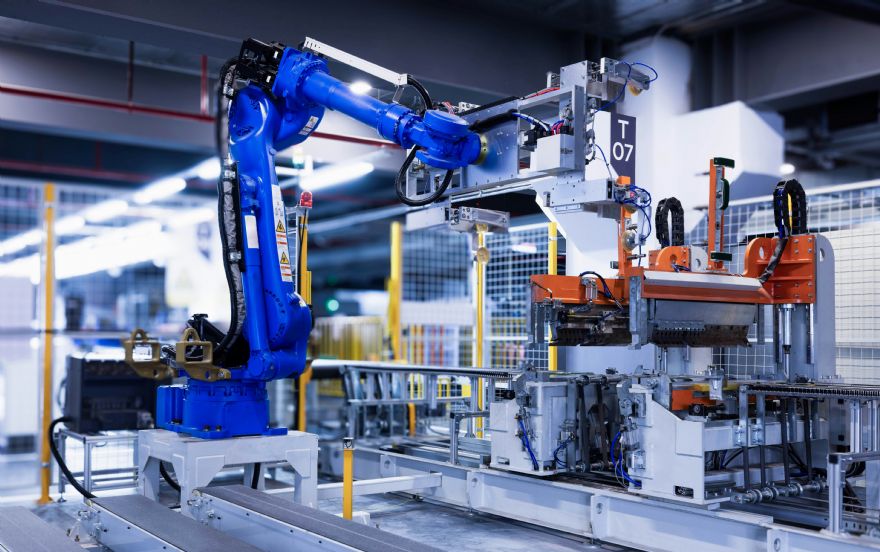
Industrial robots — can perform repetitive tasks much faster, thereby reducing energy consumption in production.
Air quality monitoring — businesses can implement the necessary changes if they receive alerts about increased carbon emissions.
Cutting the amount of material wasteThe manufacturing industry also generates significant
material waste, which, if it ends up in landfills, will further harm the environment. There, they will cause even more environmental issues, which is why it is better to address this problem early.
Automation can address some of these challenges and ultimately reduce waste. Here is how automation accomplishes this:
Better inventory — AI-powered analytics leverage automation to keep real-time insights regarding the inventory status of a manufacturing business. So, companies will finally avoid dealing with material surpluses, which harm the planet.
New production methods — the manufacturing business has also adopted new production methods, such as Just-in-Time (JIT). In this method, businesses only create products when customers actually need them. Toyota is one of the businesses that has integrated the JIT method in the 1970s. They do this through automated supply tracking, proper timing, and careful project management.
Demand forecasting methods — businesses are also utilising methods to forecast demand. They do this by analysing data such as trends and customer research, which is an eco-friendly approach because it doesn’t lead to overproduction.
Improving efficiencyAnother essential advantage that automation is bringing to the manufacturing landscape is increased efficiency. The result? Cutting waste and lowering emissions, while
streamlining operations and using less energy. Automation can benefit many people. For employees, they will have an aid, especially for very repetitive tasks or those associated with high risk. Customers will receive better products while also knowing that their purchases do not generate additional carbon emissions. Plus, this approach will significantly impact the company’s bottom line.
The businesses that have decided to bring automation into their operations will be able to streamline their operations, cut energy costs, and also contribute to sustainability practices. Amazing, isn’t it?
ConclusionMost fear of automation. For example, employees wonder whether this technology might take their jobs, and businesses might be afraid to improve their operations with this change. However, automation helps both employees and companies by eliminating repetitive and high-risk tasks. As the planet already faces severe consequences, including climate change, it is more important than ever to act. Each individual and business has an impact on the environment, and we need collective action to help the planet recover from the harm we already produced.
The manufacturing industry has generated significant pollution, so it must begin to look for ways to reduce its carbon footprint. Automation can help it achieve its ideals and address many of the shortcomings that lead to high carbon emissions. This is why many businesses in this sector have already leveraged automation and will continue to integrate it further in the future.
So automation has transformed from a nice-to-have to a must-have feature, and it shouldn’t be overlooked if companies are committed to integrating eco-friendly practices.