Machinery freight covers the movement of industrial equipment between businesses, whether transporting machines to a new buyer, relocating assets between operational facilities, or managing the import and export of machinery as part of wider commercial activity — transport cost, timing, documentation and compliance can influence deal values and dictate how reliably equipment reaches its destination.
In 2026, the efficiency of machinery transport remains a decisive factor for manufacturers, dealers and resellers, particularly when handling high‑value or second‑hand machinery that must arrive safely and on schedule.
Core concepts and challengesMachinery transport differs from standard freight because the cargo itself is rarely uniform. Industrial equipment such as printing presses, lathes or food‑processing lines often weigh several tonnes and are built in shapes that do not conform to traditional pallet sizes. These characteristics create a need for specialised handling, careful route planning and, for over-sized or heavy loads, strict adherence to movement permits.
Most machinery exceeds normal palletised freight dimensions, and since Brexit, differences between domestic and cross‑border regulations have made planning even more critical. Documentation must be accurate and complete, and for any shipment beyond the UK, the customs process now forms a crucial part of the logistics timeline.
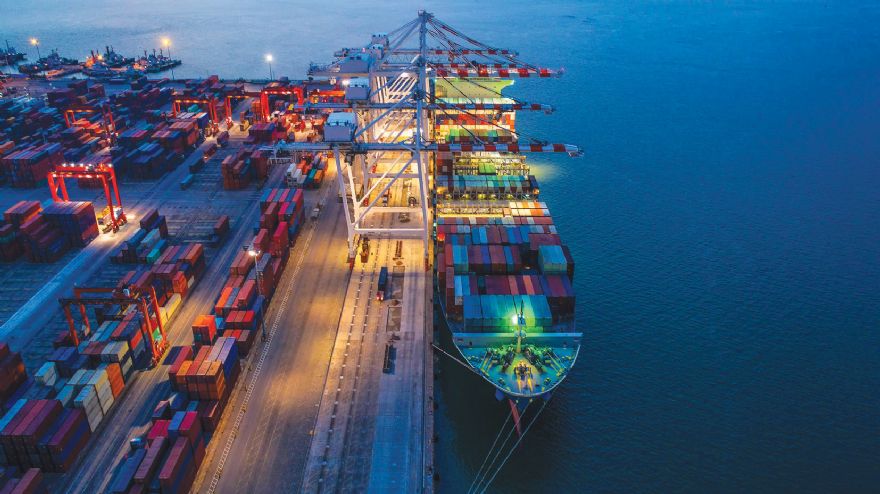
Road freight services continue to be the dominant method for machinery moved within the UK and throughout Europe. Beyond Europe, shipments typically rely on air or sea freight, with full container loads used for large consignments and less‑than‑container loads providing flexibility for smaller machinery moves.
Industrial and mechanical equipment remain among the UK’s strongest export categories, contributing tens of billions of pounds annually and reinforcing the importance of smooth, compliant logistics.
Documentation plays a central role in the freight process. A commercial invoice must detail the machinery, its value and both the sender’s and receiver’s information. A packing list is required to outline the exact dimensions and weight of each piece. Certain categories of equipment need export or import licences, and a Certificate of Origin may be necessary where trade agreements apply. When machinery travels by road across borders, the CMR consignment note serves as formal proof of the contract of carriage.
Why choose a freight forwarder?Many companies choose to work with freight forwarders because the administrative and regulatory demands are increasingly complex. Acting as intermediaries, forwarders manage transportation, documentation and customs procedures. In 2024, more than 1,000 UK freight forwarders were listed by BIFA, giving businesses access to extensive expertise. Their knowledge of UK and international regulations helps prevent costly errors; in one notable case in 2023, a manufacturer avoided a £10,000 fine because a forwarder identified missing export certificates before departure. Forwarders also coordinate ‘groupage and less‑than‑truckload movements’, allowing smaller machinery shipments to benefit from shared transport costs.
Costs and transit times vary depending on the chosen transport mode. Road freight can deliver machinery within one to seven days across the UK and Europe, making it the most flexible option. Sea freight typically ranges from seven to 30 days and is suited to high‑volume or non‑urgent global shipments. Air freight, although more expensive, remains the fastest channel for urgent or sensitive machinery, often arriving within one to five days.
Preparing machinery for transport requires accurate measurements of every component, including length, width and height, along with an assessment of whether specialist lifting equipment or rigging teams are needed. High‑value machinery should always be protected by transit insurance, and most experienced freight forwarders can guide companies through the available options. With peak periods such as the pre‑Christmas season creating pressure on capacity, advance booking remains essential. For many businesses, the immediate problem‑solving and real‑time communication provided by a seasoned freight forwarder can be the difference between an on‑time delivery and a costly operational delay.
Comparing freight solutions — the pros and consWhile direct carrier bookings can appear simpler, they often restrict flexibility and leave the responsibility for documentation and issue‑resolution firmly with the shipper. Freight forwarders offer a wider range of route options, provide access to groupage services and maintain specialist teams who intervene quickly when complications arise.
Many businesses therefore report smoother operations and more reliable cost control when a trusted forwarder is involved in machinery transport. Machinery freight within the UK, and to and from Europe, is most effectively managed via road services, with sea and air freight supporting global or time‑critical movements. Successful shipments depend on correct documentation, informed route selection and close attention to regulatory requirements.
By working with an experienced freight forwarder, businesses can ensure that every stage—from paperwork to transit updates — is handled professionally, reducing operational stress, safeguarding valuable machinery and improving overall cost efficiency. For companies planning machinery movements in the months ahead, seeking advice or a tailored quotation from an established forwarder remains a prudent next step.