Rising tungsten prices, tightening supplies of critical raw materials, and increasing demand from high-end manufacturing sectors are continuing to reshape the cutting tool market. Throughout 2025, carbide rod and cutting tool manufacturers introduced several price adjustments, with their full impact expected to be felt more acutely during 2026. This has placed fresh pressure on manufacturers, who now face not only higher costs but also the need to reconsider how tools are designed, applied, and maintained on the shopfloor.
Tungaloy is addressing this challenge by focusing on tool architecture itself. Rather than relying solely on traditional solid carbide designs, the company is promoting exchangeable-head systems that cut material usage, reduce waste, and help stabilise costs — while still delivering the high-level performance demanded by modern machining environments.
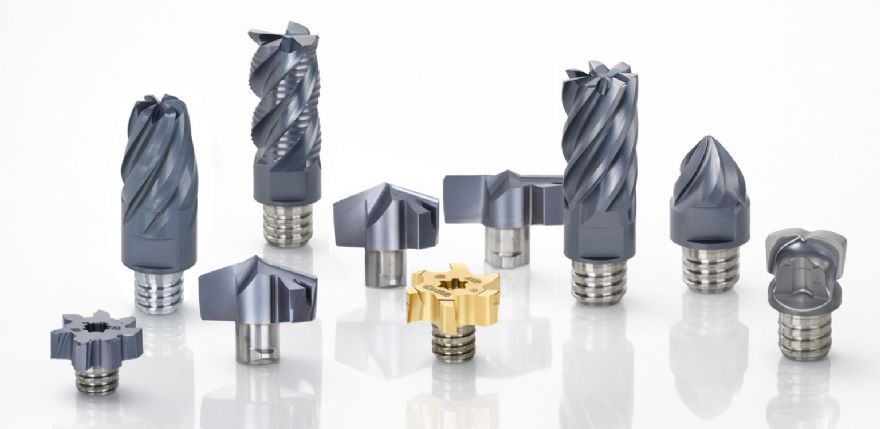
Conventional solid carbide tools must be replaced in full once worn, a practice that consumes significant amounts of carbide and exposes users to the volatility of raw material markets. By contrast, exchangeable-head systems allow only the working head to be replaced, offering a more efficient way to manage both material consumption and cost fluctuations. Tungaloy’s DrillMeister drilling line and TungMeister milling system are based on this concept, giving manufacturers a more resource‑efficient alternative to traditional tooling.
Greater versatilityThis architecture also brings greater versatility. TungMeister supports a broad range of milling operations — from high-feed and face milling to shoulder, slotting, and chamfering — via dedicated interchangeable heads. DrillMeister applies the same principle in drilling, with specialised heads covering a variety of holemaking requirements. The ability to swap heads quickly enables shops to react to changing production demands while maintaining tighter control over tooling stock.
Tighter tolerances, higher surface quality expectations, and increased tool consumption are now common across advanced manufacturing sectors. Systems that combine material efficiency with modular flexibility help manufacturers balance performance, cost stability, and long-term resource stewardship in these environments.
Tungaloy maintains that, as material prices continue to rise, the industry must look beyond short-term responses and consider more fundamental changes. Smarter, long-term solutions are needed. Solutions built into the architecture of the tool itself. By reducing waste and improving adaptability, manufacturers can support both productivity and stability, even as market conditions evolve. Or, as the company notes, in challenging times it is important not to lose focus — or, quite literally, not to lose your head.