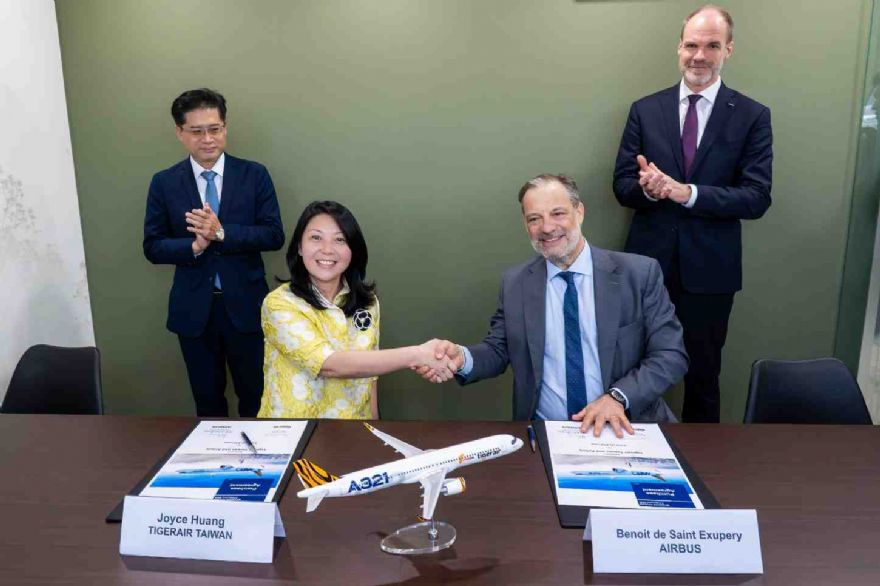
 Photo: Airbus SASTigerair Taiwan
 has placed its first order for the
Airbus A321neo after signing a purchase agreement for four aircraft. The low‑cost carrier, which currently operates a fleet of 17 A320 Family aircraft comprising nine A320ceo and eight A320neo, will use the new aircraft to expand its regional network and improve operating efficiency. Airbus said the additional fleet commonality will help the airline reduce training, maintenance and overall operating costs.
Joyce Huang, chairperson of Tigerair Taiwan, said: “The purchase of A321neo aircraft is a cornerstone of our ‘third-generation’ fleet expansion, designed to maximise operational efficiency as we scale for regional dominance. Configured with 232 seats, the A321neo allows us to increase capacity on our high-demand ‘golden routes’ and accelerate network expansion. By serving more passengers across more destinations with a lower cost per seat, this investment reinforces our position as Taiwan’s leading LCC. Furthermore, it advances our journey toward a younger, more fuel-efficient fleet that meets both our commercial and ESG targets.”
Benoît de Saint‑Exupéry, Airbus EVP sales of commercial aircraft business, said: “We are pleased to see Tigerair Taiwan reaffirm its confidence in Airbus as it takes another step in its fleet growth. The addition of the A321neo will complement its existing A320 fleet. The A321neo is the ideal platform for Tigerair Taiwan to capture growing demand while maintaining its commitment to cost-effective operations.”
Airbus describes the A321neo as the largest member of the A320neo family, offering improved operating economics, extended range capability and the ability to serve both regional and medium‑haul routes with greater flexibility. The aircraft delivers a fuel‑burn and CO
2 reduction of at least 20% compared with older single‑aisle types. To date, the A320neo Family has accumulated more than 10,000 orders from over 130 customers worldwide. All Airbus aircraft are currently certified to operate with up to 50% Sustainable Aviation Fuel, with the manufacturer targeting full 100% SAF capability by 2030.