As the aerospace sector enters a period of sustained production ramp‑up and rapid technological change, one trend is becoming increasingly clear: the long‑term capability of the industry will rely heavily on the talent entering through apprenticeship routes. Competition for skilled people remains intense across the UK aerospace supply chain, giving
National Apprenticeship Week added significance for manufacturers seeking to secure the next generation of engineers.
For
ASG Aerospace, the week has highlighted the strategic role that apprenticeships play throughout its operations in the UK and Germany. Jasmine Hibbert, now in the fifth and final year of her
Electro‑Mechanical Engineering Degree Apprenticeship, explained how she first found her path into aerospace.
She said: “I heard about the role through my engineering teacher at school and he advised me that attending the open day would be a good idea. I always had an interest in practical applications, specifically engineering, so I wanted to pursue a career in it and liked the idea of an apprenticeship to be able to work and learn at the same time.”
She added: “With my degree I enjoy being able to do a qualification and study with other people outside of the business and learning while working. If you are looking to complete an apprenticeship, just do it! The benefits are amazing and you have no student debt — it is hard to do with time management, but it is well worth it!”
According to Mandy Ridyard, financial director of ASG Produmax, the company’s broad apprenticeship offering is deliberate. She said: “Aerospace manufacturing demands consistency, discipline and curiosity. Apprentices bring all three. When you train people in your own environment, on your own processes, you build skills that last and cultures that sustain growth.”
Working across ASG Aerospace’s sites, which supply major aerospace OEMs and Primes, apprentices are frequently given early responsibility and exposure to advanced manufacturing environments. Apprentice machinist Jake Moody, recently a ‘Highly Commended’ finalist at the
Lloyds Banking Group Apprenticeship and Skills Game Changers Award, described the pace of learning involved.
He said: “No two days are the same. The role varies a lot, and I do whatever needs doing on the day — sometimes running one machine while setting up another. That variety keeps things interesting and means I am constantly learning. I feel proud to be part of something bigger here. We work with major aerospace names, and everything I make ends up going onto an engine. Knowing that gives the job real meaning.”
Changes to apprenticeship frameworks — designed to help standards evolve more quickly and to ensure training can respond to emerging skills needs — are influencing how manufacturers prepare their future workforce. Mandy Ridyard said: “Manufacturing doesn’t stand still. Materials, processes and compliance expectations evolve constantly. Apprenticeships that adapt alongside the industry give young people confidence that their skills will remain relevant, and give employers confidence in long-term capability.”
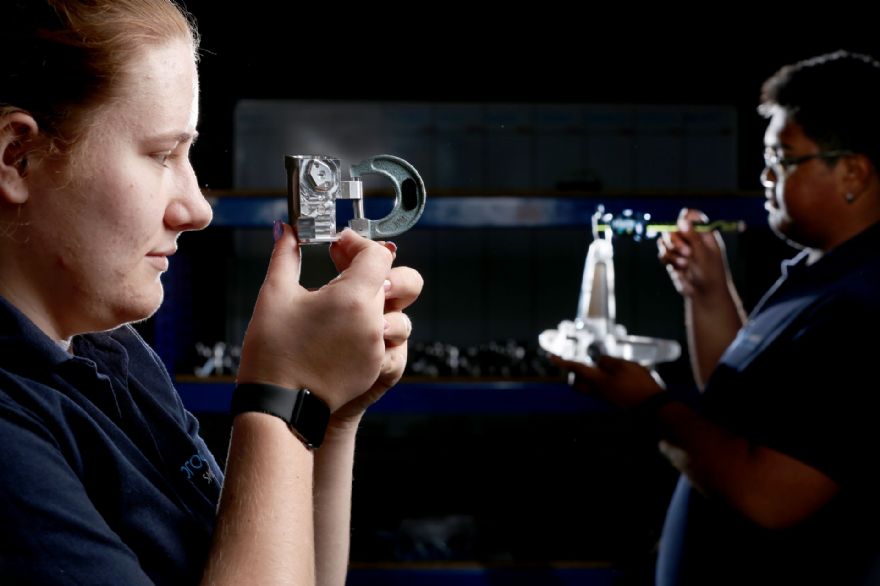
That adaptability has been central to the experience of Matilda Shearman, now working in inspection. She said: “When I arrived, I was very shy, but my confidence has grown massively. I spent time across multiple departments to understand the full manufacturing process, starting in assemblies before moving into quality and inspection, which is now my main focus.
“My advice to anyone at that crossroads at school is don’t put too much pressure on yourself. It often feels like it’s A-levels or college and that is it — apprenticeships aren’t talked about enough. You feel rushed into making big decisions without all the information. Get out of your comfort zone, speak to people face-to-face, don’t underestimate how valuable that can be.”
With major aerospace and defence programmes demanding capacity and resilience across decades-long lifecycles, apprenticeships are increasingly seen as a strategic investment rather than a short-term skills solution. For ASG Aerospace, the intention is explicit — embedding apprentices across the business is fundamental to supporting the next phase of global aerospace growth.