 Altilium
, a UK-based clean-technology company focused on the sustainable recovery of ‘critical battery materials’, has announced it will be collaborating with the
Structural Battery Co to ‘develop a fully sovereign battery supply chain for next-generation drone technologies’.
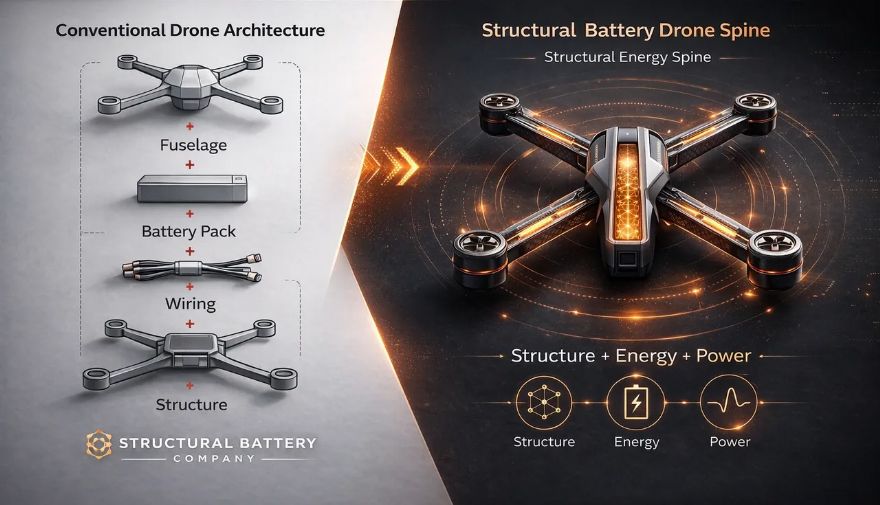
This collaboration will focus on integrating Altilium’s recycled battery materials, recovered from end-of-life EV batteries, into an advanced structural battery system developed by the Structural Battery Co for use in heavy-lift drones. The design embeds energy storage directly into the airframe of the drone, enabling lighter, stronger and higher-performance drone platforms. The companies say that as the use of battery-electric heavy-lift drones becomes more widespread in logistics and defence, establishing a domestic supply of battery materials will be vital to ensure ‘operational sovereignty and protection from future demand shocks’.
Currently, the UK is reliant on international supply chains for battery materials such as lithium, nickel and graphite, leaving it vulnerable to supply disruptions and price increases. By recovering these critical materials from old EV batteries in the UK, Altilium is building a circular supply chain and helping to reduce reliance on imported materials.
Under the agreement, the two companies will explore the technical feasibility of producing battery cells with recycled cathode active materials (CAM) and anode active materials (AAM) for use within the SB Co’s Drone Spine technology, a structural battery backbone for heavy uncrewed aerial vehicles. The company says: “By turning the battery from payload into primary structure, the technology reduces structural mass and provides greater mechanical strength, electrical performance and sustainability.
“Structural batteries represent a transformative leap in energy storage, combining energy functionality with structural integrity. The SB Co’s approach involves creating a core material by bonding cylindrical cells, providing structural integrity and enhanced efficiency. Heavy-lift drones incorporating the company’s structural batteries demonstrate increased payload and range, with the structural battery delivering up to a 50% weight saving compared to a traditional airframe-plus-battery architecture.”