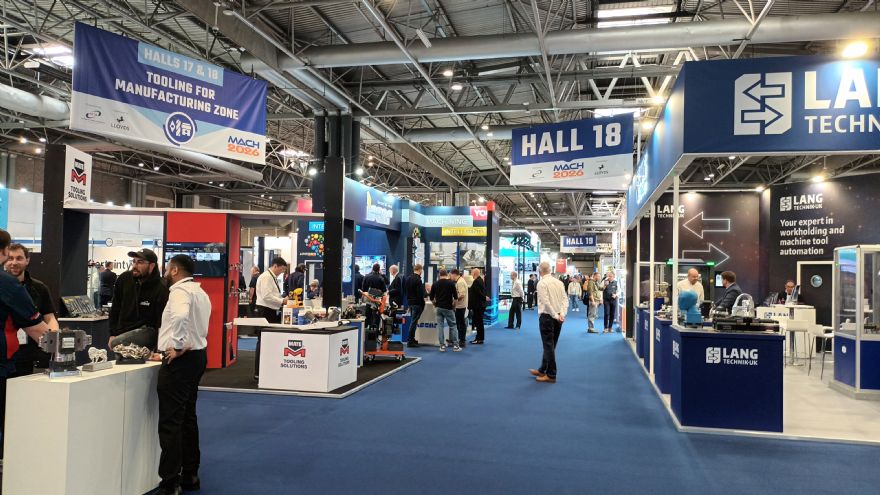
 The recent MACH 2026 industry showcase organised by the MTA
The
Manufacturing Technologies Association (MTA) has warned that newly announced US tariffs on UK exports risk becoming the tipping point for British manufacturers already under severe pressure from soaring energy costs, rising employment taxes and chronic skills shortages.
The warning follows an appearance by Mark Ridgway OBE, CEO of Group Rhodes Ltd and MTA Board Member, on BBC Radio 4’s Today Programme, where he set out the immediate impact of the Trump administration’s latest tariff measures on UK manufacturers selling into the United States.
The new tariffs, reportedly ranging from 10% to 12.5% and applying to dozens of countries including the UK, have been imposed over alleged failures to tackle forced labour. They follow a February US Supreme Court ruling which struck down earlier duties, adding further uncertainty for exporters already trying to price, finance and deliver major capital equipment projects into the American market.
Additional pressuresWhile the tariffs are a serious blow, the MTA said they must be understood in the context of a much deeper competitiveness crisis facing UK manufacturing. British firms are already operating with some of the least competitive industrial energy costs in the developed world, absorbing recent increases in National Insurance contributions, and facing the prospect of raw material cost spikes resulting from proposed UK Steel tariffs and struggling to recruit the skilled engineers and technicians needed to deliver growth.
For advanced manufacturers, even a 10% tariff can have a significant impact on customer confidence and investment decisions, particularly where high-value machinery and technology are sold on long lead times.
Mr Ridgway told the BBC: “The real issue these tariffs create is indecision. When a customer in the United States is buying high-technology, patented equipment from the UK, they have to factor these additional import costs into the return on investment. On a multi-million-pound programme, a 10% duty is not a rounding error it can change the commercial case altogether. What matters is not only the tariff itself, but how it compares with the treatment of our global competitors.”
The MTA said the situation underlined the urgent need for the UK Government to strengthen the domestic foundations of manufacturing competitiveness, rather than leaving firms exposed to international trade shocks while carrying avoidable costs at home.
James Selka, CEO of the MTA, said: “The US tariff announcement is not an isolated event it is the latest pressure point for UK manufacturing. Our members are innovative, export-led and globally competitive, but they are being asked to absorb international trade disruption while also facing uncompetitive energy prices, higher National Insurance costs and a persistent shortage of skilled labour.
“Government cannot control every tariff decision made in Washington, but it can control the cost base and policy environment here in the UK. If ministers want British manufacturers to withstand global shocks, they must move quickly to reduce industrial energy costs, ease the burden of recent tax rises and deliver a serious, long-term plan for engineering and manufacturing skills.”
The MTA said it would continue to engage with government and industry partners to ensure the voice of UK manufacturing technology suppliers is heard as firms assess the impact of the US measures on exports, investment and future competitiveness.