In modern manufacturing, the ability to read a mark clearly at the end of a process is only part of the equation. Increasingly, manufacturers are discovering that the real value of a marking system lies in how well it integrates with the wider production environment.
From workflow efficiency to traceability and quality assurance, the choice of marking method can have far-reaching consequences that go well beyond the mark itself.
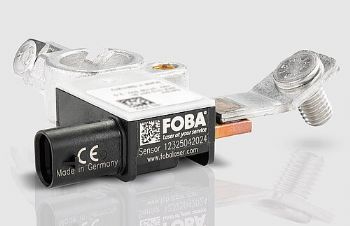
A recent example from electronics production highlights the issue. On a line producing sensor housings, operators began encountering persistent difficulties when scanning Data Matrix codes at an inspection station. What initially appeared to be a problem with the scanner soon proved otherwise.
Codes that were perfectly legible when first applied were losing contrast as components progressed through cleaning stages and experienced routine mechanical handling. The result was a growing need for manual inspection and part removal, creating delays and increasing operational effort.
This is far from an isolated case. Similar scenarios are reported across sectors such as automotive, medical technology and electronics. The common thread is simple: marking cannot be treated as a standalone step. It plays a critical role in determining whether automated systems run smoothly and whether products remain traceable throughout their lifecycle.
Damian Zawadzki, product and application manager at
FOBA, explains: “What matters is not readability immediately after marking, but its stability throughout the entire process chain and beyond. For products subject to regulatory requirements, this extends across the full product lifecycle.”
Traditional marking methods such as inkjet printing, pad printing and labelling remain widely used for good reason. They are cost-effective, flexible and well suited to applications requiring colour or high-speed throughput, such as packaging and beverage production.
However, these methods rely on adding material to the surface, which introduces inherent vulnerabilities. Cleaning processes, abrasion, UV exposure and temperature changes can all degrade the applied layer, reducing contrast and ultimately affecting readability.
This has led many manufacturers to reconsider marking from a broader, process-oriented perspective. In applications where durability and consistency are critical, laser-based direct part marking (DPM) is gaining traction. Unlike conventional methods, laser marking alters the material itself rather than adding to it, whether through annealing on metals or controlled colour change in plastics.
Advances in laser technology have broadened its applicability.
“In our application laboratories, we test a wide variety of products for our customers every day,” says Mr Zawadzki. “Innovations in laser technology make it possible to mark even sensitive materials with high contrast and minimal heat input. In addition to the laser source, selecting the right parameters is critical for marking quality.”
This is particularly relevant for engineering plastics used in connectors and sensor housings, where newer UV laser systems can deliver clear, high-contrast codes even on challenging surfaces.
Yet the real distinction between laser marking and traditional methods lies not only in how the mark is created, but in how the entire process is designed. Increasingly, laser marking is being integrated into fully automated workflows that include alignment, verification and immediate inspection.
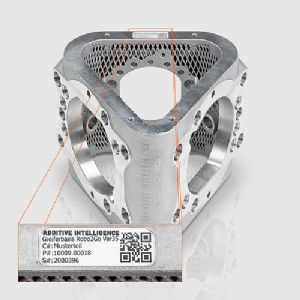
In practical terms, this means that each part is precisely located by a vision system, the marking content is accurately positioned, and the result is checked in real time. A key enabler of this approach is the integration of the vision system directly into the marking head.
“Think of the camera and the laser beam as sharing the same line of sight to the product. This avoids distortions and achieves extremely high reliability,” Mr Zawadzki says. The result is a process that not only delivers consistent marking quality but also minimises the need for operator intervention.
For manufacturers, the implications are significant. Stable readability reduces interruptions, lowers scrap rates and supports more reliable inspection processes. At the same time, integrated data capture improves traceability, an increasingly important consideration in regulated industries. There are also longer-term cost benefits, including reduced rework, fewer production stoppages and the elimination of consumables such as inks and labels.
Despite these advantages, the transition to laser marking is often approached with caution, largely due to higher initial investment costs. However, this perspective can be misleading when viewed in isolation.
“Laser marking is often underestimated because it initially appears more expensive,” notes Mr Zawadzki. “In practice, however, it proves its worth especially where processes must run consistently and where identification is a critical factor.”
Ultimately, the choice of marking technology is a strategic decision that affects the entire production system. The sensor housing example demonstrates how quickly marking can become a bottleneck if it is not aligned with process requirements. For companies evaluating their options, the key is to look beyond the mark itself and assess how different approaches perform across the full production lifecycle.
A structured evaluation process is essential. This begins with clearly defining requirements, not only in terms of marking quality but also production stability, automation needs and regulatory compliance. Existing processes should then be examined to identify where they perform reliably and where limitations emerge over time. Crucially, any new solution should be tested under real-world conditions using actual components and representative process steps.
Only by taking this holistic approach can manufacturers determine whether a new marking technology will deliver the reliability and consistency they need. In an increasingly automated and data-driven industrial landscape, marking is no longer just a finishing touch. It is a critical element of production performance.