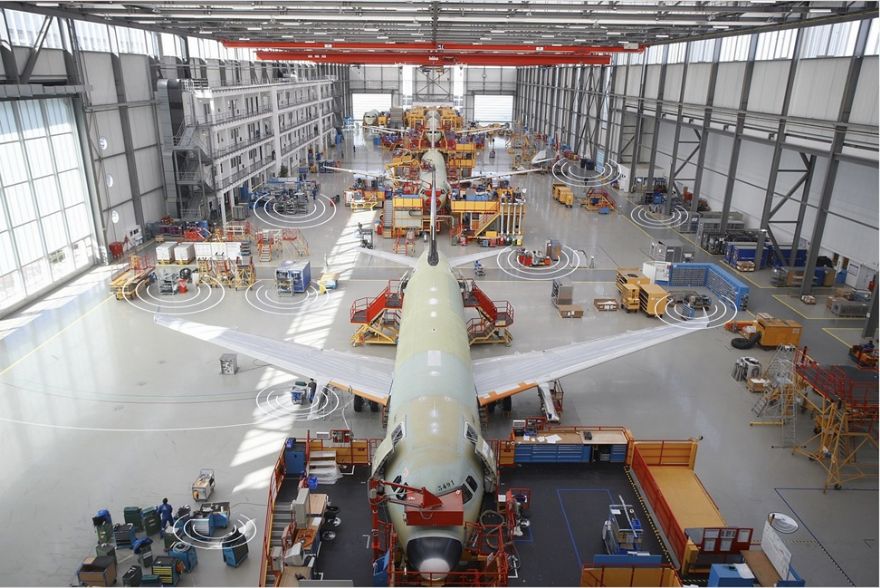
The global aerospace industry’s record production backlog is being compounded by a hidden operational drag - the daily cost of lost and untracked physical assets across the supply chain.
That is the warning from
Sensolus, the European IoT tracking specialist, as it marks ten years as Airbus’s asset tracking partner. Over that period, Sensolus has tracked more than 40,000 containers and tools across 100 plus Airbus sites, delivering an 80% reduction in lost assets and eliminating Foreign Object Debris (FOD) risk entirely through 100% tool visibility on the production floor.
The data, the company argues, points to a problem the industry has yet to fully reckon with. While billions have been invested in ERP systems, digital twins, and AI-driven forecasting, most aerospace organisations still lose visibility of their physical assets the moment they leave a warehouse or hangar. And in a production environment under record pressure, that blind spot has a rising cost.
With 16,683 commercial aircraft on backlog order as of April 2026 (a 5% year-on-year increase and the highest figure ever recorded, representing approximately 12 years of production at current rates) the pressure on every link in the aerospace supply chain has never been greater. The containers, tooling, ground support equipment, and engine stands that production lines depend on every day become invisible the moment they leave a controlled environment.
Kristoff Van Ratthinge, CEO, Sensolus, explained: “The industry has invested enormously in digital infrastructure, and rightly so. But digital systems can only act on the data they receive. The moment a physical asset leaves a controlled environment, most enterprise systems go blind. That is the physical visibility gap and across a supply chain of this scale, its cumulative cost is significant.”
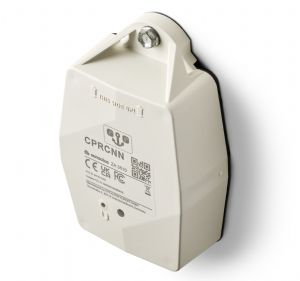
The Airbus partnership, now entering its eleventh year, provides the clearest evidence of what closing that gap delivers. Across more than 100 sites in Europe and beyond, the operational results of Sensolus physical tracking systems have been measurable and sustained: an 80% reduction in lost assets, 100% tool visibility on the production floor, zero FOD incidents, and ROI achieved within six months on specialist tool tracking.
A second use case, focused on Bluetooth Low Energy tracking of specialist tooling, has created digital twins of tools as they move through the production flow, enabling any misplaced item to be located within minutes and eliminating the Foreign Object Debris risk that represents both a safety hazard and a significant financial liability in aircraft manufacturing.
The same visibility gap exists at every tier of the supply chain, manifesting differently depending on the business. At Tier 1, a first-tier provider of on-board aerospace and transportation solutions deployed 600+ trackers to monitor trolley flows between plants, achieving reliable on-time delivery and freeing its logistics team from manual tracking.
At MRO level, one of Europe’s largest aircraft maintenance providers tracks ground support equipment in real time across Schiphol, eliminating the search time that previously delayed aircraft turnarounds.
At Tier 2, a provider of aerostructures, wiring, and landing gear components runs 2,500+ trackers for component logistics. In each case there were no infrastructure changes, operational within days, and integration with existing ERP and MRO systems via standard APIs.
Aerospace procurement sets some of the most demanding data security and compliance requirements of any industry. Sensolus meets them, shaped by a decade of working to Airbus' specifications, with end-to-end encryption, EU-hosted infrastructure, and annual independent penetration testing built in as standard rather than added on.
Mr Van Ratthinge added: “Working with Airbus since 2016 set the bar from day one. You learn quickly that security is not a sidetrack but a daily routine - an inseparable part of your product and your business.”