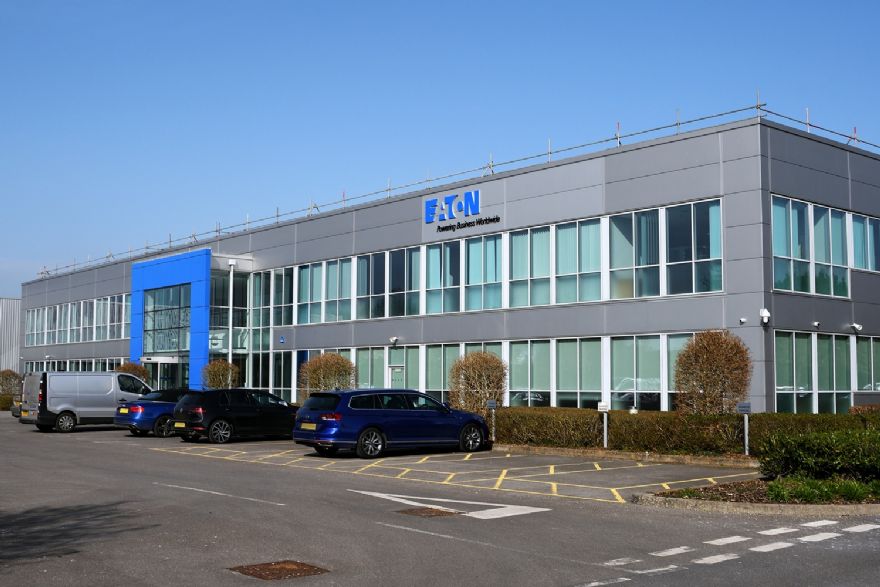
 Pic: Eaton Aerospace's UK engineering, manufacturing, and support facility in WimborneTomasina Bailey, Eaton Vice President for Engineering and Technology, Aerospace, explains to Ed Hill how additive manufacturing, AI and electrification are reshaping future aerospace engineering practices and supply chains.
Aerospace may be one of the world's most technologically advanced industries, but it is also one of the most tightly regulated. New technologies can take years to move from concept to certification, while safety, reliability and traceability remain paramount. However, change is gathering pace, and Eaton believes it is well positioned to help drive the industry's next phase of evolution.
Speaking to Machinery Market at this year’s Farnborough International Airshow, Tomasina Bailey, vice president of engineering and technology for aerospace at
Eaton, outlined how the power management specialist is investing in additive manufacturing, electrification and artificial intelligence while balancing the demands of both commercial aviation and defence markets.
Part of the global intelligent power management company Eaton Corporation, the Eaton aerospace business is a substantial operation in its own right, generating roughly $4.3 billion in annual sales and employing around 12,000 people worldwide. The business operates across fuel systems, hydraulics, actuation, electrical distribution, interconnect technologies and defence-related mission systems, giving it a footprint that spans much of a modern aircraft.
Recent years have seen the company strengthen that position through a series of acquisitions. The purchase of Souriau-Sunbank expanded Eaton's capabilities in electrical interconnect technologies, while the acquisition of Cobham created its Mission Systems division and broadened its defence activities. More recently, Ultra PCS added further actuation and motion control expertise.
 Pic: Tomasina Bailey, Eaton Vice President for Engineering and Technology, Aerospace
Those moves were not opportunistic acquisitions, according to Bailey. They were carefully aligned with long-term aerospace trends.
The Souriau-Sunbank acquisition, for example, was intended to address the growing demand for electrified aircraft systems.
"If you look at the construct of Eaton being a power management company, being primarily in the electrical sector, it was a nice strategic fit for us because we're backed by that legacy from a company perspective," she explained.
Going electricElectrification remains one of the industry's most discussed themes, particularly as airframe manufacturers and future aircraft developers investigate new propulsion architectures capable of reducing emissions and operating costs. Bailey acknowledges that progress can be slow partly because certification authorities must be satisfied that new technologies meet rigorous safety requirements. Nevertheless, Eaton continues to see electrification as a strategic growth area.
"For aerospace, it's about power electronics and the type of componentry that is going to need to evolve to be able to be inserted into electrified aircraft," she said.
At the same time, the company is making significant investments in additive manufacturing, an area Bailey believes has now moved beyond being viewed as an emerging technology.
The company's recent opening of a new Additive Manufacturing Centre in Wimborne represents a significant milestone. The facility joins an established aerospace additive manufacturing centre in the United States and forms part of a wider Eaton additive manufacturing network.
"I hesitate to call it a mega-trend area, because I don't consider it a trend anymore," Bailey said. "I think it's a vital part of this evolution into growth to make aircraft faster, more efficient, safer."
The decision to establish the centre in the UK reflects both the country's engineering expertise and the importance of Eaton's British operations. The company employs approximately 2,600 people across ten UK sites, with significant activities centred around fuel systems, hydraulics and aerial refuelling technologies.
According to Bailey, the Wimborne facility is particularly well placed to support major customers such as Airbus while also strengthening Eaton's local engineering capability. Its location also reflects the company's deep roots in aerial refuelling technology, much of which is based in the UK.
The investment comes at a time when aerospace manufacturers continue to wrestle with supply chain constraints. Castings, forgings and machined components remain areas of concern across the industry, creating bottlenecks for aircraft production programmes already facing substantial order backlogs.
While Bailey is cautious about making wider predictions regarding supply chain recovery, she believes additive manufacturing offers a valuable route to greater resilience.
"If you think about componentry on an aircraft, specifically from a machining perspective, and the issues that supply chain has with castings, the fact that you can move to producing those through additive technology is a big advantage," she said.
The benefits extend beyond resilience. Additive manufacturing can reduce material waste, accelerate design iterations and enable the production of geometries that would be difficult or impossible using conventional manufacturing methods. Crucially for aerospace applications, it also supports the ongoing drive towards lightweighting.
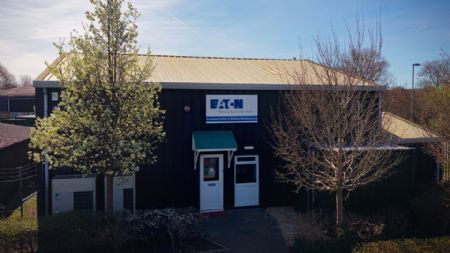 Pic: Eaton's new European additive manufacturing centre
In fact, Bailey notes that Eaton has already demonstrated its credentials in this area as the company has successfully qualified, through EASA, one of the first additive-manufactured components currently flying on an Airbus aircraft.
Lighter and lighterAircraft weight remains one of the industry's most persistent challenges because every kilogram removed from an aircraft can translate directly into reduced fuel consumption and lower operating costs.
"At the end of the day, aside from human beings travelling in them, it's all about the weight of the aircraft," Bailey said. "That translates into fuel, and fuel translates into expense, and so it's all about the lightweighting of the aeroplane."
That objective is influencing everything from materials selection and structural design to manufacturing processes and systems integration. Additive manufacturing is increasingly viewed as a key enabler because it allows engineers to optimise components for weight without compromising performance.
The same principle applies in defence applications, where autonomous and collaborative aircraft are creating new engineering challenges.
One area attracting significant attention is the development of so-called ‘loyal wingman’ platforms, autonomous aircraft designed to operate alongside conventional crewed fighters. Bailey highlighted Boeing’s MQ-28 Ghost Bat programme as an example of this trend.
These systems present a very different set of design requirements. Components must be highly compact and extremely lightweight, while overall programme costs have to remain tightly controlled.
"The componentry has to be miniaturised and it has to be extremely lightweight," Bailey explained.
Additive manufacturing is already contributing to these programmes. Eaton currently supplies additive-manufactured components for the MQ-28 platform, demonstrating how the technology is supporting next-generation defence applications.
The AI revolutionYet while additive manufacturing is transforming physical production, Bailey believes the most significant innovation challenge facing aerospace engineering may be artificial intelligence.
"AI has to be the next big thing," she said, but we have to overcome the obstacles to be able to unlock it and use it at its full potential."
Unlike many industries, however, aerospace cannot simply adopt AI tools without considering security, certification and regulatory implications. This is particularly true in defence programmes, where sensitive data is often subject to strict export control regulations and military security requirements.
Rather than being sceptical about AI, Bailey suggests that aerospace organisations will have to focus on ensuring that appropriate safeguards are in place.
"The correct level of protection" is essential, she said, particularly when companies are handling sensitive technologies and defence-related information.
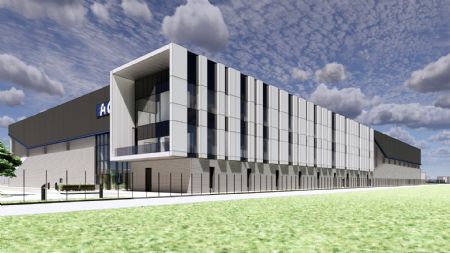 Pic: Eaton is investing further in the UK with a move to a new fuel system site set to open in 2027
Cloud-based AI systems create additional challenges because organisations must demonstrate that proprietary and controlled data cannot be compromised. This means significant investment in digital infrastructure and cybersecurity capability.
Despite those hurdles, Bailey sees AI as a powerful enabler that will help accelerate engineering processes, improve decision making and reduce development times. However, she does not believe human expertise will disappear totally from the equation.
"In terms of the complexity of the product that we make, there are still very specific operations that a human will need to take care of," she said.
Increasing innovation That balance between innovation and responsibility perhaps captures aerospace's current position better than any other theme. The industry remains fundamentally conservative for good reason. Safety cannot be compromised, and certification requirements cannot be ignored. Yet the pace of technological change is increasing, driven by sustainability goals, defence priorities and new forms of competition.
To navigate that environment, Eaton is not simply developing new products. It is also adapting the way it operates.
Next-generation aerospace companies are increasingly demanding faster development cycles, reduced bureaucracy and quicker routes to market. Bailey argues that engineering organisations must therefore innovate their processes as well as their technologies.
Engagement with certification bodies and industry organisations is also becoming more important. Eaton maintains a strong presence within SAE committees in the US and other technical forums to ensure it contributes to the development of future standards and certification frameworks.
For Bailey, the goal is straightforward: "We want to have a seat at the table in those conversations," she adds.
As aerospace enters a period shaped by additive manufacturing, AI, electrification and autonomous systems, that seat at the table could prove increasingly valuable. For Eaton, the challenge comes down to balancing innovation with the rigorous demands of one of the world's most exacting industries.
However, Bailey appears confident that it can do exactly that, helped by its growing additive manufacturing capability, expanding defence opportunities and a belief that the next wave of aerospace innovation is always on the horizon.