As manufacturers increasingly introduce recycled plastics, elastomers and silicone into production, injection moulding equipment must be capable of handling a far broader range of material characteristics than ever before, according to
TM Robotics.
Nigel Smith, CEO of TM Robotics, the UK and Ireland distribution partner for Shibaura Machine injection moulding and automation systems, believes processors can no longer rely on a one-size-fits-all approach to moulding as regulations and customer requirements drive greater use of alternative materials.
According to Plastics Europe, circular plastics accounted for 15.4% of European plastics production in 2024, only a modest increase from 14.8% in 2023. At the same time, the EU Packaging and Packaging Waste Regulation is pushing manufacturers towards greater recyclability and increased recycled content in plastic packaging.
For moulders, this means materials are no longer fixed throughout a product's lifecycle. Components originally designed for virgin resins may later need to incorporate recycled material, higher levels of regrind, or alternative materials such as elastomers, silicone and specialist polymers.
The challenge is that processing conditions developed for one material do not necessarily deliver the same results when the feedstock changes. Variations in melt flow, temperature sensitivity, mould filling characteristics and cooling or curing behaviour can all affect product quality and process stability.
Recycled thermoplastics present a particular challenge. Even when materials meet a defined specification, processors may encounter greater variations in moisture content, melt behaviour and contamination levels compared with virgin materials. Such differences can affect filling pressure, surface finish and mechanical performance, making consistent injection control, plasticisation and process monitoring increasingly important.
Elastomers, rubber and silicone introduce additional complexities. Their processing behaviour can differ significantly from conventional thermoplastics and, in many cases, materials require time within the mould to cure or cross-link. Production cells may also need specialised tooling, insert-loading systems and reliable demoulding arrangements.
In these applications, vertical injection moulding machines can offer advantages by providing improved access to the mould area for operators and automation systems, particularly where inserts must be positioned before injection or components removed without distortion.
Smith argues that manufacturers should look beyond the moulding press itself and consider the complete production system, including material drying, feeding, handling, inspection and finishing processes.
"A press may produce a stable cycle while an unsuitable auxiliary process introduces variation before or after moulding," he explains. "In recycled plastics applications, inconsistent drying or material delivery can undermine precise injection control. In rubber or silicone processing, curing and demoulding may determine the cycle more than injection speed."
He adds that processors should define the entire manufacturing sequence before selecting equipment, ensuring automation is used to maintain consistency and minimise unnecessary manual intervention.
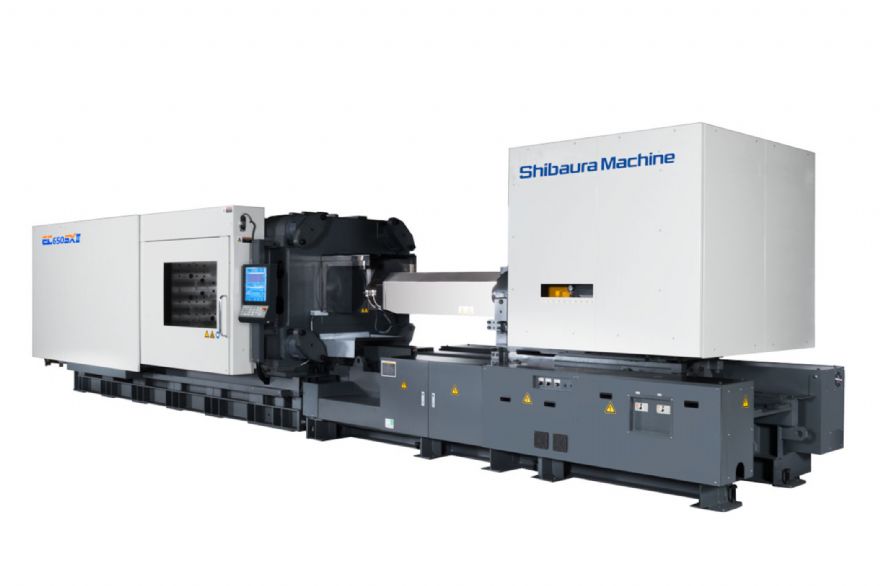
TM Robotics points to Shibaura Machine's injection moulding portfolio as an example of how different machine architectures can be matched to specific material requirements. The company's EC-SXIII all-electric injection moulding series uses closed-loop servo control to support precise and repeatable thermoplastic processing, continuously monitoring and adjusting key machine movements to maintain consistent injection, clamping and plasticisation performance.
In a recycled PET packaging application, for example, the moulding machine can be integrated with material drying, cooling, robotic handling, inspection and downstream decoration equipment as part of a complete production cell.
For more specialist applications, Shibaura Machine LWB, formerly LWB Steinl, provides expertise in vertical injection moulding machines and automated production systems. The German manufacturer became part of the Shibaura Machine group, strengthening its European manufacturing, sales and service capabilities while expanding its expertise in rubber, silicone and elastomer processing technologies.
Smith concludes that as regulations and customer specifications continue to broaden material choices, manufacturers will need to match machine architecture, process control, auxiliary equipment and automation to individual applications.
"When the material changes, the process may need to change too," he says. "Manufacturers that build flexibility into the complete production cell will be better placed to respond."