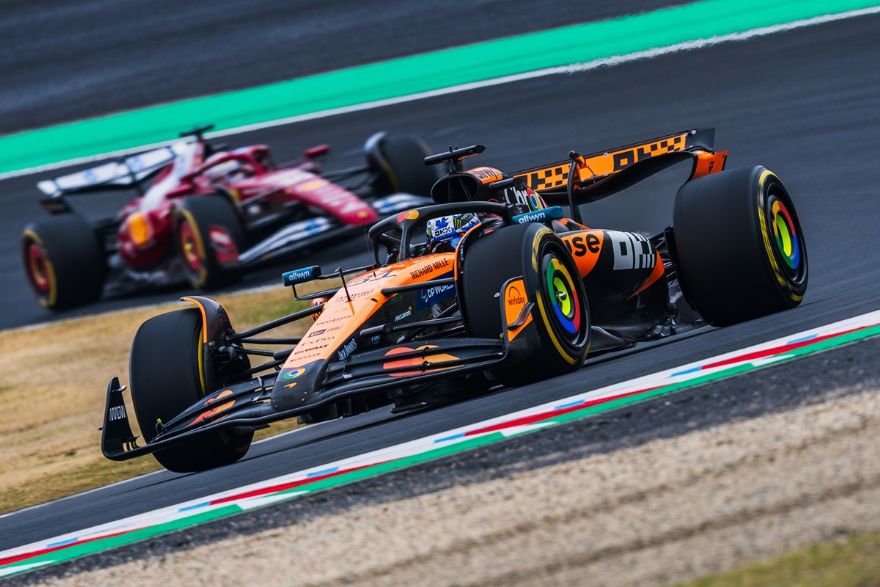
 When people think of motorsport technology filtering into everyday life, the first examples that typically come to mind are hybrid powertrains, lightweight materials or sustainable fuels. Yet some of the most interesting technology transfers from motorsport have occurred far away from the race circuit, finding applications in healthcare, retail, construction and marine engineering.
The influence of motorsport on wider industry is rooted in a culture of innovation that has developed over decades. In the UK particularly, the foundations can be traced back to the years following the Second World War. Britain emerged with a generation of highly skilled engineers accustomed to solving complex technical challenges under intense pressure and tight deadlines. Many gravitated towards the growing motorsport sector, where competition demanded continuous improvement and rapid problem solving.
From those beginnings grew what is now known as Motorsport Valley, a concentration of engineering expertise that has become renowned for developing advanced technologies at remarkable speed. While the automotive sector remains the industry's most obvious beneficiary, the motorsport mindset of innovation and collaboration is increasingly delivering benefits far beyond vehicle development.
Motorsport engineering in healthcarePerhaps no example better illustrates the wider value of motorsport engineering than the industry's response to the Covid-19 pandemic.
During one of the most challenging periods in recent history, engineers from seven UK-based Formula 1 teams joined forces under Project Pitlane to provide urgently needed support to the NHS. Working collaboratively, they developed a breathing aid prototype in just three weeks, a remarkable achievement given the complexity of medical device development.
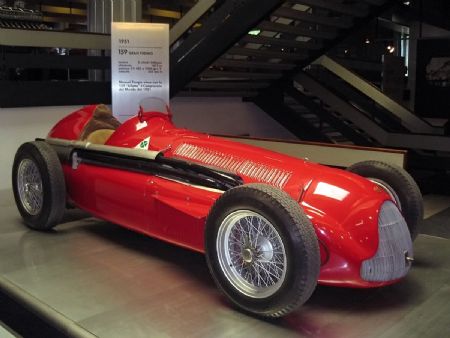 Pic: A 1951 Formula 1 winning car
The project eventually evolved into a Continuous Positive Airway Pressure (CPAP) device adapted by mechanical engineers at University College London and clinicians at University College London Hospitals, working alongside
Mercedes-AMG. Components were manufactured using machinery more commonly associated with producing Formula 1 pistons and turbochargers.
The initiative highlighted motorsport's unique ability to move rapidly from concept to production, demonstrating how expertise developed in a highly competitive sporting environment can be deployed to address urgent societal challenges.
The healthcare sector had already experienced the benefits of Formula 1 thinking decades earlier. During the 1990s, Ferrari's pit crew worked with Great Ormond Street Hospital to analyse patient handover procedures within intensive care units.
The parallels between a Formula 1 pit stop and the transfer of critically ill patients proved surprisingly relevant. Both environments depend on teamwork, precision, communication and flawless execution under pressure.
The recommendations from Ferrari's engineers and pit crew helped streamline procedures, ultimately contributing to a reported 20% reduction in errors during patient handovers. It was an early example of how lessons learned in motorsport could improve outcomes in entirely different environments.
From Formula 1 aerodynamics to supermarket refrigerationAnother less obvious example of motorsport-derived innovation can be found in supermarket refrigeration systems.
Williams Advanced Engineering, now operating as Fortescue Zero, successfully adapted aerodynamic principles originally developed for Formula 1 brake cooling and rear wing performance to improve the efficiency of refrigerated display cabinets.
The solution involved introducing blade-like aerodynamic elements that help control airflow across open-fronted refrigeration units. By directing cold air more effectively and minimising leakage into the surrounding environment, the technology significantly reduces energy consumption while maintaining product temperatures.
For retailers facing rising energy costs and increasing pressure to improve sustainability, the benefits proved compelling. Some supermarket operators reported energy savings of up to 30%.
The technology subsequently found widespread adoption across major UK retailers including Tesco, Sainsbury's and Marks & Spencer. For consumers, the innovation is largely invisible, yet it demonstrates how sophisticated aerodynamic research developed for fractions of a second on a race track can generate substantial operational savings in a retail environment.
Motorsport expertise is also influencing the built environment. Computational Fluid Dynamics (CFD), a core tool in Formula 1 aerodynamic development, is now widely used by architects and urban planners.
Modern city developments increasingly depend on advanced airflow modelling to understand how new buildings interact with their surroundings. Tall structures can create uncomfortable wind conditions at street level and alter patterns of rainfall, temperature and solar reflection.
CFD simulations, similar to those used to optimise racing cars, are helping planners identify and mitigate these effects before construction begins. The technology enables engineers to predict wind behaviour around complex structures and improve comfort and safety for people at ground level.
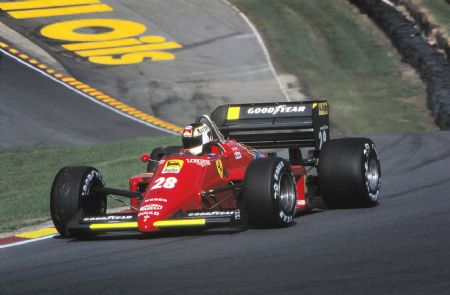 Pic: A 1985 F1 car at the European Grand Prix
Formula 1-inspired technology has also contributed to advances in structural engineering. Research into compact inerters, devices similar to those developed for motorsport suspension systems, has influenced the design of tuned mass dampers used in tall buildings.
These systems help control building movement caused by wind and seismic activity. By adopting lighter and more compact designs, engineers have demonstrated potential reductions in damper weight of up to 70%, delivering both performance and cost advantages.
New opportunities on the waterThe transfer of motorsport technology is increasingly evident within the marine sector, where electrification and alternative propulsion systems are gathering momentum.
Williams Grand Prix Technologies established a dedicated cross-sector business unit in 2024 to accelerate technology transfer into new markets. One of its latest developments is the ES10M battery system, designed specifically for marine applications.
Commenting on the technology, Selin Tur, managing director and chief technology officer of Williams Grand Prix Technologies, said: “Designed specifically for marine applications, it reflects our commitment to bringing elite motorsport-derived engineering expertise to an industry undergoing significant technological change.”
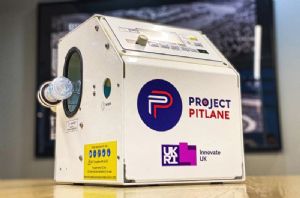 Pic: The Project Pitlane ventilator developed by F1 teams during the COVID 19 pandemic
The project highlights a broader trend across the motorsport supply chain as specialist companies look beyond traditional markets to apply expertise in energy storage, lightweight structures, advanced materials and systems integration.
For Chris Aylett, chief executive of the Motorsport Industry Association, such developments are a natural consequence of the industry's culture.
“The most successful motorsport engineers are insatiably curious, and that instinct doesn't switch off once the fuel, aerodynamics or engineering problem is resolved,” he said.
“They simply go looking for the next challenge. The
MIA CTS – Motorsport Engineering and Technology Show, on 14-15 October, at Silverstone, provides a platform where we see such technology exchange ideas forming and partnerships developing, especially in areas including marine, automotive, defence and aerospace.”
While this article highlights the more unusual motorsport-derived innovations, there is increasingly cross-sector applications and technology transfers occurring across motorsport supply chain and other industries.
Motorsport engineering is competitive, with engineers striving continuously to improve and develop technology fast, but it is also increasingly collaborative, with specialists working together to overcome challenges- both on the track and in the wider community.
Top picture credit: Jay Hirano-Shutterstock.comProject Pitlane Ventilator picture courtesy of FORMULA1.COM