As metal additive manufacturing moves deeper into production environments, the industry’s quality challenge is changing. Manufacturers are no longer asking simply whether in-situ monitoring can capture process data. They are asking whether that data can help accelerate qualification, reduce inspection burden, and support more confident production decisions.
That is exactly the space being explored at the
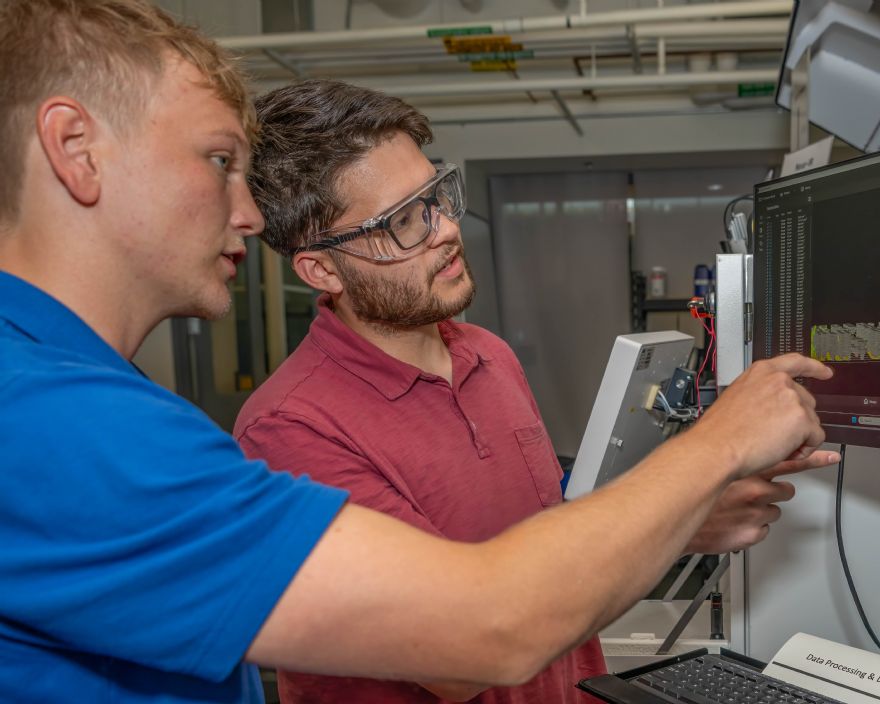
Commonwealth Center for Advanced Manufacturing (CCAM), in Disputanta, USA, where research engineer for additive manufacturing, Kamden Shephard, is a primary user of
Additive Assurance’s AMiRIS in-situ monitoring system. CCAM works with industrial members to evaluate advanced manufacturing technologies and assess how they can support real production needs.
In metal AM, Mr Shephard thinks the pressure around process intelligence has increased sharply. He said: “Over the past year, we’ve seen a real shift in urgency. Users understand that traditional qualification standards are not always a direct fit for AM, and there is now a much stronger push to understand which sensors and process intelligence tools can support qualification in a more practical way.”
For him, one of the current strengths of AMiRIS is its focus on making large volumes of in-situ data accessible to the end user. While many in-situ tools generate large volumes of layer images or technically interesting outputs, their production relevance ultimately depends on whether operators and engineers can efficiently interpret and use that information. He said: “Software and usability are critical,” says Shephard. “A lot of monitoring tools have good hardware, but the interface feels like something written for the engineer who built it. AMiRIS is different. It is one of the easiest systems I’ve used, and that matters enormously if you want a tool to move from a research environment into production.”
Mr Shephard also highlighted the quality of AMiRIS spatial resolution, noting that the system’s multi-camera near-infrared approach provides exceptionally high-resolution process insight. He said:
“With AMiRIS, you are getting spatial resolution that approaches the scale of individual scan tracks. That level of detail has a lot of potential as powder bed fusion evolves toward more advanced process monitoring, beam control, and feedback control. The underlying resolution gives the system significant potential as the industry moves in that direction.”
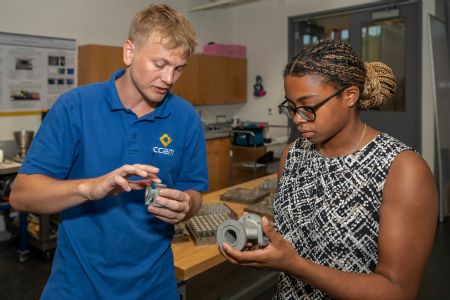
AMiRIS is also designed to convert large volumes of build data into processed information that can more readily interpreted by the user. Mr Shephard said: “At the end of a build, AMiRIS provides reports, intensity information, and processed outputs that are human-readable. That accessibility is a major strength of the system. As the underlying calibration, stitching, and processing continue to mature, I think that approach could be very valuable for making in-situ monitoring information more practical for qualification teams.”
For Additive Assurance, this feedback reinforces the company’s central proposition — in-situ QA must be more than sensing. It must help manufacturers build confidence, shorten the path from data to decision, and reduce reliance on slow, expensive, retrospective inspection strategies. For production AM users evaluating how to make quality assurance more scalable, systems such as AMiRIS demonstrate the potential value of moving beyond simple data collection toward information that can support more informed production decisions. The value of in-situ monitoring is not just what it sees during the build. It is what it helps you decide after it.
Manufacturers interested in exploring how AMiRIS could support qualification, production monitoring, and decision-ready reporting are invited to contact Additive Assurance for a discussion.