The
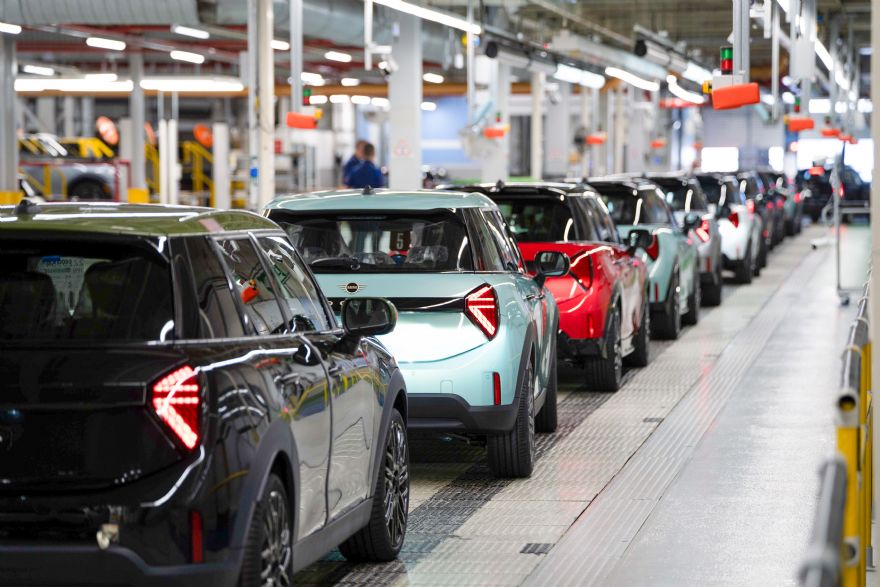
BMW Group has reached a significant milestone in its journey towards smarter manufacturing, recording one million vehicle movements using its Automated Driving In-Plant (AFW) technology.
The achievement was reached at MINI Plant Oxford, where the driverless system has become an increasingly important part of vehicle logistics operations. Introduced initially as a pilot project at BMW Group's Dingolfing plant in 2022, AFW has since expanded to multiple manufacturing locations and now handles around 3,500 automated vehicle movements every day across the company's production network.
AFW enables new vehicles to move autonomously through defined production and logistics areas without a driver behind the wheel. Unlike conventional automated guided vehicle systems, the technology allows vehicles to react dynamically to people, other vehicles, logistics traffic, driverless transport systems and temporary obstacles encountered along their route.
The milestone demonstrates how rapidly the technology has evolved from a development project into an established production tool.
BMW says the system is a key element of its wider BMW iFACTORY strategy, which focuses on digitally connected and highly intelligent manufacturing operations.
Infrastructure-led automationOne of the most distinctive aspects of AFW is that the intelligence required for vehicle movement sits largely within the plant infrastructure rather than the vehicle itself.
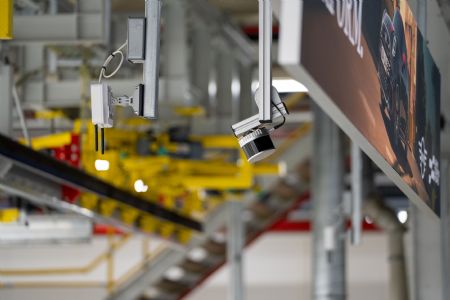
The system combines cloud-based architecture, motion-planning software and an extensive network of LiDAR sensors installed throughout the factory environment. These sensors continuously monitor vehicle routes and surrounding conditions, enabling safe real-time navigation.
According to BMW, this approach means automated driving can be deployed regardless of a vehicle's individual specification. It also allows larger operating areas and narrow passages to be monitored effectively, supporting a smoother flow of production and logistics traffic.
The LiDAR network has become a critical component of the system's operation. At BMW Group Plant Dingolfing, the company operates what it describes as Europe's largest LiDAR infrastructure, providing valuable experience and data for further deployment across its global manufacturing network.
Another important factor behind the technology's wider adoption is that AFW is CE-certified for use within the production environment, creating a foundation for deployment at additional facilities.
The technology was developed jointly by BMW Group and Swiss technology company
Embotech through the BMW Startup Garage programme. BMW has supported Embotech since 2018, helping the business develop and commercialise the technology into what is now a globally deployed logistics solution.
Artificial intelligence also contributes to the development and operation of the system. BMW says AI is used to support simulation, testing and validation activities, helping engineers accelerate development cycles and introduce new functions more efficiently.
Oxford's role in the future factoryMINI Plant Oxford has been at the forefront of AFW implementation and represents the fourth BMW Group facility to deploy the technology, following Dingolfing, Leipzig and Regensburg.
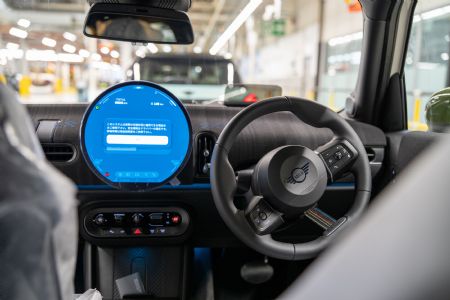
The Oxford installation is notable because it is the first BMW Group site where automated vehicle movements have been directly integrated with existing production control systems. The AFW system positions vehicles precisely alongside a lifting device, where defined production tasks can then be carried out automatically as part of the manufacturing process.
More than 53,000 automated vehicle movements were completed at the Oxford facility over the past year, highlighting the growing role of autonomous logistics within day-to-day operations.
The success of the technology at Oxford and other facilities suggests BMW sees autonomous vehicle movement as a central element of future manufacturing. By removing the need for drivers to shuttle vehicles between production stages, the system improves process consistency and frees employees for higher-value tasks within the factory environment.
The company is continuing to expand the technology across its production network. BMW Group Plant Spartanburg in the United States is expected to become the fifth site to introduce AFW in series operation from 2027.
As BMW continues to roll out AFW across its global operations, the technology is set to play an increasingly important role in advancing the company's vision of the digital, intelligent and highly connected BMW iFACTORY, demonstrating how innovations can successfully transition from pilot projects to large-scale industrial production.
Raymond Wittmann, member of the Board of Management of BMW AG responsible for Production, said: “One million vehicles moved using automated driving technology and the deployment of this technology at four sites to date demonstrates the innovative strength and scaling capabilities of our production network.
“We recognised the potential of Automated Driving In-Plant early, tested it in a pilot phase and systematically developed it to series maturity. We are now rolling out this technology worldwide.”