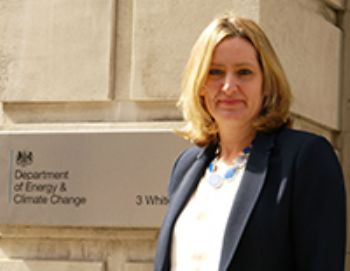
Speaking at the Institution of Civil Engineers in London recently, Energy Secretary Amber Rudd (
www.gov.uk) set out “a new direction for energy policy” and announced that all coal-fired power stations will close by 2025, with their use restricted by 2023.
She said that energy security will be at the heart of this new policy, adding: “We are tackling a legacy of under-investment and ageing power stations. They need to be replaced by alternatives that are reliable, good value for money and help to reduce our emissions. It cannot be satisfactory for an advanced economy like the UK to be relying on polluting 50-year-old coal-fired power stations.”
Claire Jakobsson, head of energy and environment policy at the EEF, said: “This announcement marked a turning point for the UK’s energy strategy. At long last, we are seeing a Government addressing security-of-supply concerns in line with de-carbonisation goals.
“The Government has placed a clear ‘marker in the sand’ with its announcement to end unabated coal by 2025 and has given investors a clear signal to move forward with plans for new gas. Our dwindling capacity margin demonstrates the need to urgently bring forward investment in new gas plants.
“We cannot afford more decades of delay impacting security of supply, risking international competitiveness and — ultimately — costing the consumer.”