The lives of thousands of people with mobility issues could be transformed thanks to ground-breaking research by scientists at the University of Bristol.
The FREEHAB project will develop wearable rehabilitative devices with a view to helping elderly and disabled people walk — and move from sitting to a standing position — in comfort and safety.
Led by robotics professor Jonathan Rossiter, FREEHAB builds on discoveries from his Right Trousers project, which saw
the development of new soft materials that could be used like artificial muscles.
He said: “There are over 10.8 million disabled people living in the UK today, and 6.5 million of them have mobility impairments.
“We will make devices that physiotherapists can use to accurately pinpoint limitations in their patients’ movements, thus enabling them to plan personalised training programmes.
We will also make simpler devices that patients can use to enhance their mobility activities and exercise with confidence when a therapist is not with them.”
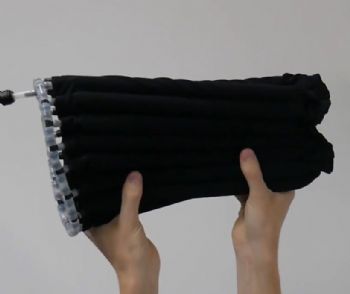
The materials from which the artificial muscles are made include 3-D printed electroactive gels and soft but strong pneumatic chains that change shape when inflated and can exert considerable force.
The three-year FREEHAB project, due to start in September, has received over £1 million of funding from the Engineering and Physical Sciences Research Council (EPSRC).