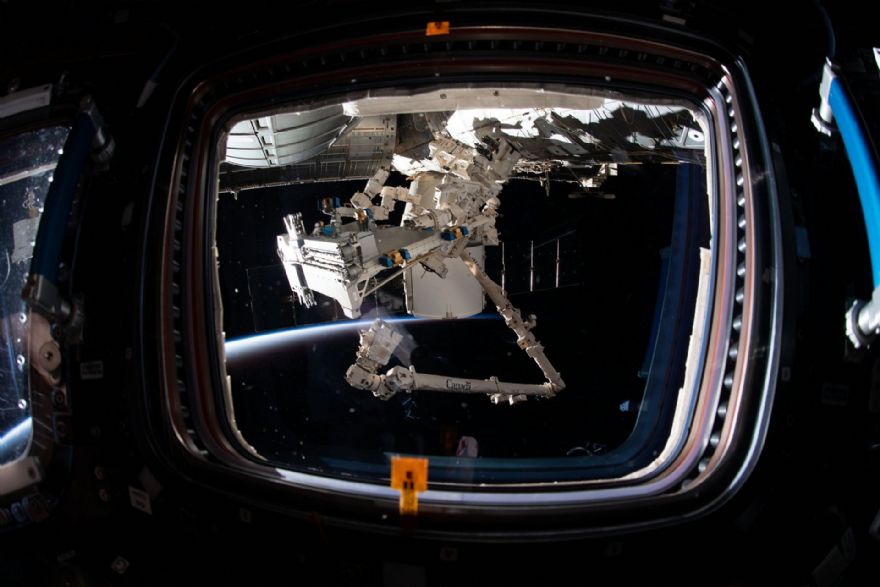
Airbus and Xenesis have signed a contract for a payload slot on the International Space Station’s (ISS) Bartolomeo platform for the demonstration of the Xen-Hub. This is a ‘greater than 10GB per sec’ optical communications terminal that was enabled with a technology transfer from the NASA Jet Propulsion Laboratory and is designed to increase satellite communications bandwidth.
The Airbus-built Bartolomeo platform offers ‘external science and payload hosting capabilities on the ISS, providing new opportunities for science and research’. Launched from the Kennedy Space Center in Florida and installed on the ISS’s Columbus module in April, Bartolomeo was developed by Airbus using its own funds and is operated in a partnership with ESA, NASA and CASIS.
Debra Facktor, head of Airbus US Space Systems, said: “The Xenesis payload will be one of the first from the USA to be installed on the Bartolomeo platform; it has the opportunity to demonstrate the viability of its optical communication space terminal for multiple customers. In addition, Airbus and the ISS National Lab are inviting others to use the research and test opportunities provided by the Bartolomeo platform.”
Bartolomeo is regarded as a cost-effective and time-efficient alternative to small satellites and cube-sats for a variety of missions, accommodating up to 12 different experiment modules, supplying them with power and providing data transmission to Earth.
It can undertake experiments that include Earth observation, environmental and climate research, robotics, material sciences and astrophysics. Launch opportunities are available on every servicing mission to the ISS, which occur about every three months.