 Rolls-Royce
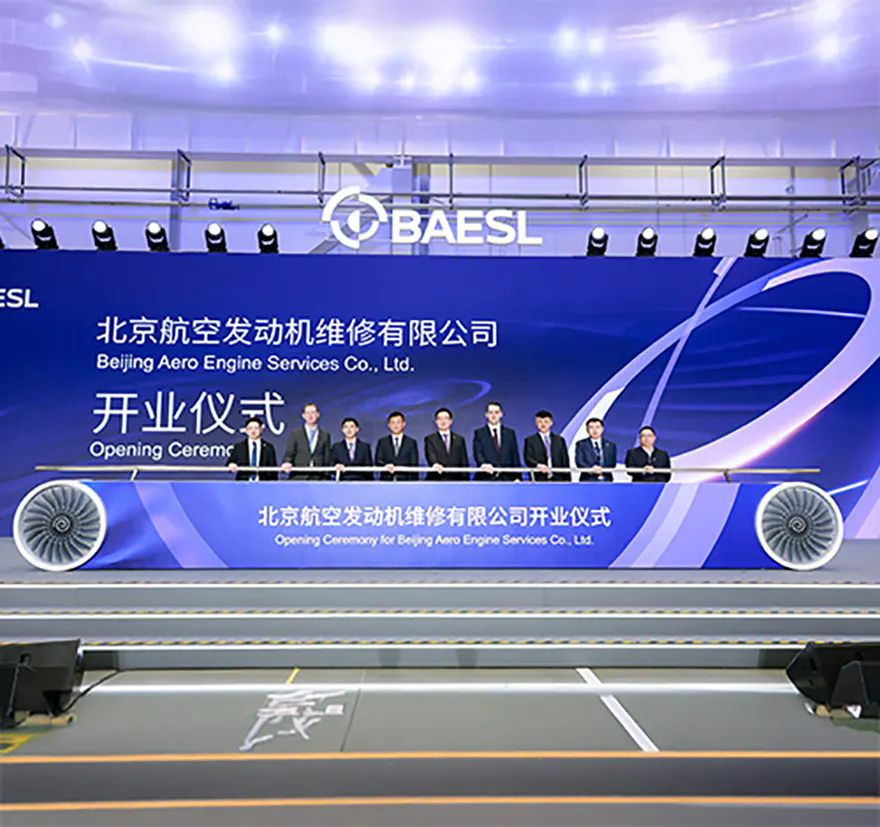
 has celebrated the official opening of Beijing Aero Engine Services Ltd (BAESL), its new joint-venture maintenance, repair and overhaul (MRO) facility with
Air China. Located in Beijing, BAESL is the first dedicated Trent engine overhaul site in mainland China and a major addition to Rolls-Royce’s global MRO network.
The Civil Aviation Administration of China granted BAESL its maintenance organisation certificate during the opening ceremony, confirming the facility’s readiness to deliver high-quality overhaul services on Trent engines. The event also marked the arrival of the first customer engine, witnessed by representatives from Rolls-Royce, Air China, the Beijing Municipal Government, the British Embassy, suppliers and customers.
Paul Keenan, director – commercial aviation aftermarket operations at Rolls-Royce, said: “The opening of BAESL not only supports our long-term growth in the Chinese market, but also contributes to our ambition to significantly increase our global MRO capacity by 2030. China is one of the largest and fastest growing widebody markets in the world and is also key to Rolls-Royce. We power more than 500 of China’s in-service commercial aircraft; nearly 20% of our global Trent engines were delivered to China. Increasing flying hours, new orders and existing fleet upgrades all lead to growing demand for shop visits, both in China and around the world. Therefore, we are making bold investments in our global Trent aftermarket network, including BAESL, to remain resilient and keep our customers flying.”
Air China, as China’s sole national flag carrier, is a long-term strategic customer for Rolls-Royce. The joint venture strengthens cooperation between the two companies and enhances Air China’s position in the aircraft maintenance industry chain.
BAESL will be one of four authorised joint-venture overhaul facilities within Rolls-Royce’s global services network. From 2026, it will introduce overhaul capability for Trent 700, Trent XWB-84 and Trent 1000 engines, with capacity expected to ramp up to 250 overhauls per year by 2034.