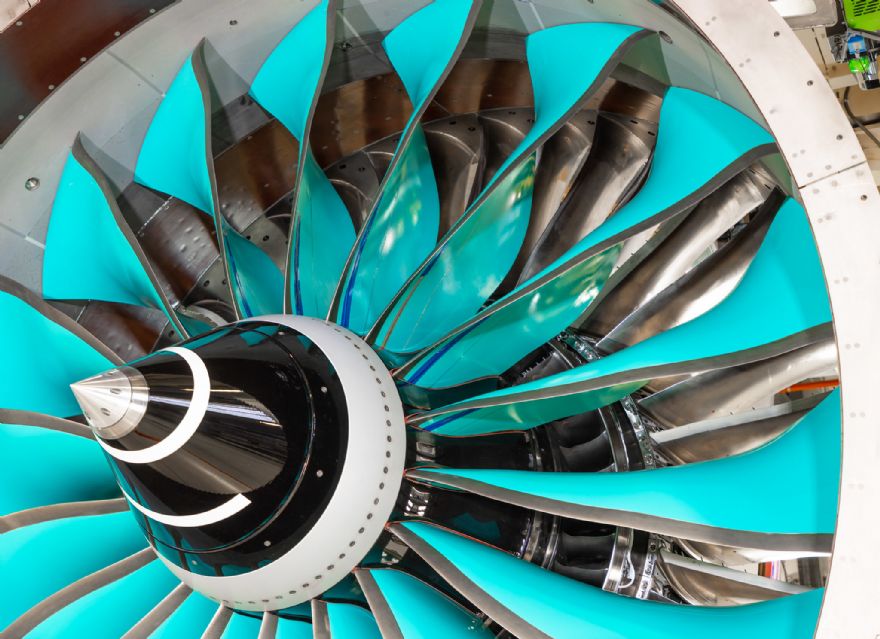
 Photo courtesy Rolls-RoyceRolls-Royce
 and
Pratt & Whitney have signed a joint agreement with
Virginia Tech for pre-competitive research focused on the impact of environmental contaminants on aeroengine operation and testing. The four-year project will use Virginia Tech’s research and cross-discipline expertise on engine operation, instrumentation, and geosciences — as well as the current research relationships that both Pratt & Whitney and Rolls-Royce have with the university.
This research relationship continues a longstanding collaboration between Rolls-Royce and Pratt & Whitney on issues that are common across the aerospace industry. The two companies have partnered on several government-based research projects, including a study focused on volcanic ash damage to aircraft engines. Work on this front has taken place in the USA, the UK, and around the world, with various groups developing some of the basic understanding needed before complex modelling can be undertaken.
Lisa Teague, head of emerging technologies and innovation at Rolls-Royce LibertyWorks, said: “Rolls-Royce has enjoyed a strong relationship with Virginia Tech for decades, collaborating on a variety of research projects to measure and evaluate engine performance under different conditions. This new joint research project will help further industry understanding of airborne particles — a key contributor to engine degradation — and their impact on operability.”
Frank Preli, Pratt & Whitney’s vice president of propulsion and materials technologies, said detrimental effects of particle ingestion are common concerns in the aerospace industry and can lead to accelerated engine ageing and performance loss.
“Pratt & Whitney sees this partnership as a great opportunity to improve our basic understanding of an issue that is critically important to our entire industry. Virginia Tech has the right expertise and facilities to help us make an impact as the joint research team will investigate the fundamentals of particle (sand/dust) properties as the particles pass through the engine with the goal of improving analysis methods to better predict those effects.”
It is estimated that the impact of environmental contaminants costs hundreds of millions of dollars of losses annually.