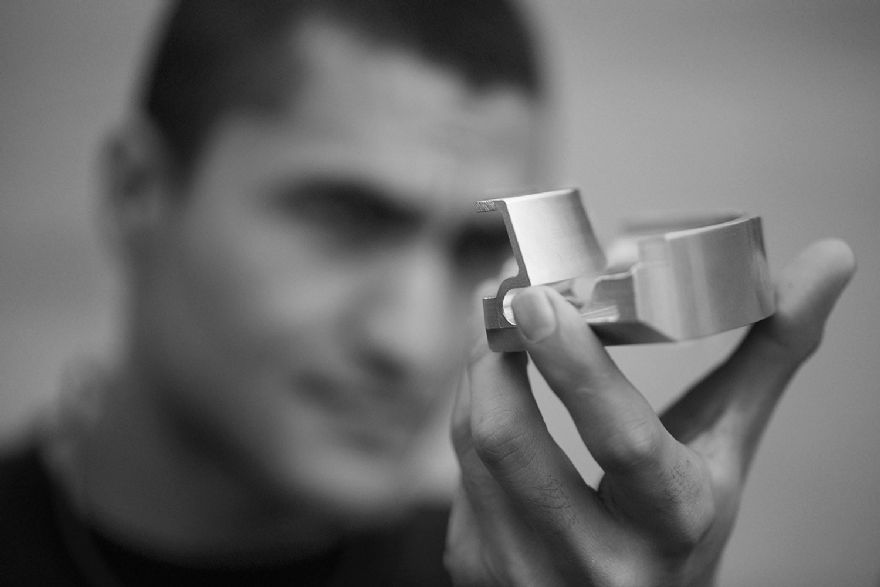
 Photo courtesy of Sandvik Coromant
Imagine producing components in repeated batches without the hassle of tool sourcing, logistics or performance issues. No worries about restocking, no concerns over quality and no last-minute panic about running out of tools. For manufacturers, administrative burdens that slow productivity are no longer acceptable. Johan Huss, vice president digital products and services at
Sandvik Coromant, has explained that the future lies in business models that remove complexity from the shopfloor and tie costs directly to output.
According to
Fictiv’s latest
State of Manufacturing report, 44% of engineers spend at least six hours per week on procurement, with 19% dedicating more than eight hours — a full working day — to these tasks in 2025. This is up from 13% in 2024, highlighting the growing strain on engineering teams managing increasingly complex supply chains.
It is not just the time spent ordering tools. Sandvik Coromant’s research shows that while tooling accounts for only 3–5% of total production costs, mismanagement can impact operator downtime, scrap and emergency purchases. As much as 20% of an operator’s time can be lost simply searching for the right tool — a stark reminder of how small inefficiencies quickly add up. Manufacturers need service and technology-driven sourcing solutions that streamline workflows and allow teams to focus on higher-value tasks. This is where outcome-based models make a measurable difference, particularly in busy machine shops.
Traditional procurement involves checking tool availability, raising purchase orders, tracking lead times and managing invoices — often across multiple suppliers. Many businesses also hold excess “just in case” inventory, tying up capital and storage space. Outcome-based models turn this approach on its head. Instead of buying tools as consumables, manufacturers pay a fixed cost for every finished component.
Pay per part serviceThe pay-per-use concept is simple: pay for what you use. At Sandvik Coromant, its ‘Pay per Part’ service removes complexity from machining and provides full transparency of production costs. The process begins with a detailed analysis of the customer’s situation, reviewing objectives and tooling strategies to identify inefficiencies. This might reveal excess stock or wasted time searching for tools. Experts then design a tailored strategy, selecting the most efficient tools, setting process parameters and integrating digital solutions for performance tracking. The result is a fixed cost per part, giving customers predictability and control. Instead of managing separate tool costs or worrying about downtime, every aspect of machining is covered under one reliable structure.
Benefits include transparent, predictable costs, simplified operations and improved process reliability. Downtime and scrap are reduced, while continuous optimisation ensures measurable year-on-year savings. Sustainability is also central, with tool reconditioning, reduced packaging and smarter logistics contributing to lower environmental impact. Continuous improvement is built into the model, with adjustments over time to enhance tool life, process stability and efficiency. By combining advanced tooling expertise with data-driven insights, Pay per Part ensures production remains reliable and increasingly effective.
Through Pay per Part, Sandvik Coromant offers more than tools — it offers time, stability and a partner in performance. Manufacturers gain confidence knowing every part produced carries guaranteed quality and a fixed cost, while tooling, logistics and optimisation are handled by experts dedicated to optimising production.