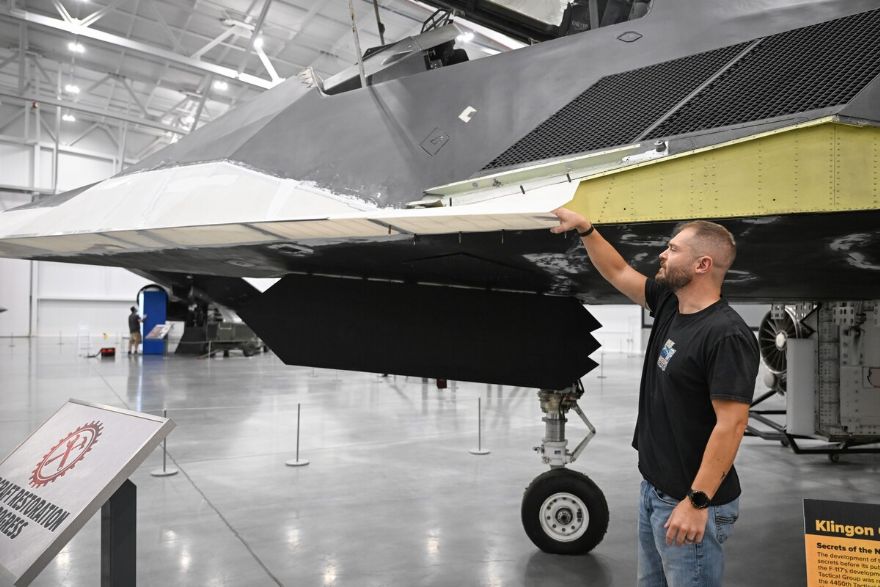
Technicians at
Hill Aerospace Museum in the USA are using 3-D printing technology to bridge the gap between aviation history and modern manufacturing, fabricating hard-to-find parts in-house to restore historic aircraft. A $6,000 investment in 3-D scanning and additive manufacturing (AM) at the museum in Utah has cut project costs by 80% and replaced months of searching for obsolete components with accurate reproductions that preserve the authenticity of the collection.
Brandon Hedges, the museum’s restoration chief, said: “Ensuring historical accuracy is at the forefront in restoration and exhibits. Our priority is to find the historically accurate part; if we are unable to find the correct part, that’s when we turn to modern technology to recreate our part for visual purposes.”
The process begins with research to locate the original part, often involving outreach to the aviation community. If the part cannot be sourced, the team relies on gathered data or scans of existing pieces to capture precise dimensions for reproduction. Museum intern Holly Bingham explained that the scanner allows technicians to capture every detail of an object.
She said: “It takes careful adjustments, correct lighting, and steady movements to create the perfect model. These models can then be 3-D printed to replace the fragile or missing components of a aeroplane.”
Immersive authenticityVisitors benefit from the technology through fully restored aircraft that deliver immersive authenticity. Mr Hedges added: “If we decide to 3-D print something that we cannot find a surplus, we strive to make it blend in just as the original. Providing the visitors with historically accurate depictions is mission priority for restoration and exhibits.”
Every recreated part is tracked so an original can be swapped in if one becomes available. The innovation has expanded in-house capabilities, producing cost and resource savings across multiple museum programs, including curation, restoration, exhibits, and education. Beyond aircraft restoration, the technology has proven valuable in practical applications.
Exhibit specialist John Sluder highlighted one example. He said: “Static sign mounts that hold informational signs alongside aircraft and exhibits. The mounts use printed feet to prevent steel base plates from sliding on concrete floors and include fixtures that allow quick swapping and long term re-use.”
He concluded: “What excites me most is that 3-D printing is not just helping us restore aircraft parts — it is giving us tools to solve everyday challenges in the museum, from keeping exhibits safe to making signage more flexible. In the end, it means we can preserve history more effectively and share the US Air Force story with future generations in ways that are sustainable and adaptable.”