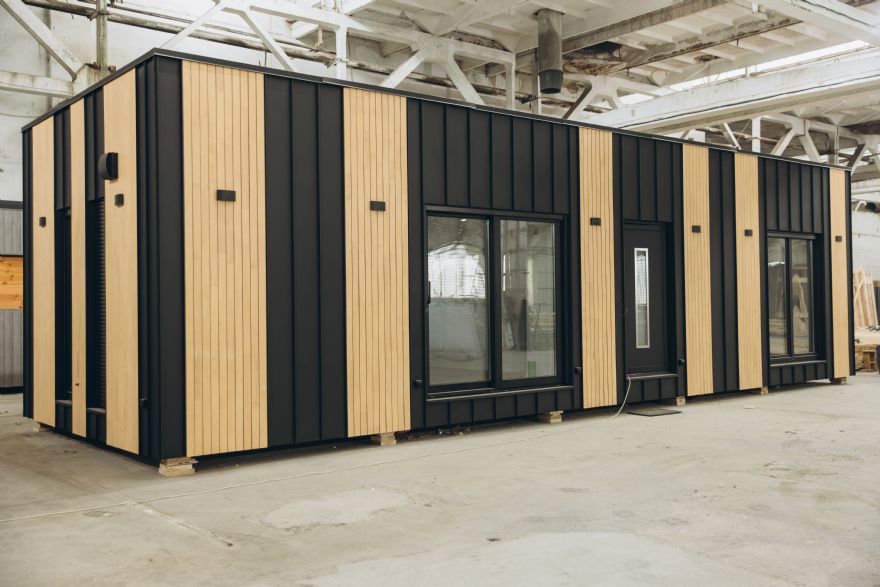
 Pic: Shutterstock
In today’s industrial landscape, manufacturers are increasingly navigating the combined pressures of maintaining efficiency while meeting rising expectations around sustainability. Escalating raw material costs, stricter regulatory frameworks and unpredictable fluctuations in demand continue to complicate long‑term planning for production and storage. As a result, many companies are rethinking the traditional model of investing in permanent facilities. Instead, temporary industrial buildings have emerged as strategic assets, offering the kind of adaptability and cost‑control that modern operations require.
Over the past decade, temporary structures have evolved far beyond their former reputation as short‑term shelters. They are now engineered systems built to withstand intensive industrial use, and their adoption reflects a shift in mindset across the sector. Manufacturers deploy them to bridge capacity gaps, support expansion phases, or counteract supply chain disruptions with minimal downtime.
The ability for
temporary industrial buildings to be installed quickly and scaled in line with operational need has positioned them as viable alternatives to permanent construction, especially in industries where volatility is the norm. Companies in machinery production and logistics, where demand can swing rapidly, increasingly value the absence of planning uncertainty that comes with temporary space. The option to expand or contract operational footprints without committing to permanent infrastructure allows them to craft more resilient long‑term strategies.
Sustainability has become a defining advantage of these structures, and much of that benefit stems from modular design. Components are manufactured to be assembled, dismantled and reassembled repeatedly, creating a lifecycle that greatly reduces waste. The use of re-usable steel or aluminium frameworks, recyclable cladding and standardised modular elements ensures that the environmental footprint remains significantly lower than that of traditional buildings. Once operations at a particular site conclude, the structure can be relocated rather than demolished. This alignment between reuse and sustainability underscores a shift from single‑use development to long‑term stewardship of materials.
Adaptability is keyFrom a lifecycle perspective, temporary buildings also outperform permanent facilities when the intended longevity of a project remains uncertain. Instead of risking investment in a fixed structure that may outlive its usefulness, organisations maintain the freedom to adapt capacity swiftly in response to shifting market conditions. This adaptability extends to operational performance as well.
Modern temporary buildings can be equipped with efficient insulation, mechanical ventilation and tailored lighting systems, ensuring that energy use remains optimised for either production or storage applications. Shorter construction phases reduce energy consumption upfront, while the ability to position structures near production lines or logistics zones cuts internal transport distances and lowers emissions. In many cases, these operational efficiencies translate into quantifiable savings.
To maximise both efficiency and sustainability outcomes, selecting the right solution demands expert guidance. Load requirements, regulatory compliance, fire protection and planned duration of use must all be considered early in the decision‑making process. Industry bodies emphasise the importance of responsible supply chain partnerships, and as one publication on
sustainable supply chains from the German Federal Ministry for the Environment explains, companies benefit when they “integrate environmental and social criteria into procurement, production, and logistics processes,” supported by transparent, long‑term collaboration.
Spantech is among the suppliers equipped to meet these expectations, with a focus on technical reliability and adaptability for industrial applications. Their expertise helps organisations align immediate operational needs with future planning objectives.
As industrial environments evolve, temporary buildings increasingly represent the meeting point between efficiency and environmental responsibility. Their combination of agility, durability and sustainable design ensures they will remain central to infrastructure strategies for companies seeking to remain competitive while using their resources wisely.