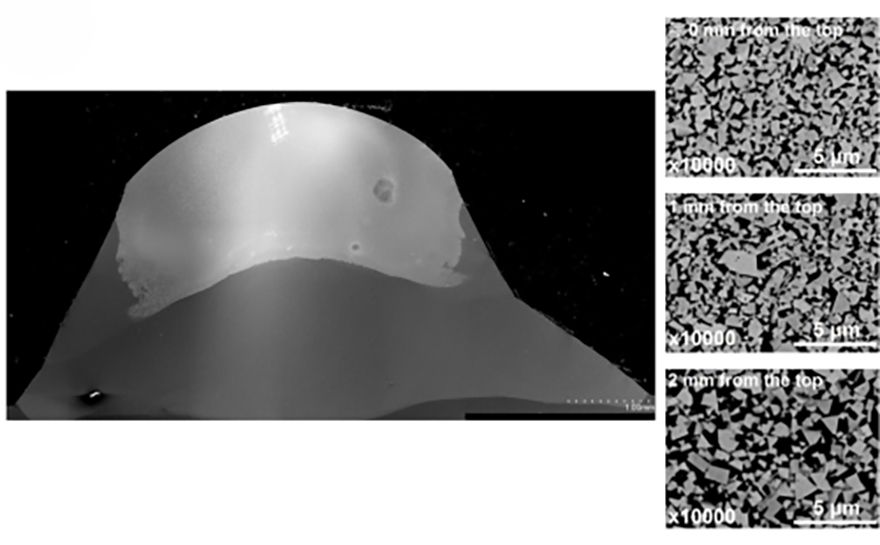
While tungsten carbide–cobalt (WC-Co) is recognised for its hardness, this property makes it difficult to shape, and current processes are not only wasteful but also expensive for the yield produced, so an economic method for producing these materials is long overdue.
Researchers at
Hiroshima University say that while WC-Co cemented carbides are important in fields that require high wear resistance and hardness, such as cutting and construction tools, currently, these carbides are made using powder metallurgy that uses high pressure and sintering machines to combine the WC and Co powders to ‘yield a manufactured cemented carbide’.
They said that although this method does produce highly durable and hard final products, a lot of costly material is used, and the yield is suboptimal. “The research proposed in our study uses the novel technique of additive manufacturing (AM) and the hot-wire laser irradiation method to produce cemented carbides without sacrificing hardness and durability, while also reducing material waste and overall cost.”
Their work — published online in December 2025 in the
International Journal of Refractory Metals and Hard Materials and appearing in the journal’s April 2026 print issue — focuses on the use of AM, specifically hot-wire laser irradiation, along with two fabrication methods. Hot-wire laser irradiation (also called laser hot-wire welding) is a technique in which a laser beam and a preheated filler wire are combined to increase the deposition rate and efficiency of the process.
One fabrication method used in this study involves direct irradiation on top of the cemented carbide rod, with the rod leading the direction of fabrication. The other method is led by the laser and is irradiated by the laser between the bottom of the cemented carbide rod and the base material (iron). In both methods, the metals are softened instead of completely melted to form the cemented carbide.