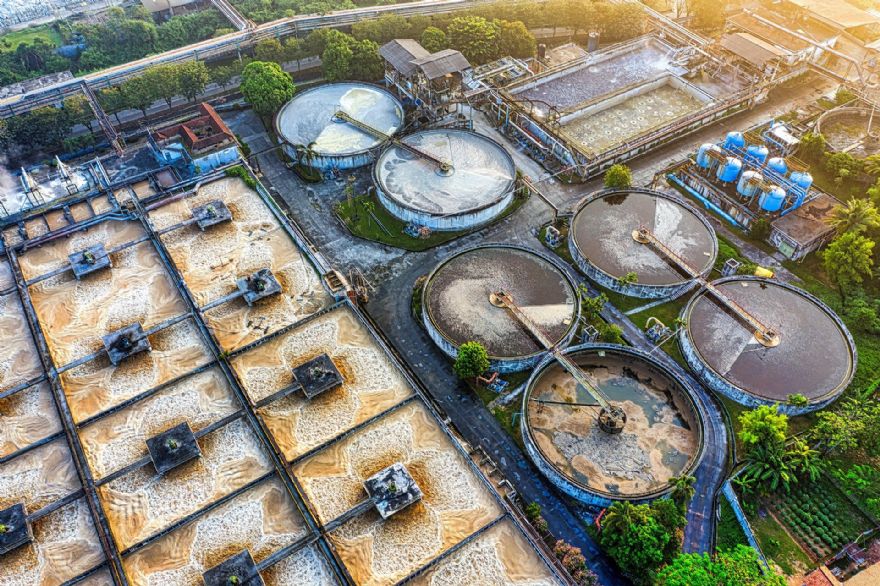
Industrial production has evolved rapidly over the past decade. Facilities are larger, product chemistries are more complex and quality standards are more exacting. Yet in many cases, wastewater infrastructure has not kept pace with these changes.
As processes intensify and formulations become more sophisticated, legacy treatment assets can struggle to manage modern effluent profiles. Upgrading treatment infrastructure is therefore not simply a maintenance decision. It is a strategic investment in compliance resilience, operational stability and long-term sustainability.
Responding to more complex effluent streamsToday’s production environments generate wastewater containing a broader spectrum of organic compounds than in the past. Active ingredients, intermediates, solvents and specialty additives can interact in ways that challenge conventional biological or basic physico-chemical systems.
Where legacy assets were designed for simpler loads, performance may become inconsistent as influent variability increases. Fluctuations in concentration, pH or chemical composition can reduce removal efficiency and place stress on downstream equipment.
Modern
wastewater treatment companies are increasingly designing treatments with this variability in mind. Advanced tertiary stages can be introduced to target persistent organics that resist degradation. Technologies that combine adsorption with electrochemical oxidation, for example, enable contaminants to be concentrated and then destroyed within a single, controlled process. This targeted approach reduces the risk of untreated residues passing through the system and supports more predictable effluent quality under changing production conditions.
Improving operational reliability and asset protectionUpgrading treatment infrastructure is not only about achieving lower discharge concentrations. It is also about protecting critical process assets and maintaining uptime. Certain organic compounds can inhibit biological reactors or damage membrane systems. If not addressed upstream, these substances may reduce performance, increase cleaning frequency or shorten asset lifespan. The resulting downtime and maintenance burden can undermine productivity.
By integrating robust tertiary treatment, facilities can intercept problematic compounds before they compromise core treatment stages. Systems with in-situ regeneration and minimal moving parts also reduce operator intervention and simplify maintenance planning. Modular design is another key consideration. Rather than undertaking major civil works, many facilities are now adopting scalable treatment units that can be added alongside existing infrastructure. This allows capacity to increase in line with production growth, while maintaining operational continuity.
Aligning infrastructure with sustainability goalsModern production must balance output with environmental responsibility. Investors, customers and regulators increasingly expect evidence of reduced carbon intensity, improved water stewardship and responsible waste management.
Upgraded treatment infrastructure plays a central role in meeting these expectations. Advanced oxidation processes that operate without chemical dosing can reduce hazardous handling and secondary waste generation. On-site treatment also limits reliance on transport and incineration routes, cutting associated emissions and administrative burden.
Improved removal of persistent contaminants further supports water reuse initiatives. By polishing effluent to higher standards, facilities may reduce freshwater abstraction and strengthen resilience in regions facing water stress. In this context, upgrading is not merely reactive. It becomes part of a broader sustainability strategy that integrates compliance, cost control and environmental performance.
Future-proofing production through smarter treatmentAs product portfolios diversify and regulatory scrutiny intensifies, the gap between legacy infrastructure and modern requirements will continue to widen. Facilities that proactively review and enhance their treatment capability place themselves in a stronger position to adapt. Strategic investment in advanced industrial wastewater treatment systems delivers more than improved discharge metrics.
It supports stable operations, protects valuable assets and reinforces long-term environmental credibility. For growing and evolving manufacturers, upgrading treatment infrastructure is not simply an engineering exercise — it is a practical step towards resilient, responsible and future-ready production.