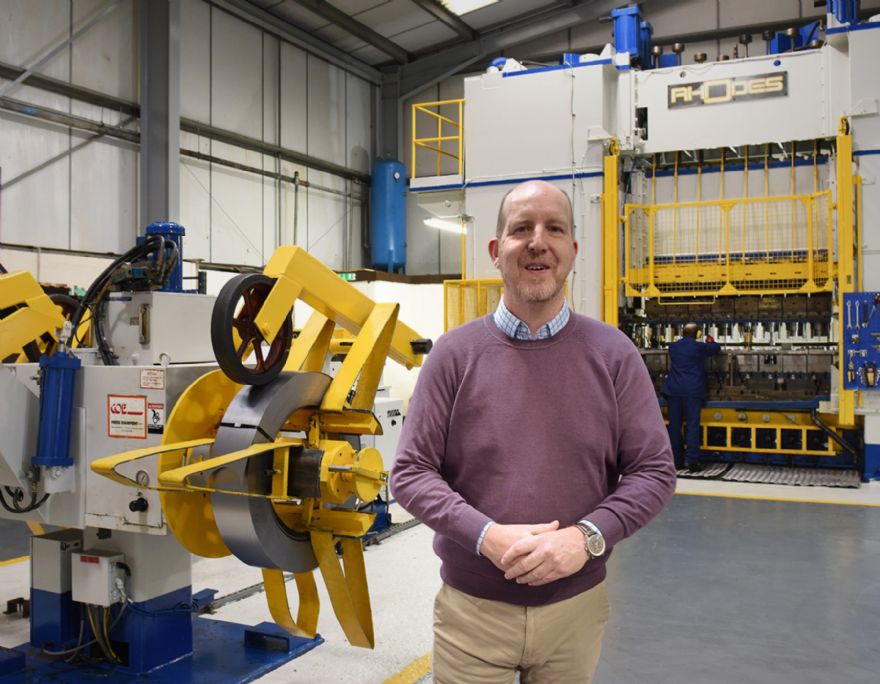
 Doug Allen, CEO at HT Brigham Pressings
For decades, UK manufacturing has been framed around a simple equation — volume versus cost. But in today’s industrial landscape—shaped by persistent cost inflation, geopolitical uncertainty and accelerating technological change — that model is rapidly becoming obsolete. Competitiveness is no longer determined by scale alone, but by the ability to deliver complex, high-value components with precision, consistency and resilience.
Recent findings from the
Make UK Executive Survey 2026 underline this generational shift. Despite rising employment, energy and technology costs, nearly two-thirds of manufacturers believe opportunities outweigh the risks in the year ahead. However, businesses are not retreating, but instead, are investing — prioritising innovation, digital transformation and new product development as routes to growth. It is a decisive move away from commoditised production towards capability-led manufacturing.
For
HT Brigham Pressings, the Birmingham-based metal pressings specialist, this is not a new direction but a long-standing philosophy now firmly aligned with wider industry trends. CEO Doug Allen said: “The UK is no longer set up to compete purely on volume or lowest cost. Our strength is in engineering depth, process control and the ability to deliver complex work reliably.”
Risk and opportunityThat capability is increasingly being called upon as instability within the automotive and wider manufacturing supply chain creates both risk and opportunity. Across the sector, margin pressures and operational challenges have left some suppliers struggling to maintain performance, prompting OEMs and Tier Ones to seek alternative partners capable of restoring stability at pace.

Brigham has positioned itself at the centre of this dynamic. The business has developed a strong reputation for stepping into underperforming or distressed supply situations — taking on transferred tooling and programmes from suppliers in difficulty and rapidly stabilising production. This is not simply a question of available press capacity; it requires a combination of engineering expertise, tooling knowledge and disciplined process validation.
Mr Allen said: “When a programme comes across from a supplier that is struggling, the priority is rebuilding confidence. That means assessing tooling condition, understanding the history of the job, validating every stage of the process and getting parts back into consistent, reliable production as quickly as possible.”
This ability to recover and re-establish supply has become a critical differentiator in a market where continuity is often as valuable as cost. Customers are increasingly prioritising partners who can not only manufacture components, but also safeguard programmes when disruption occurs.
At the heart of this capability is Brigham’s integrated toolroom and in-house engineering team, which allows the company to take full control of tooling performance and lifecycle management. Rather than relying on external support, Brigham can quickly refurbish, adapt or optimise tools brought in from other suppliers, significantly reducing the time required to return programmes to stable output.
This operational depth reflects a broader industry shift identified in both Make UK and Deloitte research. As manufacturers face growing complexity, investment in smart manufacturing technologies, process control and digital systems is becoming central to competitiveness. Deloitte’s 2026 outlook highlights that the majority of manufacturers now view advanced technologies—including automation, data analytics and AI—as essential to improving productivity, increasing agility and unlocking capacity.
For Brigham, however, technology is only part of the equation. The real value lies in combining digital capability with hands-on engineering expertise and a culture of accountability on the shop floor.
Adding valueMr Allen continued: “If you are operating at the commodity end of the market, you are always exposed to price pressure. But when you’re taking on complex work, managing tooling properly and working closely with customers, you are adding value in a completely different way.”
This approach is also shaping the company’s longer-term growth strategy. Alongside organic expansion, Brigham is actively exploring opportunities for growth through acquisition—particularly where businesses bring complementary capabilities or where there is potential to stabilise and strengthen underperforming operations.
In a market where some suppliers are under strain, this presents a strategic opportunity to consolidate capability while reinforcing resilience across the supply chain. Acquisitions are not viewed simply as a route to scale, but as a means of extending engineering expertise, broadening customer relationships and enhancing the company’s ability to support complex programmes.
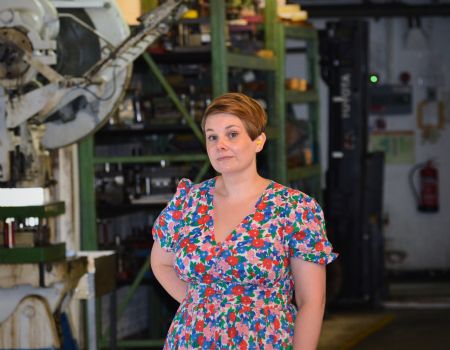 Pictured right: HT Brigham Pressings’ compliance director Anna Lavender-Moore
Mr Allen noted: “There are good businesses out there that need the right support, the right systems and the right approach to realise their potential. If we can bring those capabilities into the group and strengthen them, it benefits both the business and the customers they serve.”
This combination of operational resilience and strategic ambition reflects a wider mood across UK manufacturing. The Make UK survey shows that companies are increasingly focused on growth—expanding product portfolios, entering new markets and investing in customer engagement—despite the continued pressure of rising costs. At the same time, the UK’s Industrial Strategy is beginning to rebuild confidence, with a majority of manufacturers expecting it to support increased investment, even if structural challenges around energy, skills and competitiveness remain.
What is emerging is a more focused, capability-driven manufacturing sector—one that recognises its strengths and is aligning investment accordingly. High-value production, supported by engineering expertise and digital infrastructure, is becoming the foundation of competitiveness.
For HT Brigham Pressings, that strategy is already delivering results. By positioning itself as a reliable partner in times of disruption, the company is not only protecting existing programmes but also opening new avenues for growth.
HT Brigham Pressings’ compliance director Anna Lavender-Moore, said: “Turning out parts isn’t enough anymore. Customers need confidence in their supply chain. If you can provide that — if you can step in, solve problems and deliver consistently — then you are competing on capability, not just cost.”
In a manufacturing landscape increasingly defined by uncertainty and complexity, that capability may prove to be the UK’s most valuable asset.